
Mountain bike shoes: clipless or flat pedal


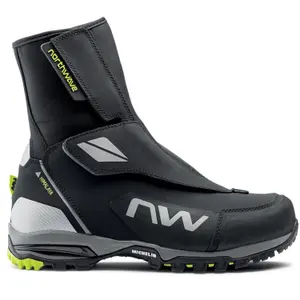


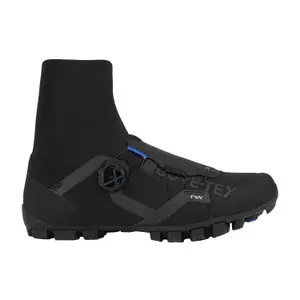
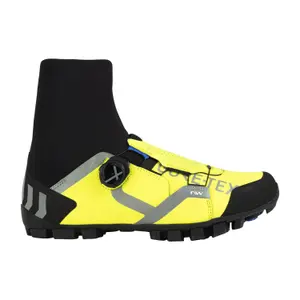
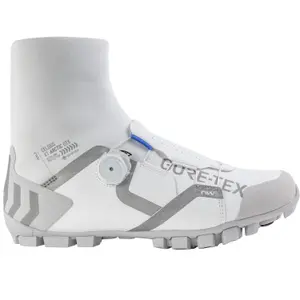
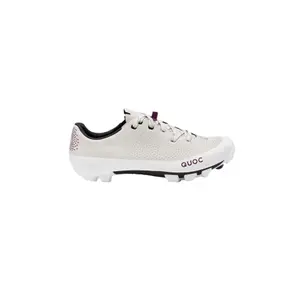


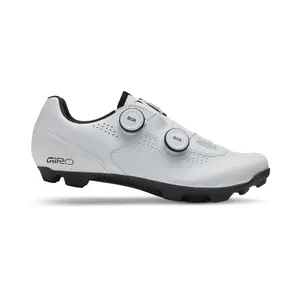
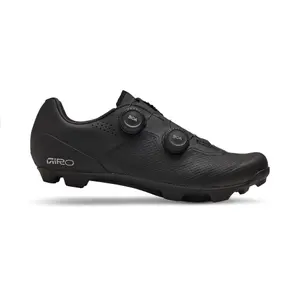
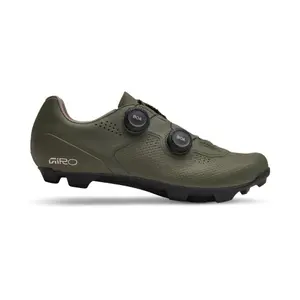


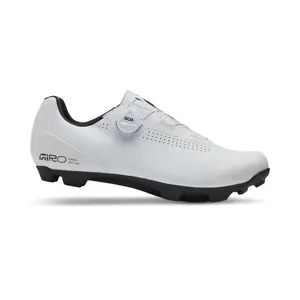
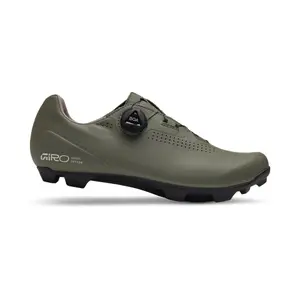
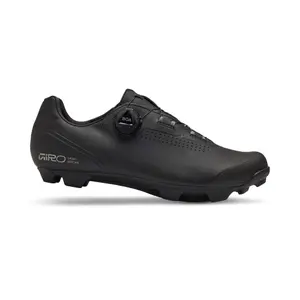


Choose mountain bike shoes first according to your pedals: with two-bolt cleats for SPD clipless pedals, or with a very grippy flat sole for flat pedals. Then compare stiffness, grip when walking, ankle protection and waterproofing, from cross-country to enduro and winter rides, for men, women and juniors.
What are mountain bike shoes for?
Off-road, your foot has to stay connected to the pedal over the bumps, but also be able to touch down in an emergency, push the bike up a steep pitch or carry it over a rocky section. A mountain bike shoe reconciles these demands: a sole stiff enough to pedal efficiently, a treaded rubber outsole for walking on mud and rock, a reinforced toe cap against impacts, and an upper that dries quickly or resists water. It suits cross-country as well as enduro, and many gravel riders adopt it for its versatility.
If you ride mainly on tarmac, road cycling shoes, stiffer and lighter, make better use of every pedal stroke.
Clipless or flat pedals: which shoe for which pedal?
Clipless mountain bike shoes take a small cleat fixed with two bolts, housed in a recess in the sole: you can walk without it touching the ground. This is the SPD standard, found on most off-road clipless pedals; it is not compatible with three-bolt road cleats. A locked-in foot gains efficiency on climbs and control on rough sections.
Flat pedal shoes have no cleat: their flexible sole, in soft rubber with a flat tread, grips the pins of the pedal. They leave the foot free to reposition and release instantly, hence their popularity in enduro, downhill, dirt jumping and with beginners. In between, some clipless pedals with a wide platform combine locking and stable support with suitable shoes.
Cross-country, enduro, winter: what changes from one shoe to another
For cross-country, the shoe is close to a road model: a very stiff carbon or composite sole, dial closure, low weight, and screw-in toe studs for muddy climbs on foot. For trail and leisure riding, a semi-stiff sole and more generous rubber favour comfort and walking.
For enduro and downhill, the shoe gains protection: a reinforced shell over the toes and ankle bones, a mid-cut version that covers the ankle, and a flap over the laces to stop them catching in the drivetrain. For winter, insulated models get a waterproof membrane and a high upper that keeps water and mud out, to be worn with thicker socks.
Size, cleats and care
Choose your size with the socks you will actually wear, leaving a little more room for a winter model. Your heel should stay locked in when you walk uphill, otherwise rubbing quickly appears. As for cleats, Shimano offers two SPD versions: one releases only when you twist your heel outwards, the other in several directions, more reassuring for beginners.
After a muddy ride, rinse the shoes with clean water, remove the insoles and leave them to dry away from any heat source, stuffed with newspaper. Regularly check that the cleat bolts are tight. Your mountain bike helmet, gloves and the rest of your kit can be chosen from MTB gear.
Which mountain bike shoe brand should you choose?
Shimano organises its off-road shoes by family: XC for cross-country, such as the XC3 and XC7, GE for gravity, with the GE9, which has a BOA dial and Ultread rubber, and EX for exploration and trail riding.
Quoc spent several years designing the Gran Tourer XC: a carbon composite sole, a rubber toe cap against wear and replaceable front studs for sections on foot, with a lace-up variant.
Lake focuses on comfort with the MX169, a lace-up SPD-compatible shoe, built on its widest last, Comfort Plus, with a rubber and EVA sole that makes walking easier.
Northwave, an Italian brand that moved from snowboard boots to cycling shoes, began in cycling with mountain biking; its range goes from the Spider Plus 3 to the Enduro Mid 2, a mid-cut shoe that protects the ankle.
adidas distributes Five Ten shoes, specialists in flat pedals thanks to their Stealth rubber: the Freerider for versatility, the protective mid-cut Impact Pro Mid for downhill, and the Trailcross GORE-TEX for riding in the rain.
Sidi, the Italian shoemaker whose models were worn by Julien Absalon, applies its closures with replaceable parts to off-road riding, with shoes such as the Aeron.
Where can you find mountain bike shoes on sale?
Replaced models and colours move to MTB shoe clearance, while the latest arrivals feature in new arrivals. Take advantage of the seasonal sales or Black Friday to add a winter model to your main pair.
Frequently asked questions
Do you need clipless pedals to start mountain biking?
No. Many mountain bikers start on flat pedals with grippy-soled shoes, to learn bike handling while keeping the freedom to put a foot down. Clipless pedals become worthwhile when you are looking for more efficiency, in cross-country in particular.
Can you use mountain bike shoes on a road or gravel bike?
Yes, as long as you fit the bike with two-bolt SPD pedals. It is a common choice for gravel and touring, as the recessed cleat lets you walk at stops. On the road, you lose a little stiffness and stability compared with a road shoe.
Are trainers enough for mountain biking?
For a gentle ride, yes. As soon as rides get longer or the terrain gets tougher, their overly flexible sole tires the foot and their rubber slips on the pedal pins. A flat pedal mountain bike shoe offers better hold and protects your toes better.
Which mountain bike shoes for a child?
For a young mountain biker, a flat pedal shoe that is easy to put on and has grippy rubber is best suited. Choose the exact size, with barely half a centimetre of room, rather than a size up that would leave the foot floating on the pedal.
How do you keep your feet dry mountain biking in winter?
A shoe with a waterproof membrane and a high upper, worn with wool or waterproof socks, remains the most effective solution. Trousers that cover the top of the shoe stop water from running inside. Dry your shoes between rides.







