
Mountain bike helmet: full face, enduro, kids


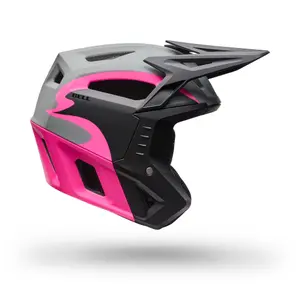
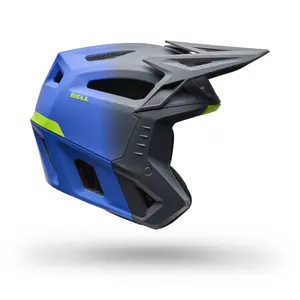
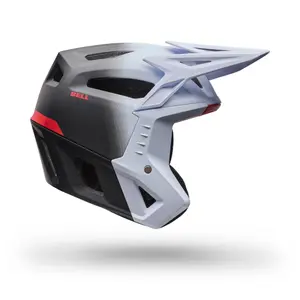
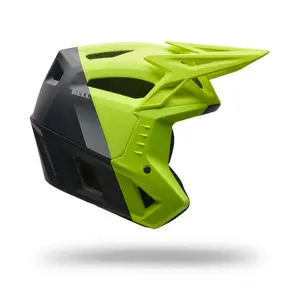
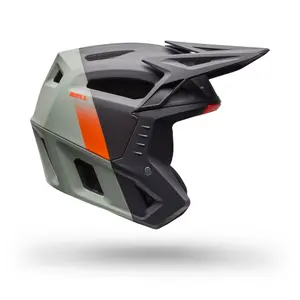
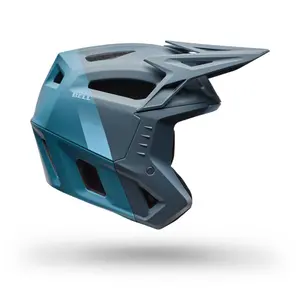
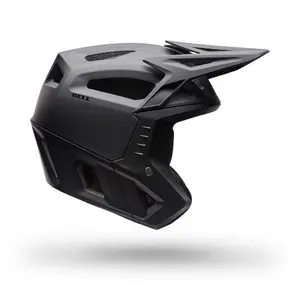
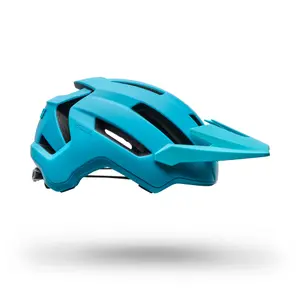
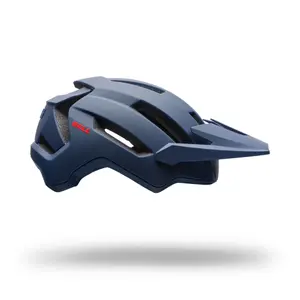
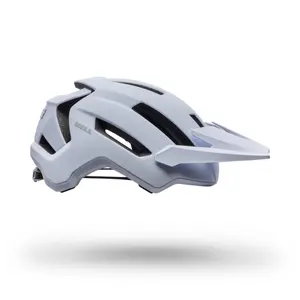
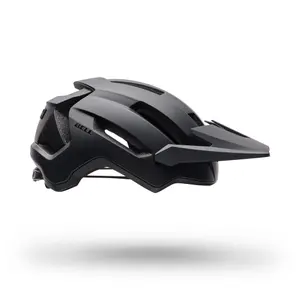
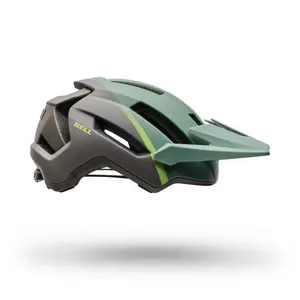
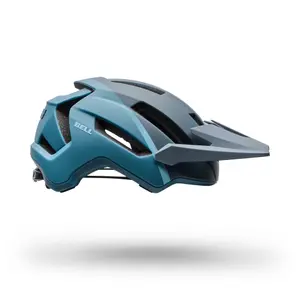
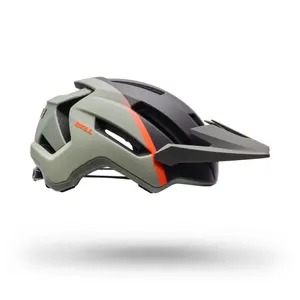
A mountain bike helmet comes lower down the back and sides of the head than a road helmet and has a peak against sun, rain and branches. Depending on how you ride, choose a half-shell for leisure rides and cross-country, a model with a removable chin guard for enduro or a full face helmet for downhill, in adult or kids' sizes. Replacement peaks and pads complete the page.
How does a mountain bike helmet differ from a road bike helmet?
Off-road, crashes happen at varying speeds and on uneven ground: rocks, roots, stumps. A mountain bike helmet therefore protects a larger area, with a shell that wraps around the back of the head and the temples. Its peak, often adjustable, cuts out low sunlight in the woods, deflects rain and low branches, and flips up to hold goggles. Its vents are designed for slow climbs, where little air flows, and its retention system has to stay stable over the bumps.
Half-shell, three-quarter, removable chin guard or full face: which helmet for which discipline?
For leisure rides and cross-country, a light, well-ventilated half-shell is usually enough: it looks like a road helmet, with a short peak and slightly lower coverage at the back. For trail and all-mountain riding, half-shells with extended coverage protect the back of the neck more; some three-quarter helmets, also called jet helmets, extend the shell further towards the cheeks.
Enduro popularised the helmet with a removable chin guard: you take it off for the climbing liaison stages and put it back on before the timed descents. Several enduro race rulebooks require a helmet with a chin guard, fixed or removable. In downhill and at the bike park, the full face helmet with a fixed chin guard is a must: UCI regulations require downhill riders to wear a full-face helmet fitted with a peak, both in racing and in training on the course. For electric mountain bikes, faster uphill and downhill, some models add the Dutch NTA 8776 certification, designed for fast e-bikes.
Standards and technologies: what to check on a mountain bike helmet
The EN 1078 standard is the baseline for any bicycle helmet in Europe, as the CPSC standard is in the United States. Full face helmets intended for downhill often also display the American ASTM certification dedicated to this discipline, which is more demanding and notably tests the chin guard. On a helmet with a removable chin guard, check that the chin guard has actually been impact-tested and is not just protection against grazes.
Against rotational impacts, solutions vary by brand: the MIPS slip layer, a double shell of articulated foam at Giro, KinetiCore deformable zones at Lazer, 360° Turbine elements at Leatt. These systems complement the standard without replacing it, and a helmet that wobbles on your head gets no benefit from them.
Size, peak and kids' mountain bike helmets
Measure the circumference of your head horizontally, about a centimetre above your eyebrows, and keep the largest value from two or three measurements. A half-shell is then adjusted with the rear dial; a full face helmet, on the other hand, is held in place by its cheek pads, which should press firmly without hurting. Try the full face helmet on with your goggles to check that the opening is compatible, and lift the peak to see whether the goggles can be stowed under it.
For a child, choose a helmet that fits today rather than one to grow into. Young riders who go to bike parks now have dedicated full face helmets, some with a removable chin guard and a moderate weight, suited to head circumferences from around 48 cm.
Other helmets and mountain bike gear
For rides on tarmac, road bike helmets are lighter and better ventilated; for the skatepark and the race track, BMX helmets meet other requirements. Goggles or MTB glasses, MTB gloves and body protection are chosen at the same time as the helmet, from MTB gear.
Which mountain bike helmet brand should you choose?
Giro developed its Spherical technology with MIPS: two layers of foam linked by elastomers rotate within each other like a ball-and-socket joint. It is found on the Manifest Spherical, a very well-ventilated half-shell, and on the Insurgent Spherical full face helmet.
Met offers the Crossover MIPS, a versatile helmet for tracks and town; its Bluegrass gravity line brings the Vanguard Core MIPS full face helmet, certified for downhill and for fast e-bikes, as well as the Jetro jet helmet.
Urge, a French brand committed to eco-design, makes the Gringo de la Sierra, an enduro helmet with a removable chin guard, most of whose materials are recycled, along with its Gringo de la Pampa variant.
Leatt, known for its neck braces, fits its helmets with its 360° Turbine technology; the Enduro 2.0 becomes a half-shell once its chin guard is removed, and the Gravity 5.0 full face helmet, certified for downhill, uses a BOA fit system.
iXS offers its Trigger range as a half-shell, the Trigger AM MIPS, and as a full face, the Trigger FF MIPS; both close with a magnetic buckle and have a three-position adjustable peak that leaves room for goggles.
Lazer applies its KinetiCore protection across its whole off-road range, from the Codax to the Finch, a peaked helmet sized for young riders as well as adults with small heads.
Where can you find a mountain bike helmet on sale?
Mountain bike helmets from updated ranges are offered in MTB helmet clearance, and the latest arrivals are in new arrivals. The seasonal sales and Black Friday are the chance to treat yourself to a full face helmet or a second helmet for the bike park.
Frequently asked questions
Is a mountain bike helmet compulsory?
In the UK, the law does not require cyclists to wear a helmet, mountain bikers included, but the Highway Code advises wearing one; rules vary from one country to another. A helmet is compulsory in racing and is often required by the rules of organised rides. Given the nature of the terrain, riding a mountain bike without a helmet exposes you to serious injury.
Full face helmet or removable chin guard: which should you choose?
If you mostly ride at the bike park or do downhill, a full face helmet with a fixed chin guard offers the most complete protection. If your rides alternate long climbs and committing descents, a removable chin guard saves you from climbing with a full face helmet on your head. In that case, check that the chin guard is impact-certified.
Why does a mountain bike helmet have a peak?
In the woods, light switches quickly between shade and sun: the peak limits glare. It also protects against raindrops, flying mud and low branches. On most models, it flips up to stow goggles and comes off in a crash so that it does not catch on the ground.
Which mountain bike helmet for a child?
For leisure rides and tracks, a kids' half-shell with a peak and dial adjustment is enough. If the child jumps or rides at the bike park, a junior full face helmet is essential, preferably a light one so as not to tire the neck. In all cases, the helmet must stay put and the chin strap must be fastened on every ride.
Do you need a special helmet for an electric mountain bike?
An e-MTB whose assistance cuts out at 25 km/h (15.5 mph) can be ridden with a standard mountain bike helmet, certified to EN 1078 in Europe. As these bikes climb and descend faster, a helmet with extended coverage or a light full face helmet, possibly NTA 8776 certified, provides a welcome safety margin.







