
MTB derailleurs, rear and front, 6 to 12-speed
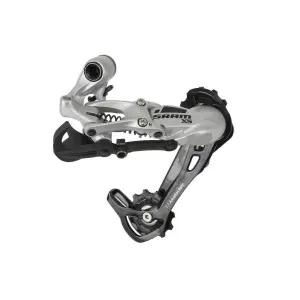
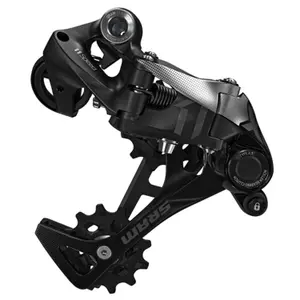
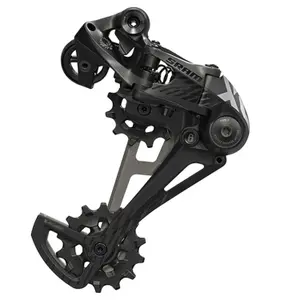
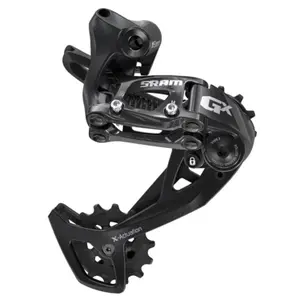
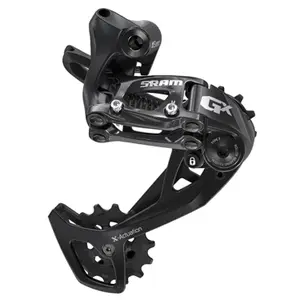
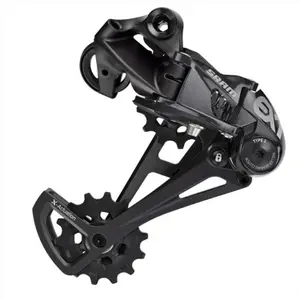
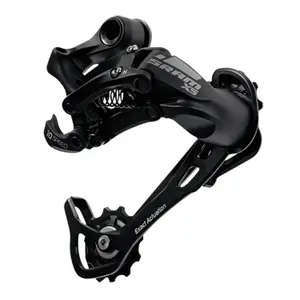
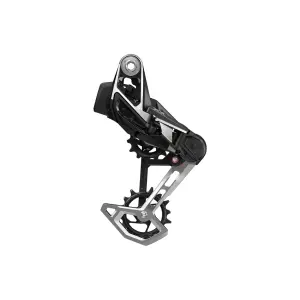
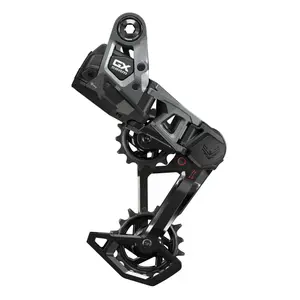
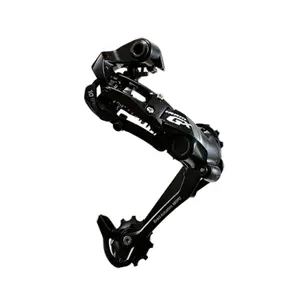
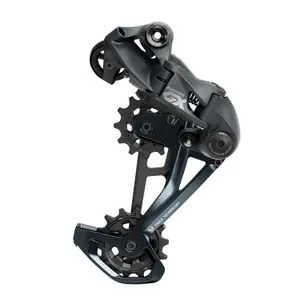
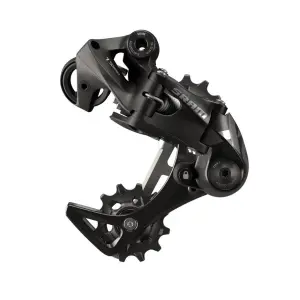
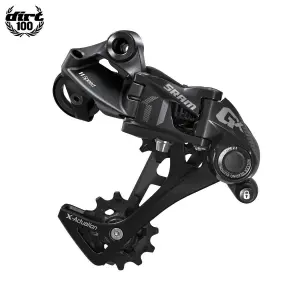
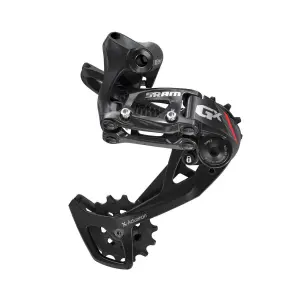
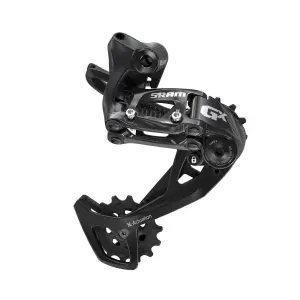
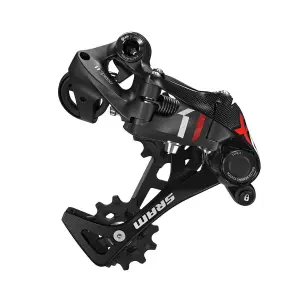
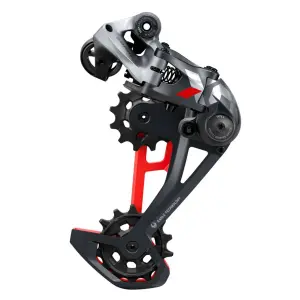
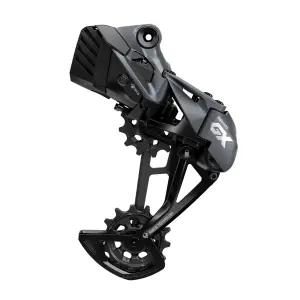
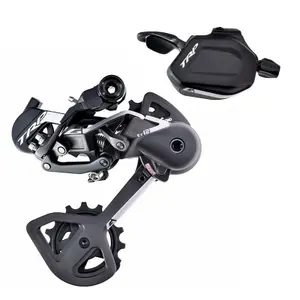
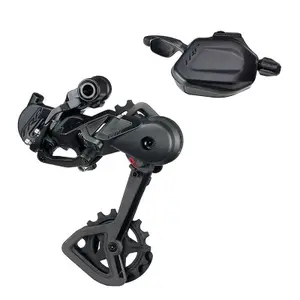
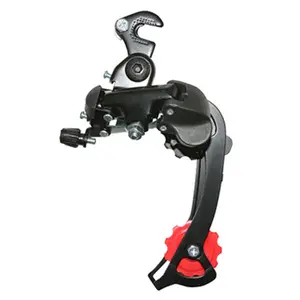
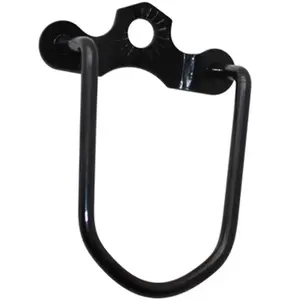
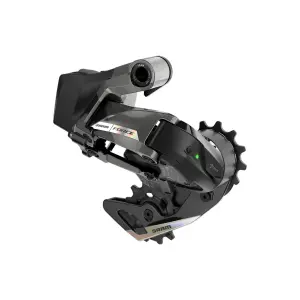
Choose an MTB derailleur to match the drivetrain it controls: the same brand and the same number of speeds as the shifter, a cage sized for the largest sprocket on the cassette and, on a single chainring, a clutch that holds the chain steady on descents. Rear derailleurs from 6 to 12 speeds, mechanical or wireless, front derailleurs for double and triple chainsets and protection are gathered here.
How does an MTB derailleur work?
The rear derailleur moves the chain from sprocket to sprocket on the cassette: a parallelogram, pulled by the cable and returned by a spring, carries it across with each click of the shifter. Its cage, with two jockey wheels, guides the chain and takes up the slack. The front derailleur, for its part, pushes the chain from one chainring to the other on double or triple drivetrains. On a mountain bike, the terrain shakes the chain constantly: mid-range and high-end rear derailleurs therefore incorporate a clutch, called Shadow RD+ at Shimano, which slows the cage and limits chain slap and dropped chains; a lever switches it off to remove the wheel.
MTB rear derailleur: speeds, cage and compatibility
First, the number of speeds: a 12-speed derailleur cannot be adjusted to an 11-speed cassette, and vice versa. Next, the brand: Shimano and Sram do not use the same cable pull ratio, so a derailleur is operated with a shifter from the same family. At Shimano, the Linkglide range even has its own shifters. Finally, capacity: the short, medium or long cage indicates the largest sprocket accepted and the total difference between chainrings and sprockets. A single chainring paired with a 10-51 or 10-52 cassette needs a derailleur rated for that 51 or 52-tooth sprocket; a triple chainset needs a long cage.
On entry-level 6, 7 or 8-speed mountain bikes, the derailleur bolts onto the frame's hanger or, on frames without one, attaches with a claw clamped under the wheel axle: check this before ordering.
MTB front derailleur: clamp, E-Type or direct mount
To replace a front derailleur, first note how it is fitted: a clamp around the seat tube, low or high, in 28.6, 31.8 or 34.9 mm diameter; an E-Type plate held under the bottom bracket; or direct mount, bolted to a tab on the frame. Then the cable routing: top pull, bottom pull, or front pull on Shimano's Side Swing models, which free up room for wide tyres. Also count the chainrings and the rear speeds: a front derailleur for three chainrings has a taller cage, covering the gap between the small and large rings.
Mechanical or wireless electronic?
Most MTB derailleurs remain mechanical, easy to adjust and repair. Electronic derailleurs shift gears with a motor controlled by a wireless shifter, with consistent precision whatever the wear on the cable. Sram's T-Type Eagle AXS derailleurs go further: they mount without a hanger, directly around the wheel axle, on frames with the UDH interface, and only accept parts from that same family. On an e-MTB, go for a drivetrain rated for the torque of the motors.
MTB derailleur adjustment, hanger and protection
A rear derailleur is adjusted in three steps: the high and low limit screws stop the chain falling off either side of the cassette, the B-tension screw sets the gap between the upper jockey wheel and the sprockets, and the barrel adjuster on the cable aligns each shift. Before touching the adjustments, check the derailleur hanger: deliberately fragile, it bends at the first impact to protect the frame, and a bent hanger is enough to throw the whole drivetrain out of adjustment.
A new derailleur only shifts properly with MTB gear cables and housing in good condition and a compatible MTB gear shifter. To change the number of teeth on a single chainring, see MTB chainrings; chains, cassettes and chainsets complete the MTB drivetrain. Gravel derailleurs, meanwhile, are aimed at bikes for tracks and trails.
Which MTB derailleur brands to choose?
Shimano covers every kind of riding, from the Tourney of leisure mountain bikes to the racing XTR, by way of the 12-speed Deore, SLX and XT and the Saint for downhill; its Linkglide derailleurs, such as the Deore XT RD-M8130, focus on durability for e-MTBs.
Sram, an American group based in Chicago, popularised the single chainring in mountain biking with its 12-speed Eagle drivetrains; its T-Type Eagle AXS derailleurs mount without a hanger, and the 7-speed X01 DH and GX DH are dedicated to downhill.
Sunrace, a Taiwanese manufacturer that owns the British brand Sturmey-Archer, offers rear derailleurs from 6 to 10 speeds, such as the 9-speed RDM91 or the medium-cage MS100, and low-clamp front derailleurs for doubles and triples.
TRP, the high-end brand of the brake manufacturer Tektro, developed its TR12 derailleur with the downhill racer Aaron Gwin and his mechanic John Hall: a lever, the Hall Lock, locks the mounting pivot to absorb impacts, and the clutch is adjustable.
Microshift, founded in Taiwan and presented as the first Taiwanese derailleur manufacturer, made its name with Advent, a wide-range 9-speed single-chainring drivetrain whose rear derailleur, with a clutch that can be switched off, features on this page.
MTB derailleurs on sale and new arrivals
When a range is renewed, derailleurs from the previous one join our MTB drivetrain clearance, while the new arrivals page presents the latest listings. The winter sales and other seasonal sales are a chance to replace a tired part before the warmer days.
Frequently asked questions
Can you operate a Sram derailleur with a Shimano shifter?
No, in the vast majority of cases: Shimano and Sram do not pull the same length of cable with each click, so the derailleur would not line up with the sprockets. Replace the shifter at the same time as the derailleur if you change brand, or stay within the same family.
Does an 11-speed derailleur work with a 12-speed cassette?
No. The spacing between sprockets is not the same and the indexed shifter has a precise number of clicks. Moving to 12-speed means changing the derailleur, shifter, cassette and chain together, and sometimes the freehub body.
Is my derailleur hanger bent?
Stand behind the bike: the derailleur and its jockey wheels should be parallel to the sprockets. If they lean towards the wheel, or if the gears go out of adjustment just after a crash, the hanger is bent. A workshop can straighten it with an alignment gauge; after one or two straightenings, it should be replaced.
Which cage length should you choose for a mountain bike?
It depends on the drivetrain: a short cage is enough with a close-ratio cassette, a medium cage is fitted to most single-chainring set-ups, and a long cage is needed with two or three chainrings and a large cassette. The manufacturer states the total capacity and the largest sprocket allowed.
Do you need a specific derailleur for an e-MTB?
It is not compulsory, but the motor's torque wears the drivetrain faster. Ranges designed for e-MTBs, such as Linkglide at Shimano, focus on durability and smooth gear changes.







