
MTB gear cables, outer housing and kits
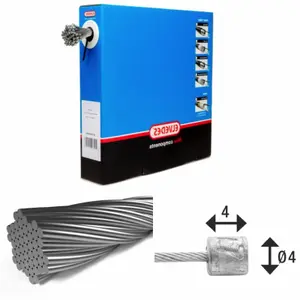
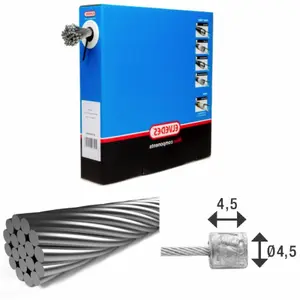

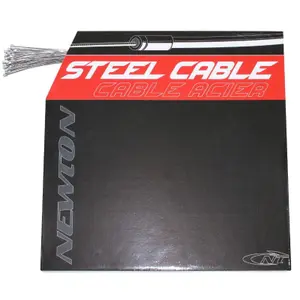

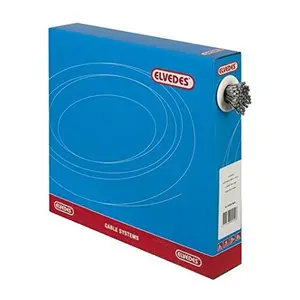




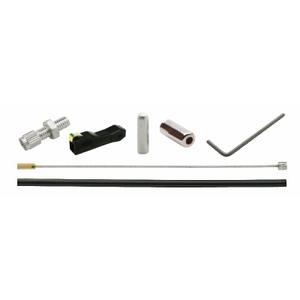
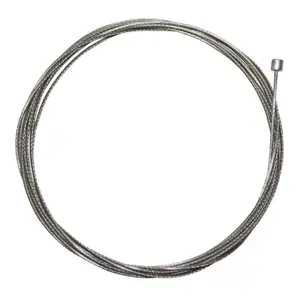
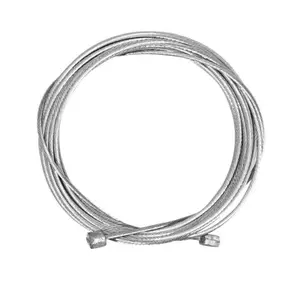

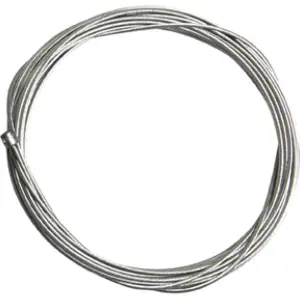
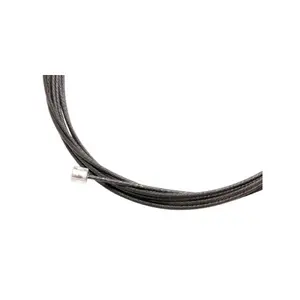
A tired MTB gear cable is enough to make shifting hesitant, even with a new drivetrain. 1.1 mm inner cables in stainless steel, galvanised or with a slick coating, 4 mm gear outer housing and complete kits with ferrules: choose the head that matches your shifter and a sufficient length, then replace inner and outer together to get crisp shifting back.
What do the gear cable and outer housing do?
The cable transmits each click of the shifter to the derailleur, sliding inside an outer housing that guides it along the frame. On a mountain bike, this link has to cope with mud, water and suspension movement: a cable that drags or housing that compresses throws the indexing out, and the derailleur no longer lines up with the sprockets.
Gear housing or brake housing: do not mix them up
Gear outer housing, generally 4 mm, is made of steel strands laid lengthwise: it hardly compresses at all, which is what makes shifting precise. Brake housing, thicker at 5 mm, is made of a steel wire wound in a spiral, which withstands the strong pull of hard braking. Never fit gear housing on a brake: under a sudden load, its lengthwise strands can burst. Conversely, brake housing on a derailleur would make indexing vague.
Stainless, galvanised or coated: which gear cable to choose?
- Galvanised: economical, but more prone to corrosion.
- Stainless steel: the workshop standard, which resists rust and lasts longer.
- Polished or coated stainless steel: Slick, PTFE or polymer-coated versions reduce friction in long runs of housing and internal routing.
Next, check the head: Shimano and Sram share the same cylindrical head, while Campagnolo needs a specific one. A 2.3 m cable is enough for the rear derailleur of a standard mountain bike; a tandem or a cargo bike needs a cable of 3 m or more.
Replacing your MTB gear cable and housing, and related pages
Change the inner cable and the housing together when gears shift up poorly or when the cable frays at the head. Cut the housing with a dedicated cable cutter, reopen the inner channel, then fit a ferrule at each end. Keep smooth loops: too short, the housing pulls when you turn the handlebar; too long, it rubs. A new cable stretches a little at first: go back to the barrel adjuster after a few rides.
The cable is chosen together with the MTB gear shifter and the MTB derailleur it connects, and the MTB drivetrain section gathers the rest. For braking, brake cables and housing have their own page.
Which gear cable brands to choose?
Shimano offers its OT-SP41 kits, with polymer-coated gear housing and cables, and its Optislick cables, sold individually or in workshop boxes.
Jagwire, a specialist in bike controls, from brake and gear cables to hydraulic hoses, offers its 1.1 mm cables in Elite and Pro levels, with Shimano and Sram or Campagnolo heads, and in Workshop boxes for bike shops.
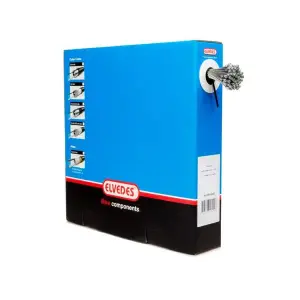
Elvedes, a specialist in cables and braking, makes stainless steel gear cables in various constructions, 7x7 wires, 1x19 wires or 49 strands in a Slick version, as well as kits for Nexus hubs.
Velox, a French spare parts manufacturer based in La Guerche-de-Bretagne, known for its Guidoline bar tape, sells its stainless or galvanised gear cables in boxes of 25, in 2, 2.5 or 3 m lengths.
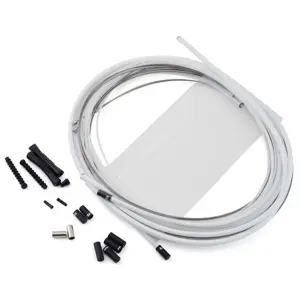
Sram combines a polished cable and 4 mm gear housing in its Slickwire Pro kit.
MTB gear cables on sale and new arrivals
To stock up on consumables, keep an eye on our MTB drivetrain clearance and the winter sales; new arrivals present the latest kits.
Frequently asked questions
Is a new cable in worn housing enough?
Rarely: dirty or crushed housing wears the new cable and slows its return. On a mountain bike ridden in mud, inner and outer wear at the same rate.
What cable diameter for an MTB derailleur?
Current gear cables measure 1.1 or 1.2 mm depending on the manufacturer, compared with 1.5 mm or more for an MTB brake cable. The housing and the frame's cable stops are designed for these diameters.
My frame has internal routing: what do I need?
Thread a guide wire through the old housing before removing it, so you can feed the new one through without hunting for the exit. A coated cable limits friction in the bends.
How do you know if your gear cable is worn?
Slow shifts towards the smaller sprockets, frayed strands under the shifter or traces of rust should alert you. A cable almost always breaks at the head.
Should you lubricate a gear cable?
A coated cable or housing with an inner liner should not be greased. For a bare stainless cable, a drop of light lubricant at the entry to the housing is enough; avoid thick grease, which traps dust.







