
MTB handlebars: carbon or alloy, 31.8 and 35 mm
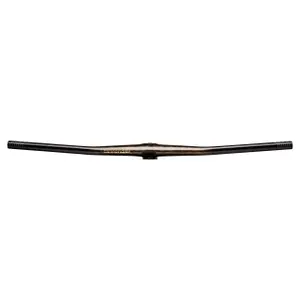
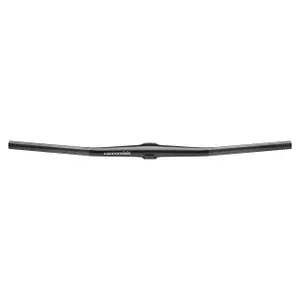
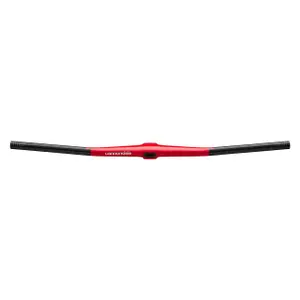


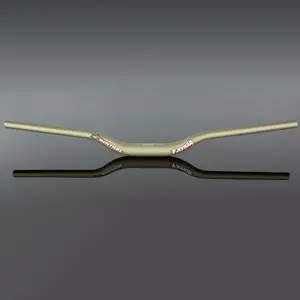

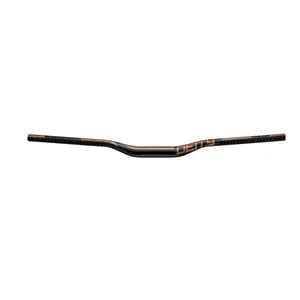
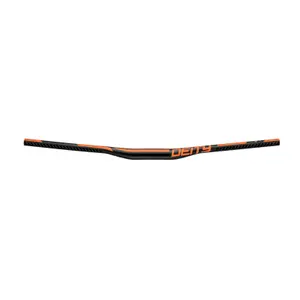
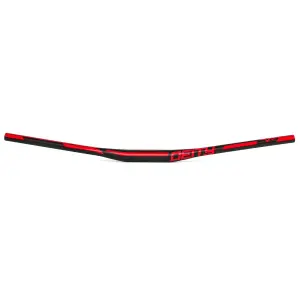
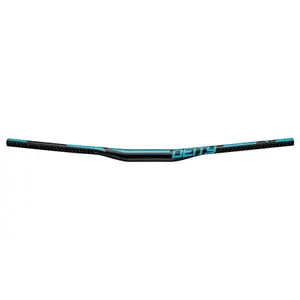
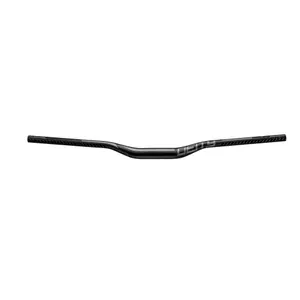


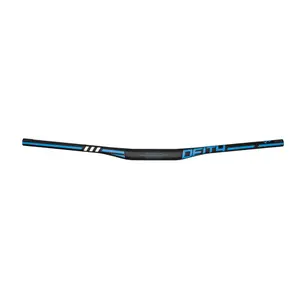
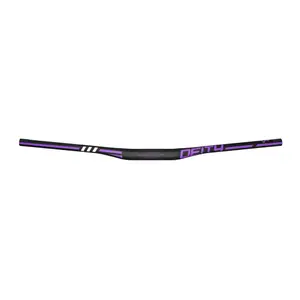
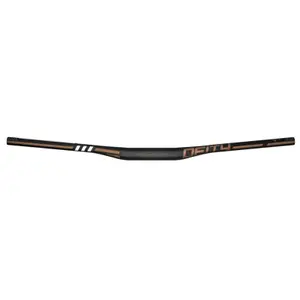
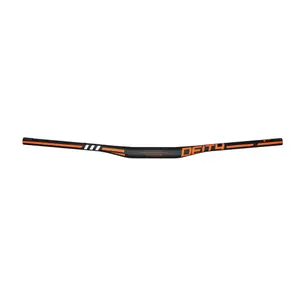
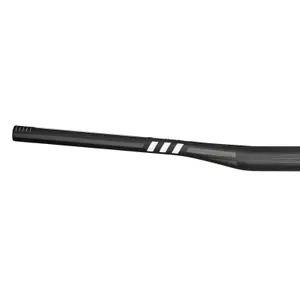
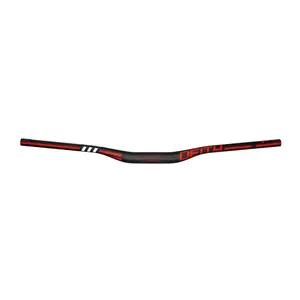
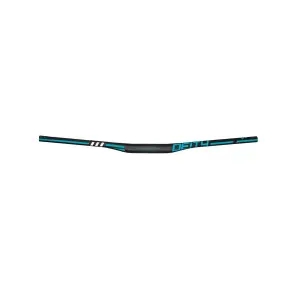
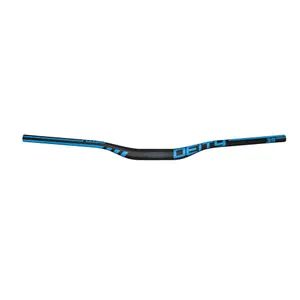
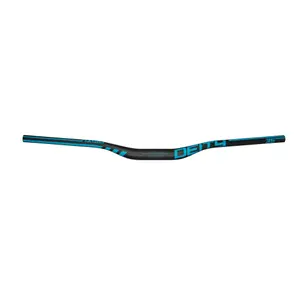
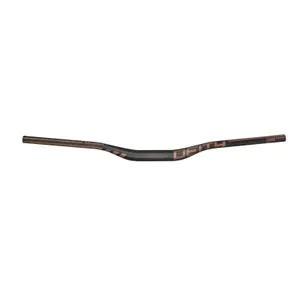
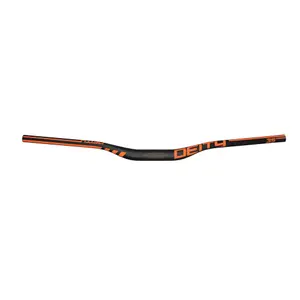
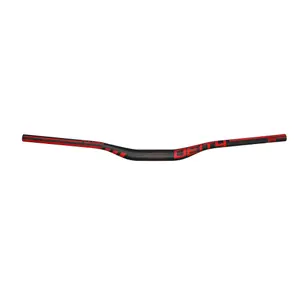
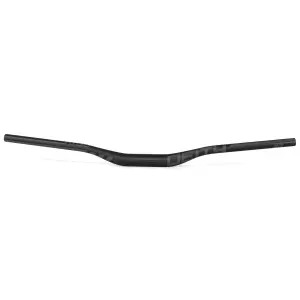
MTB handlebars set how far apart your hands are and how high the front end sits, two measurements that change the way the bike handles, downhill as well as uphill. Start from the clamp diameter of your stem, 31.8 or 35 mm, then choose the width, rise and material to suit your riding, from cross-country to downhill. Flat and riser bars, in aluminium or carbon, are all on this page.
Why do handlebars matter so much on a mountain bike?
On a mountain bike, the handlebar is both a steering lever and a point of support: it takes the impacts passed up through the fork and the forces that place the bike in a corner. Its width sets how open your shoulders are, its height the angle of your upper body, its bend the angle of your wrists. Well chosen, it makes your handling precise in technical sections and delays forearm fatigue.
How wide should MTB handlebars be?
- Cross-country and marathon: from around 720 to 760 mm, flat or with little rise, for a light cockpit and a stretched-out position that favours pedalling.
- Trail and enduro: from 760 to 800 mm, with a rise of 20 to 40 mm, to stay in control on steep slopes.
- Downhill and freeride: 800 mm and more, often in a 35 mm diameter, to absorb landings and hard braking.
The wider the bar, the more leverage and stability it gives you, but the more it catches trees on narrow trails. Start from the width of your shoulders, then adjust to how it feels. Most MTB handlebars can be cut down: markings at the ends guide the cut, to be split equally between the two sides, in steps of 5 to 10 mm, without going below the minimum width set by the manufacturer.
Rise, backsweep and upsweep: handlebar geometry
Rise is the height by which the ends of the bar climb above the clamping area: zero on a flat bar, it exceeds 50 mm on the highest-rise models on this page. A high rise raises your upper body and puts more weight on the rear, which is reassuring on steep descents; a low rise loads the front wheel, useful for climbing and holding your line in cross-country. Backsweep, the backward angle, is generally between 7 and 9 degrees, and upsweep, the upward angle, between 4 and 6 degrees. These are what position your wrists: with the same rise, two brands can feel very different.
Diameter and material: 31.8 or 35 mm, aluminium or carbon?
The clamp diameter must match that of the stem exactly. The 35 mm diameter, which came from enduro and downhill, is stiffer for the same weight; the 31.8 mm, still very widespread, keeps a slight flex that is appreciated on rough terrain. Aluminium, often 7000 series with thicker walls in the centre than at the ends, remains tough and affordable. Carbon makes the cockpit lighter and filters vibration better, but it requires tightening with a torque wrench, a suitable assembly paste and a careful inspection after every crash.
Many manufacturers state the bar's intended use according to the ASTM F2043 classification: category 3 covers cross-country and trail riding, category 4 enduro, and category 5 downhill, freeride and bike park riding. Check this rating for aggressive riding or for an electric mountain bike, which is heavier. Before buying, also make sure that the straight section of the bar leaves enough room for the brake levers, the gear and dropper post remotes, and the grips.
Stem, grips and headset: the rest of the cockpit
Choose your handlebar together with its stem: MTB stems specify their clamp diameter and length, which together set the position of your hands. For your grip on the bike, grips and bar ends complete the handlebar, and the headset lets the whole front end turn. Flared bars designed for tracks are with the gravel handlebars, and road and city models among all our bike handlebars.
Which MTB handlebar brands to choose?
Protaper, a brand born on motocross podiums, brought to mountain biking 810 mm-wide bars whose rise is expressed in inches: this page offers them in aluminium, with a half-inch or one-inch rise, and in carbon, in 35 mm.
Chromag, a Canadian brand from British Columbia, puts its Fubars handlebars through an in-house heat treatment called HTX, designed to be identical from one bar to the next; the OSX and the higher-rise FU50 feature on this page.
Deity, an American brand founded by a couple of riders, Eric and Sadie Davies, created the Brendog bar in 7075 aluminium with Brendan Fairclough; the range also includes the Ridgeline in 35 mm and the Skywire and Speedway carbon models.
Spank injects a controlled-density foam called Vibrocore into some of its bars to damp the vibration transmitted to your hands: this is the case with the Spike 800 Vibrocore, shown here alongside the different rises of the Spoon.
Sixpack Racing, a German manufacturer based in Vogt, designs its Millenium805 for downhill and freeride: made from 7050 aluminium and rated ASTM category 5, it measures 805 mm and can be cut down to 765 mm; it also comes in carbon.
Reverse Components, a Black Forest brand run by riders, designed a signature bar with freerider Nico Vink, available in 31.8 and 35 mm, and offers models such as the Lead and the Base.
MTB handlebars on sale and new arrivals
A handlebar replaced by a new colour or a new width moves to MTB component clearance; recently arrived references can be found in new arrivals. Make the most of Black Friday or the winter sales to try a different rise.
Frequently asked questions
Can you cut down a carbon MTB handlebar?
Yes, if the manufacturer allows it and within the limits of the markings. Wrap the area in adhesive tape, use a cutting guide and a fine blade suited to carbon, then lightly sand the edge. Remove the same length from each side and never go below the stated minimum width.
Do you need a 35 mm handlebar for enduro?
It is not compulsory. The 35 mm diameter brings stiffness, appreciated by a heavy or very aggressive rider, while a 31.8 mm bar filters repeated impacts a little better. The diameter you choose simply has to match that of the stem, which you change at the same time if necessary.
Why do my hands hurt on descents?
A bar that is too stiff, badly rotated or the wrong width can be the cause, as can brake levers set too high or too low. Rotate the bar by a few degrees, review the angle of your levers, then consider a damped handlebar or thicker grips.
To raise the front end, should you change the handlebar or the stem?
Start with the spacers: moving a spacer from above to below the stem raises the cockpit without buying anything, within the limit of the steerer length. A higher-rise handlebar then lifts your hands without affecting the steering; a stem with a positive angle raises them too, but changes the reach to the bar.
When should you replace an MTB handlebar?
After any crash that has bent, nicked or cracked it, even slightly: a damaged handlebar can fail without warning. Also check the clamping area at every service: marks and corrosion appear there first.







