
MTB grips: lock-on grips and bar ends

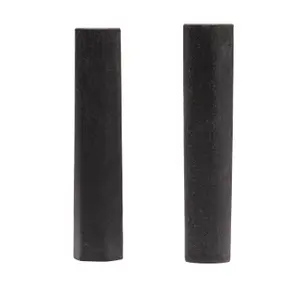


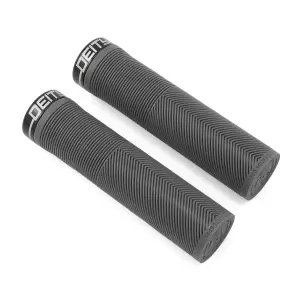
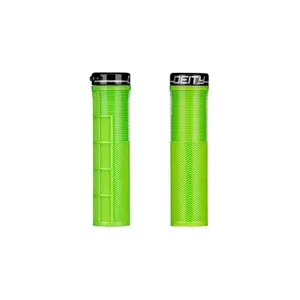
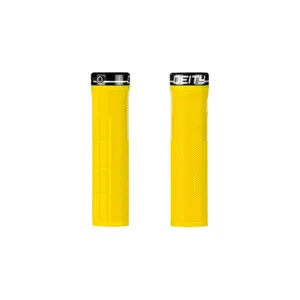
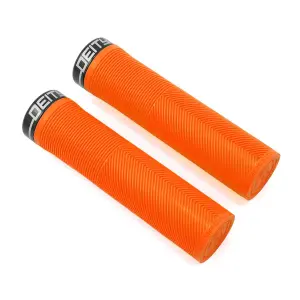
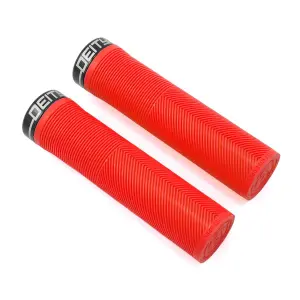
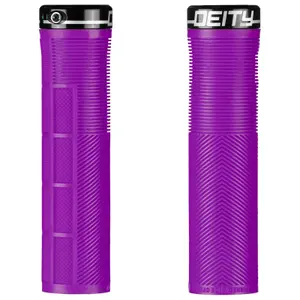
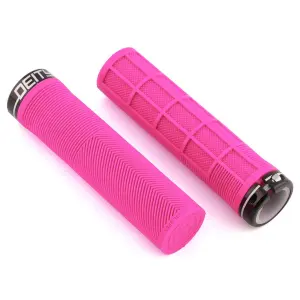
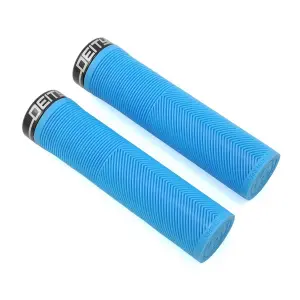


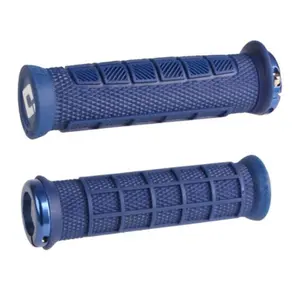


MTB grips are your only contact with the handlebar: they have to hold under your gloves, absorb vibration and stay in place over impacts. First choose the fixing method, lock-on with a clamp or push-on, then the thickness according to the size of your hands and the material according to your riding. Grips, bar ends and bar end plugs are all on this page.
What do grips do on a mountain bike?
On a mountain bike, your hands take everything the fork has not absorbed, while braking, changing gear and steering at the same time. Grips are the interface for all this work: a grip that is too thin tires your forearms, a grip that is too slippery forces you to squeeze harder, which brings on cramp and pins and needles sooner. They also have to stay effective with or without gloves, in the rain or in the mud. They are one of the simplest parts to change, and one of those that most alters how the bike feels to ride.
Lock-on or push-on: which fixing method?
A lock-on grip consists of a rigid core covered with rubber, locked onto the bar by one or two bolted clamps. It does not twist, even when wet, and comes off in a few seconds: it is the most widespread solution in mountain biking. With a single clamp, on the inner side, the end stays soft under your palm; two clamps lock the grip on both sides.
A push-on grip, with no core or clamp, is lighter and cushions along its whole length, since the rubber is in direct contact with the bar. Fitting it takes more care, and a worn or badly fitted grip will eventually twist. It remains popular in cross-country and with riders looking for a very soft feel.
Thickness, pattern and material: finding the right grip
Choose the thickness according to your hands: a thin grip gives more feedback and suits small hands, a thick grip filters out more impacts and stops you squeezing too hard if your hands are large. Many brands offer the same model in several thicknesses. The surface pattern, waffle, ribbed or smooth, affects grip with or without gloves.
- Rubber: the classic material, in a single compound or a dual compound, firmer at the core and softer on the surface.
- Silicone: light, very cushioning and tacky, appreciated on long, rough descents.
- Foam and cork: lightness and comfort for cross-country and touring.
- Ergonomic: a wing supports your palm and spreads the pressure on long rides.
Length, often around 130 mm, also matters: on a handlebar crowded with controls, a shorter grip leaves room for the levers and the dropper post remote.
Bar ends and end plugs: extending or protecting the handlebar
Bar ends, the horns fixed to the ends of the handlebar, offer an extra hand position for climbing while pulling on the bike or for varying your hand position on a long ride. They are fitted with an open-ended or trimmed grip, and only if the handlebar manufacturer allows it: some handlebars, carbon or downhill models, prohibit them. End plugs, for their part, close off the ends of the handlebar. Always keep them in place: an open tube can cause injury in a crash.
Handlebar, controls and other contact points
Choose your grips together with the handlebar that carries them: width and diameter can be compared among our MTB handlebars. The saddle lever that sits next to them comes with dropper posts. Your feet are the rider's other point of support: MTB pedals follow the same logic of grip. The whole cockpit is in MTB components.
Which MTB grip brands to choose?
ESI Grips makes light, cushioning silicone grips in the United States, in three thicknesses, from the Racer's Edge, the thinnest, to the Extra Chunky; the Fit models combine two of these profiles on the same grip.
Lizard Skins, born in mountain biking before expanding into other sports where grip matters, offers its grips in single or dual compound rubber, and in lock-on versions with one or two clamps: Charger Evo, Northshore, Machine or Moab.
Odi, based in Riverside, California, claims to have invented the Lock-On system and produces its grips in its own factory; the Elite Flow, with offset padding and a half-waffle pattern, appears here in its single-clamp V2.1 version, as do the Elite Pro and Elite Motion.
MTB grips on sale and new arrivals
Replaced colours and end-of-line models join MTB component clearance; grips that have just arrived are in new arrivals. The winter sales or Black Friday are a chance to try a different thickness.
Frequently asked questions
Why do my grips twist on the handlebar?
On a push-on model, the rubber has stretched or residue from a product has lubricated the bar: clean it and fit a new grip. On a lock-on grip, the clamp has loosened or the core is worn; retighten the bolt to the specified torque, without overdoing it, and replace the grip if the problem comes back.
Do ergonomic grips prevent numb hands?
They often help, by spreading the pressure over a larger area of your palm. Also check the angle of your brake levers, the rotation of the handlebar and the tilt of the saddle: too much weight on your hands is enough to cause numbness.
Do you need specific grips for an electric mountain bike?
No, the same grips work. Just check the space available on the handlebar: the assistance control and the display often take up a few centimetres on the left, and a shorter grip or a repositioned control may be needed.
Can you fit bar ends to a carbon handlebar?
Only if the handlebar manufacturer allows it, and by respecting the specified tightening torque. Clamping a bar end concentrates the force on the end of the tube: without the manufacturer's approval, it can weaken the carbon.
When should you change your grips?
As soon as the surface becomes smooth or tears, or the rubber hardens: grip drops and you squeeze harder without realising it. A grip that twists or whose clamp has developed play should also be replaced.







