
Gravel saddle bag and sac for bikepacking


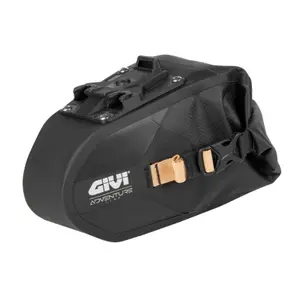


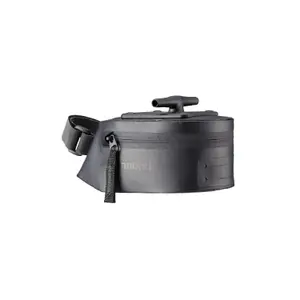
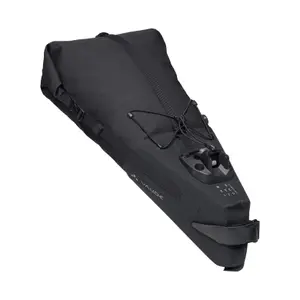
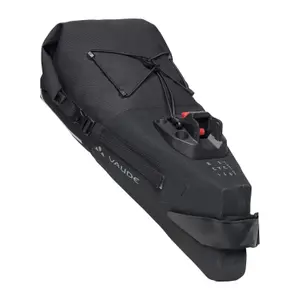
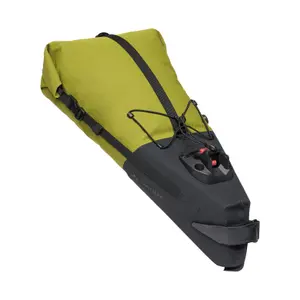
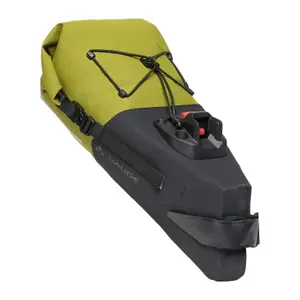


A gravel saddle bag carries the repair kit for a day trip or, in a larger size, the clothes and bedding for a multi-day trip, without a bike rack. On the trails, it needs to stay stable despite the bumps, absorb the spray from the rear wheel, and leave enough space above the tyre.
Small saddle bag or bikepacking bag: what does your gravel ride require?
It all depends on the duration and the autonomy you need. For a few hours loop, a small bag attached under the saddle keeps the repair kit on hand: tubeless tire patches and glue, spare inner tube, tire levers, multi-tool, and inflator. It goes unnoticed and doesn’t affect the bike's handling.
For a long day or a self-sufficient outing, a saddle bag of 6 to 10 litres will add a jacket, a warm layer, and provisions. Beyond that, from 10 to 17 litres, it becomes the main piece of bikepacking gear: it extends the saddle backwards, holds a sleeping bag and clothes, and eliminates the need to mount a rack on a frame without eyelets.
The bumps of the trails: keep the bag stable
On a rough track, a large saddle bag can start to sway and eventually pull on the rails like on the post. Fill it completely, place dense items right against the saddle and lighter ones at the end, then tighten the compression straps to eliminate any floating volume. A purge valve, present on some models, releases air from the inner bag and makes it more compact.
For heavy loads, a rigid support fixed to the rails, often called a stabilizer, holds the bag from the sides and limits swaying. Manufacturers specify a maximum load, usually around 5 kg for a large bag: beyond that, it’s better to transfer the weight to a frame bag, which is lower and more centred.
Mud, splashes, and dust: protect the load
A gravel bike rarely rolls with fenders: the rear wheel kicks up water, mud, and gravel directly under the bag. A reinforced bottom, made of Hypalon or thick fabric, resists abrasion, and a roll-top closure keeps your gear dry in the rain and safe from sand on dry trails. Two designs coexist: a fully welded and waterproof shell, or a sturdy shell lined with a removable waterproof inner bag. The second adds a bit of weight but allows you to take out your gear in one go at camp.
Clearance, dropper post, and lighting: points to check
- Space above the tire: on a small frame equipped with wide tires, a loaded large bag can touch the wheel during compressions. Manufacturers indicate a minimum required height of visible seat post or clearance.
- The dropper post: a large bag that rests on the post can prevent it from descending. Prefer a compact model attached only to the rails, or limit the travel used.
- The rear light: the bag often obscures the one on the seat post. Choose a model with a loop or slot for the light, or move the light to the chainstay.
- The saddle rails: the straps fit all saddles; for a tight fit on the rails, ensure it accepts carbon rails, which are often oval.
Enhancing your gravel bikepacking gear
The saddle bag is best paired with a frame bag, which carries heavy items in the centre of the bike, and a handlebar bag for the tent or light clothing. If the load exceeds what these three bags can carry, a gravel rack and its side bags offer more volume. For the road and everyday cycling, check out the full range of bicycle saddle bags.
Four brands of gravel saddle bags
Topeak builds its BackLoader X around a sleeve fixed to the saddle, into which slides a waterproof inner bag with a purge valve; available in 10 and 15 litres, it has a strap for a rear light and accepts a stabilizer, the Wishbone, sold separately.
Zefal makes the Z Adventure R17 a large bikepacking bag with adjustable volume from 8 to 17 litres, made from thermally welded TPU and closed by rolling, with a reinforced base, a loop for lighting, and an elastic cord for handy items.
Acepac, based in Brno, Czech Republic, produces the Saddle Bag MKIII from 8 to 16 litres: a coated Nylon fabric that resists splashes, equipped with three compression straps and a removable waterproof inner bag with sealed seams.
Altura seals its Vortex Waterproof by rolling and claims it is waterproof according to IPX6 rating; secured with hook-and-loop straps, it includes anchor points, reflective details, and an opening for attaching a light, and comes in a Compact version.
Gravel saddle bags on sale
Previous series of bikepacking bags can be found in the road clearance, while the latest arrivals are listed under new products. Both Black Friday and winter sales help prepare for spring trips.
Frequently asked questions
What volume of saddle bag for a first gravel bikepacking trip?
A bag of 10 to 14 litres is suitable for most cyclists for a weekend: it fits a lightweight sleeping bag or two changes of clothes. On a small frame, start smaller, as the clearance above the tire limits usable length.
Why does my saddle bag rub against the tire?
The bag is overloaded, too long, or too low for the available post height. Compress it more, raise its tip by tightening the seat post straps, and move heavy items into the frame bag. If rubbing persists, switch to a shorter format.
Is a stabilizer useful for a saddle bag?
On a small bag that is well packed, it’s unnecessary. For a large volume near the manufacturer's limit on rough tracks, it significantly reduces swaying and relieves the rails. Check its compatibility with the width of the bag and the type of rails on your saddle.
Is a saddle bag really waterproof?
A welded shell closed by rolling with at least three turns offers good protection against rain. Bags with just a coated shell rely on their inner bag to stay dry. In all cases, water will eventually get in if the closure is improperly rolled.
Can you keep a saddle bag on a gravel bike with a dropper post?
Yes, with a compact model secured only to the rails and short enough not to touch the tire when the saddle lowers. A large bikepacking bag resting on the post blocks the travel: reserve it for fixed posts or accept reduced travel.







