
Gravel bike rack bag for travel
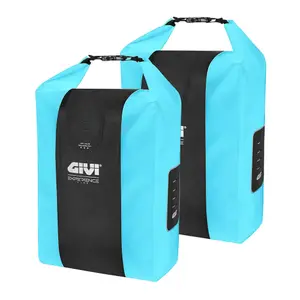
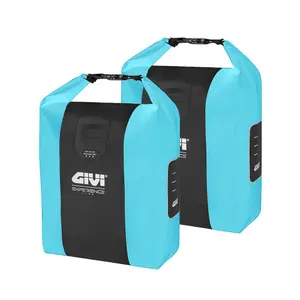
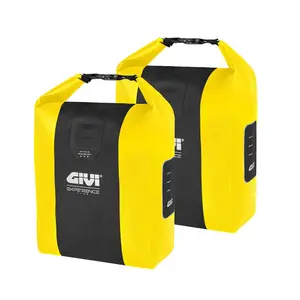


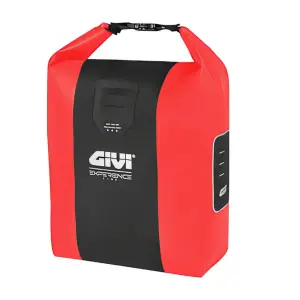

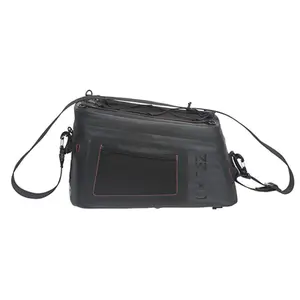


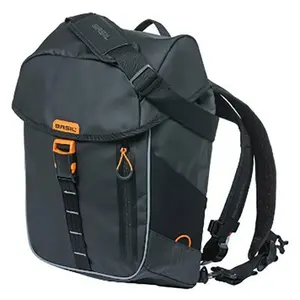


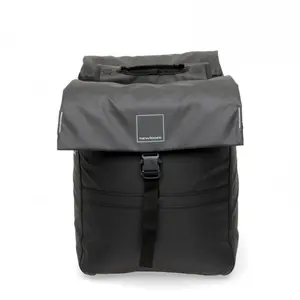
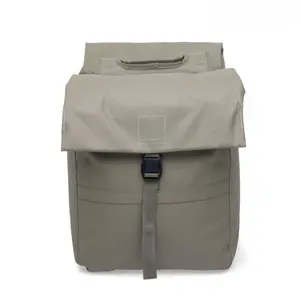
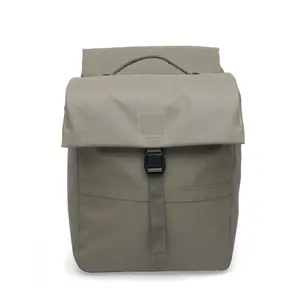
A gravel pannier must stay in place on bumpy trails, withstand dust and showers, and carry trip gear without upsetting the bike's balance. Get a pair of side bags for multi-day trips, a top bag for day outings, and make sure their attachment fits the tube of your rack.
Panniers or bikepacking: what to choose for gravel?
Both approaches allow for multi-day trips, but they carry the load in different ways. Bikepacking distributes the weight in bags attached directly to the bike, under the saddle, in the triangle of the frame, and on the handlebars: the gravel remains narrow, which matters on a trail or when it needs to be pushed. Panniers offer more volume, open like a suitcase, and detach in one move when setting up a tent or checking into a lodge.
They are suitable for travel on paths and minor roads, for long-distance trips, and for those carrying bulky gear, a stove, warm clothes, or food for several days. Many travellers combine both setups: a pair of rear panniers for the bulk of the load, and a handlebar bag for easy access to essentials.
A mount that withstands rough terrain
On gravel, ruts, and roots, a badly secured bag can end up bouncing off its mount or hitting the wheel. The upper hooks can be adjusted to the diameter of the rack tube, usually ranging from 8 to 16 mm, sometimes more: check the stated range if your rack has thick tubes. The stop hook or the lower strap locks the bag against the frame and prevents it from lifting in the bumps.
Plate systems, like MIK, Snap-it for Racktime racks, or UniKlip from KLICKfix, snap in with a click and release via a handle or a button. They eliminate any need for adjustment, provided the bag and the rack are compatible with the same standard. Before departure, load the bike, lift it by a few centimetres, and let the rear wheel drop: nothing should move or knock.
Dust, mud, and downpours: what waterproofing?
The rear wheel constantly splashes water, sand, and mud onto the bags. A coated fabric with welded seams, closed by a flap that is rolled several times before fastening, protects the contents from rain as well as fine dust from dry trails. Protection ratings provide a guideline: IPX4 means the bag resists water splashes from all directions, and IPX5 means it can withstand water jets.
Zip models are more practical for everyday use, but a rain cover becomes necessary for a trip. Rinse the zippers and hooks after a muddy outing: sand wears out the sliders and jams the locking mechanisms. Reflective strips remain useful on road sections connecting the trails.
Volume and load distribution on a gravel bike
For a day trip, a top rack bag of 10 to 20 litres is enough to carry a windbreaker, picnic, and tools; some unfold side pockets to expand when needed. For several days at a lodge, a pair of medium bags will do; for self-sufficient trips with a tent and sleeping bag, count on a pair of large volume bags complemented by a handlebar bag.
- Heavy items at the bottom and towards the front, as close to the wheel axle as possible, to keep the bike stable downhill.
- The same weight on each side, otherwise the gravel pulls to one side on bumpy sections.
- The maximum load of the rack, indicated on the support or in its manual, should never be exceeded.
- The heel clearance: the bases of a gravel bike are often shorter than those of a touring bike, so move the bags back on the rack.
A rear that is too loaded lightens the front wheel on steep climbs and makes handling less precise: shift some of the weight towards the frame or handlebars.
Complete your gravel luggage
If your frame has mounting eyelets, the gravel rack is the first piece to install. To keep a narrow bike, gravel saddle bags and frame bags hold the essentials without a support, while handlebar bags keep papers and snacks within reach. Water can be carried in a hydration bag, and all the gravel luggage can be viewed on a single page.
What brands of rack bags are there for gravel?
Kheax, a French bike accessory brand, has designed the Izoard Edge with a 31-litre capacity in 600D polyester coated with TPU, protected to an IPX5 rating; its quick hooks fit tubes from 8 to 22 mm, a lower stop hook secures it, and a coded lock is integrated.
Zefal created the Z Traveler 80 as a top rack bag that unfolds two side pockets protected by EVA shells, reaching 32 litres; it straps on without tools, and its rain cover is included.
VAUDE, a German family company, produces bags in its factory in Tettnang, near Lake Constance, including the Proof range. Its Silkroad Plus top bag, with a capacity of 9 litres stretching to 16, is compatible with the rack: MIK, Snap-it, UniKlip, or i-Rack.
Thule offers the Shield in pairs of side bags rated IPX4, which attach without an adapter to tubes of 8 to 16 mm and feature loops for mounting lights and reflective strips.
Topeak seals its Pannier DryBag with a roll-top closure on a fabric with ultrasonic welded seams; its Handle Loc system adjusts to tubes of 8 to 16 mm and releases the bag when the handle is pulled.
Gravel rack bags on sale
To equip your bike at a lower cost, check out the road clearance sale, and find the newly listed bags in the new arrivals. The summer sales come at the right time to prepare for a trip, while Black Friday is good for gearing up before the next season.
Frequently asked questions
Can you install bags on a gravel bike without eyelets?
Yes, with a rack attached to the seat post or using straps, but its load capacity is lower. Check that the manufacturer allows installation on your seat post, especially if it is carbon. Beyond a few kilos, bikepacking bags are more suitable.
What volume to take for a multi-day gravel trip?
When staying in a hotel or lodge, a pair of medium bags or a large top bag is sufficient. For complete self-sufficiency, a tent, sleeping bag, and cooking gear require a pair of large volume bags, a handlebar bag, and sometimes a frame bag. Do a test load before you go.
Are waterproof bags necessary for gravel?
For a trip, it is highly recommended: rain, as well as water and mud splashed by the wheel, can eventually penetrate a fabric that is merely water repellent. For a day trip, a zipped bag accompanied by a rain cover may suffice.
Front or rear panniers on a gravel bike?
The rear handles the main load without weighing down the steering: that's where you start. Front bags require a compatible rack with the fork; they balance a heavily loaded bike but make the handlebars heavier to handle on the trails.
Do side bags get in the way on trails?
They widen the bike and sometimes catch on vegetation on narrow trails, and their weight is felt in bumpy sections. On wide tracks and minor roads, they don't pose a problem. For very technical routes, prefer a bikepacking setup, which is more compact.







