
Bike cassettes for road and MTB, 7 to 12-speed


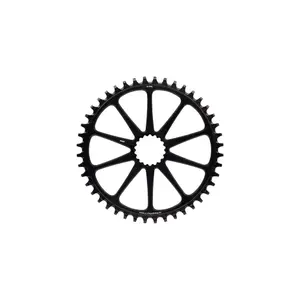
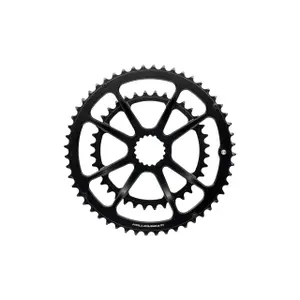
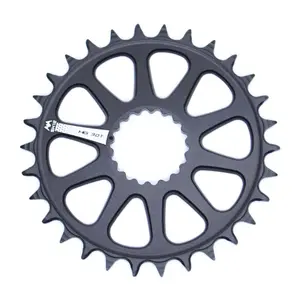
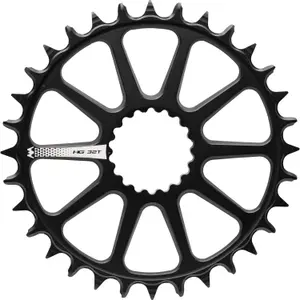


A bike cassette is chosen on three criteria: the number of speeds of your drivetrain, the freehub body of your rear wheel and the gear range, from the smallest to the largest sprocket. This page brings together road, gravel and MTB cassettes from 7 to 12-speed, as well as the freehub bodies that take them, to replace a worn part or adapt your gearing to the terrain.
What does a bike cassette do?
The cassette is the block of sprockets fitted to the rear wheel of a derailleur bike: the chain moves from one sprocket to another to give you the gear that suits the gradient and your pace. Its sprockets slide onto the splines of the freehub body, the part of the hub that houses the freewheel mechanism, and a lockring holds them tight. It is found on road bikes as well as mountain bikes, gravel bikes and hybrids. Simpler or older bikes sometimes use a screw-on freewheel, in which the sprockets and the mechanism form a single part: check what your wheel takes before you order.
Freehub body: the interface to check first
A cassette only fits the freehub body designed for it. Note the brand and model of the hub, or remove the current cassette to look at the splines.
- Shimano HG: the most widespread standard, from 8 to 11-speed. The 11-speed road body is longer, and an 8, 9 or 10-speed cassette fits on it with a 1.85 mm spacer. Shimano 12-speed road cassettes fit this same body, or the dedicated HG L2 body.
- Shimano Micro Spline: the body for the brand's 12-speed MTB cassettes starting at 10 teeth, a sprocket too small for the HG profile.
- SRAM XD and XDR: two bodies designed to take a 10-tooth sprocket. XD is used on MTB, XDR on the road; 1.85 mm longer, the latter accepts an XD cassette with a spacer of that thickness.
- Campagnolo: a spline profile specific to the brand. Its shorter N3W body takes 13-speed cassettes starting at 9 or 10 teeth, and a ring adapts it to cassettes starting at 11 teeth.
On many hubs, a worn freehub body, or one marked by the sprockets, can be replaced without changing the wheel: that is the role of the freehub bodies and freehub body units offered on this page.
How many speeds and which bike cassette sizes?
The number of speeds must match that of your shifter and your chain: an 11-speed cassette will not work with a 10-speed shifter. The gear range is written as the number of teeth on the smallest and largest sprockets, for example 11-30.
- Road: close steps between sprockets to keep a steady cadence on the flat, from 11-28 for rolling routes to 11-34 for mountain sportives.
- Gravel and MTB: with a single chainring, the cassette alone has to cover the whole gear range, hence large sprockets that often exceed 45 teeth.
- City and hybrid bikes: 7 to 9-speed cassettes, simple and robust, are fitted to most entry-level drivetrains.
Before moving to a larger sprocket, check your rear derailleur's capacity: each model states the largest sprocket it accepts, and the chain will often need to be lengthened.
When should you replace your bike cassette?
A cassette wears at the same rate as the chain that drives it. The signs are easy to spot: the chain skips on certain sprockets when you push hard, the teeth take on a hooked shape, and a new chain slips as soon as it is fitted. To delay the moment, regularly check chain stretch with a chain checker and replace the chain in time: the same cassette can then outlast several successive chains.
Removal requires a cassette lockring tool suited to the lockring and a chain whip to hold the sprockets still. When refitting, respect the order of the sprockets and spacers, then tighten the lockring to the torque specified by the manufacturer.
Other drivetrain parts
A new cassette is best fitted with a new chain, chosen from our chains. If shifting remains imprecise, the rear derailleur or its jockey wheels may be the cause, and the gear shifters must have as many speeds as the cassette. To upgrade the whole drivetrain in one go, a complete groupset brings together parts that are compatible with each other. Cassettes for gravel are also presented in our gravel cassettes, and all parts in the drivetrain category.
Bike cassette brands
Shimano, the Japanese component maker, covers almost every use, from the 7-speed Tourney for city bikes to the 12-speed 105 and Ultegra road cassettes, via Deore and XTR for MTB. Its freehub body units, such as the FH-M665, also make it possible to restore a hub.
Miche, an Italian company based in San Vendemiano, near Treviso, makes Primato cassettes in Shimano or Campagnolo versions, from 8 to 11-speed, useful for maintaining an older bike with ranges such as 13-28.
Sram offers cassettes that fit HG bodies, such as the 10-speed PG-1070 or the 11-speed XG-1190, and the XG-1290 road cassette from the Red AXS groupset, which starts at 10 teeth and requires an XDR body.
Campagnolo, the Vicenza component maker, reserves its Veloce, Potenza and Chorus cassettes, from 9 to 11-speed, for wheels fitted with its own freehub body.
XLC, the component brand of the German Winora group, offers 10-speed replacement cassettes compatible with Shimano, such as the FW-S03 in 13-28, or with Campagnolo in 12-26, as well as freehub bodies.
Sunrace, the Taiwanese drivetrain manufacturer and owner of Sturmey-Archer, is known for its wide-range cassettes, such as the 9-speed CSM90 designed for MTB.
Bike cassettes on sale
End-of-line cassettes and drivetrain parts move to our drivetrain clearance, while recently added references are listed in new arrivals. Overhauling your drivetrain before the riding season starts again often coincides with Black Friday or the winter sales, two key events to watch.
Frequently asked questions
Which cassette should you choose for a road bike?
Start from the number of speeds of your groupset and the freehub body of your wheel, then choose the gear range according to your terrain. An 11-28 suits rolling routes, while an 11-32 or 11-34 eases long climbs. A larger rear sprocket makes mountain passes more accessible, at the cost of slightly bigger jumps between sprockets.
How long does a bike cassette last?
Its lifespan depends mainly on chain maintenance, the weather and the power you put through it. A chain replaced before it stretches too far spares the teeth, and steel sprockets resist wear better than lighter aluminium large sprockets. The small sprockets, which work hardest, generally wear first.
Can an 11-speed cassette fit a 10-speed freehub body?
Usually not: 11-speed road cassettes require a longer freehub body. At Shimano, a few models such as the CS-HG700 and CS-HG800 are exceptions and fit an 8 to 10-speed body. The other way round, a 10-speed cassette fits an 11-speed body with the spacers provided.
Should you replace the chain and cassette at the same time?
It is recommended. A worn chain quickly damages new sprockets, and a new chain skips on a worn cassette. By replacing both together, you get crisp shifting back; take the opportunity to check the teeth on the chainrings.
How do you clean a bike cassette without removing it?
Run a brush or a strip of cloth between the sprockets with a bike-specific degreaser, wheel in place, then rinse with clean water and dry. Then re-lubricate the chain, not the cassette: excess lubricant on the sprockets holds dust and speeds up wear.







