
Gravel cassettes for 1x and 2x drivetrains
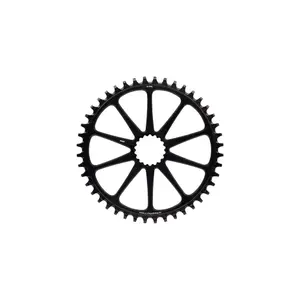

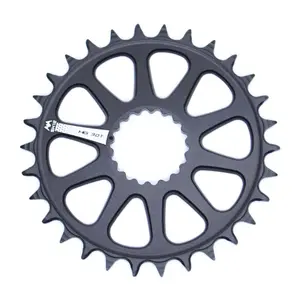
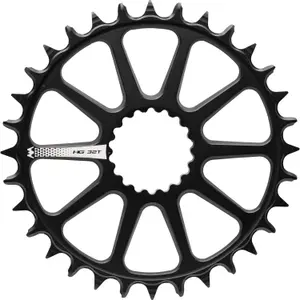
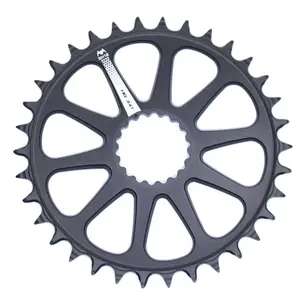
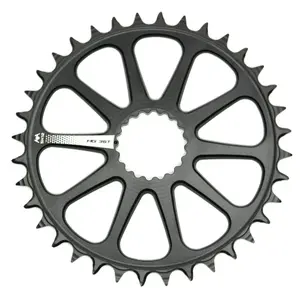


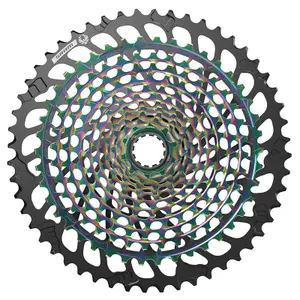

A gravel cassette must offer gears low enough to climb a broken track and high enough to speed along the road that follows. With two chainrings, a wide-range road cassette, from 11-34 to 11-36, is enough; with a single chainring, the cassette alone covers every need, from 10-44 to 10-51. Then check the freehub body of your wheel and the largest sprocket your derailleur accepts.
Which cassette for a gravel bike?
The cassette on a gravel bike is chosen according to its drivetrain: the number of chainrings, the number of speeds on the shifter and the rear derailleur's groupset. Gravel riding calls for a wider gear range than a road bike: a steep, rocky track is climbed seated to keep traction, and a bike loaded with bags needs an even lower gear. The smallest sprocket, for its part, must let you ride fast on the tarmac between two tracks. This page presents cassettes up to 13-speed, for gravel, road and MTB, as these drivetrains often share the same parts.
1x or 2x: two approaches to the cassette
With a double chainring, the gap between the two chainrings already widens the gear range. The cassette can therefore keep modest jumps in teeth from one sprocket to the next, which helps you find the right cadence on the road. Gravel bikes with a 2x drivetrain in 11 or 12-speed most often use an 11-34 or an 11-36.
With a single chainring, the cassette alone provides the full range. It often starts at 10 teeth to keep a high gear on descents and ends at 42, 44 teeth or more for climbs. The jumps between sprockets are bigger, but the drivetrain gains in simplicity: no front derailleur, fewer adjustments, and a chain held more securely by a narrow-wide chainring. It is a frequent choice for bikepacking.
GRX, XPLR, Ekar: what each gravel groupset accepts
- Shimano GRX 2x12: the RD-RX820 derailleur accepts 12-speed road cassettes up to 36 teeth, in 11-34 or 11-36.
- Shimano GRX 1x12: the long-cage RD-RX822 takes 12-speed MTB cassettes up to 10-51, which fit on a Micro Spline body.
- Sram XPLR: the 10-44 cassettes fit on an XDR body, while the 11-44 version from the Apex groupset only needs an HG-type road body.
- Campagnolo Ekar: this 13-speed single-chainring groupset uses cassettes that start at 9 or 10 teeth and require the brand's N3W body.
The 9 or 10-tooth sprocket makes up for a small chainring: a 40-tooth chainring with a 10-tooth sprocket gives the same top gear as a 44-tooth chainring with an 11-tooth sprocket. This small sprocket does, however, require a dedicated freehub body.
How to choose a gravel cassette and derailleur combination
Three points to check before you order:
- Derailleur capacity: each rear derailleur states the largest sprocket it accepts and its total capacity, that is, the difference in teeth it can take up between chainrings and sprockets. An 11-36 will not work on a derailleur limited to 34 teeth.
- The freehub body: HG, HG L2, Micro Spline, XDR or N3W, it must match the cassette. These interfaces are detailed on the general bike cassettes page.
- Chain length: a larger sprocket often requires a longer chain. Each manufacturer publishes its own calculation method, to be applied before cutting the new chain.
Gravel chains, derailleurs and groupsets
A new cassette runs better with a chain of the same number of speeds, chosen from our gravel chains. To move to a wider cassette, the gravel derailleur must follow; chainrings and chainsets adjust the other end of the gearing. Gravel groupsets replace the whole drivetrain in one go, and the gravel drivetrain page brings together the rest.
Which gravel cassette brands to choose?
Miche, an Italian maker of road and track components, offers its Shimano-compatible Primato cassettes up to 12-34 and 13-34 in 11-speed, gear ranges suited to a gravel bike with a double chainring, as well as in a Campagnolo version.
Shimano bases its GRX gravel range on its road cassettes for double-chainring set-ups, such as the 105 CS-R7101 or the 11-speed Ultegra CS-HG800, and on its MTB cassettes for single-chainring set-ups, such as the Deore XT CS-M8100 or the XTR CS-M9101 in 10-51.
Campagnolo, the Italian company from Vicenza, designed Ekar as a mechanical gravel groupset with a single chainring and 13 speeds: its 9-36, 9-42 and 10-44 cassettes range from endurance riding to loaded touring.
Sram groups its single-chainring gravel components under the XPLR name, including the XG-1271 and XG-1251 cassettes in 10-44 and the PG-1231 in 11-44; the XG-1271 saves weight with an aluminium large sprocket.
Box Components, a brand with its roots in BMX, offers the Three Prime, a 9-speed cassette in 11-46 or 11-50 that fits on a standard HG body and pairs with the chain and derailleur from the same range.
Sunrace makes wide-range 11-speed cassettes, such as the CSMS8 in 11-42 or 11-46, with large sprockets carried by an aluminium spider, to be fitted on an HG body.
Gravel cassettes on sale and new arrivals
End-of-line cassettes move to our road clearance, which also takes gravel parts; the latest listings are in new arrivals. The winter sales and the other seasonal sales are a good time to overhaul a drivetrain before the long rides.
Frequently asked questions
Which cassette for a gravel bike with a double chainring?
Start from your groupset and the largest sprocket your derailleur accepts. An 11-32 or 11-34 keeps close steps for mostly road riding; an 11-36 makes climbing on tracks easier, especially with bags. Beyond that, you generally need to move to a derailleur designed for a single chainring.
Can you fit an MTB cassette on a gravel bike?
Yes, with a single chainring, provided the rear derailleur accepts it: that is the principle of Shimano's GRX 1x12, designed for MTB cassettes up to 51 teeth. Set-ups that combine road levers with an MTB derailleur also exist, but each part must be declared compatible by its manufacturer. Finally, the freehub body of the wheel must match the cassette chosen.
Why do some gravel cassettes start at 9 or 10 teeth?
A very small sprocket lets you keep a high gear with a smaller chainring, which is easier to turn on climbs. It does not fit on a conventional HG body: it requires an XDR body at Sram, Micro Spline at Shimano or N3W at Campagnolo. Check that your wheel is available with the right body, or that its body can be replaced.
How many speeds for a gravel cassette?
The same number as your shifter: a 12-speed cassette only works with a 12-speed shifter and chain. Moving to 12 or 13-speed closes up the steps over the same range, but means changing the whole drivetrain; a 10 or 11-speed drivetrain can be refreshed with an identical cassette.
Does a gravel cassette wear faster than a road cassette?
Often, because dust and mud stuck to the chain act as an abrasive on the teeth. Cleaning the drivetrain after wet or dusty rides, and replacing the chain as soon as the chain checker says so, spares the cassette. With a single chainring, the chain runs at an angle on the outermost sprockets, which wears chainring and sprockets slightly faster.







