
Bike stems for road, MTB and city bikes
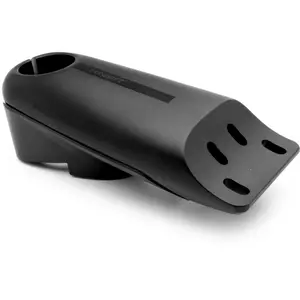
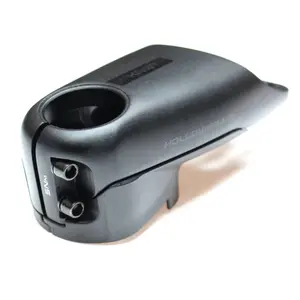
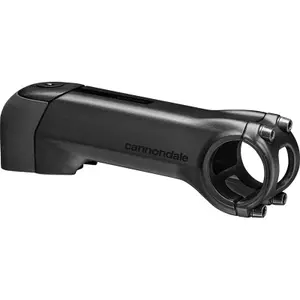
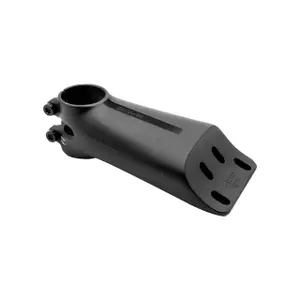
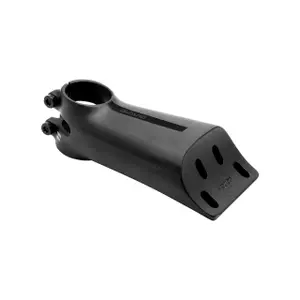
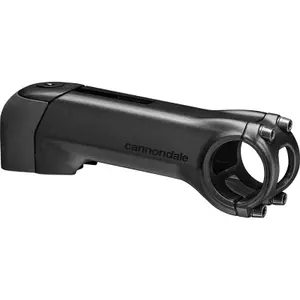
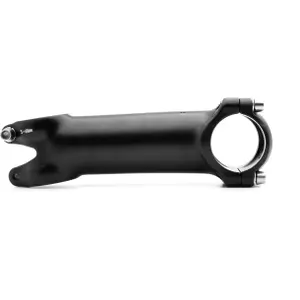


The bike stem connects the handlebar to the fork: its length and angle set the reach and height of your hands, and therefore your position. To change it, note three measurements: the handlebar diameter, the diameter of the fork steerer or quill, and the current length. Road, MTB, BMX and city stems, adjustable or quill, and their spare parts are brought together here.
How is a bike stem measured?
The length is measured centre to centre, from the centre of the fork steerer to the centre of the handlebar clamp. The angle is expressed relative to the perpendicular of the steerer: on a road bike, a minus 17 degree stem sits roughly horizontal, while a minus 6 degree stem rises slightly. On a threadless stem, flipping the stem turns a negative angle into a positive one and raises the handlebar. Finally, the height of the steerer clamp must leave room for the spacers and the top cap.
Which stem length and angle for your riding?
- Road: from about 80 to 130 mm, with a negative angle to keep the front low; the Look LS3, for example, comes in lengths from 80 to 120 mm.
- Trail and enduro MTB: a short stem, from 30 to 50 mm, paired with a wide handlebar, for direct steering and a position centred on the bike.
- Downhill: a direct mount stem, fixed to the upper crown of dual crown forks.
- City and touring: a high-rise stem or a stem with adjustable angle, so you can sit upright.
A shorter stem makes the steering quicker and brings your upper body more upright; a longer stem stabilises the steering and stretches out your position. A change of 10 mm is often enough to correct a position: proceed in small steps.
Bike stem sizes: handlebar and steerer diameters to check
The handlebar clamp is measured at the centre of the handlebar: 31.8 mm on most current bikes, 35 mm on many mountain bikes, 25.4 mm on city bikes and older models, 22.2 mm on most BMX handlebars. A shim lets you fit a thinner handlebar into a wider stem, never the reverse. On the fork side, the 1 1/8-inch threadless steerer, or 28.6 mm, is by far the most common; the 1-inch steerer is found on older bikes, and some integrated systems require a dedicated stem.
Quill, threadless or adjustable stem?
On a threaded steerer, a quill stem slides into the steerer tube and is locked by an expanding wedge: it is height-adjustable, without going beyond the minimum insertion mark engraved on the quill, whose diameter is usually 22.2 mm for a 1-inch steerer. On a threadless steerer, a threadless stem clamps around the steerer and its height is set with spacers. Stems with an adjustable angle, common on city and touring bikes, let you find the right height without changing parts.
Integration, carbon and safety
On many road bikes, the stem is part of the internal routing of cables and hoses, from the handlebar into the frame, like the Look LS3; it is then only compatible with certain frames and headsets. Carbon stems and steerers are tightened with a torque wrench, to the torque engraved on the part, with suitable carbon assembly paste. For an e-bike or heavy-duty use, check that the stem is designed for the intended total weight and riding style: some brands indicate this with a safety level.
Handlebars, headsets and stems by discipline
The stem is chosen together with its handlebar: handlebars state their clamp diameter, and headsets their compatibility with the steerer. For a selection by discipline, see our road stems, MTB stems and BMX stems. After a change of position, your saddle sometimes needs readjusting.
Which bike stem brands to choose?
Look, the Nevers-based manufacturer known for inventing the clipless pedal, designs stems for the road, such as the LS3, which routes cables and hoses from the handlebar into the frame, and carbon aero stems.
Uno, the stem and seatpost range of the Taiwanese manufacturer Kalloy, offers threadless stems in various angles and quill stems, including a fixie model with a 22.2 mm quill.
Spank, a Taiwanese MTB component maker based in Taichung, offers the Split, a short 33 or 38 mm stem for a 31.8 mm handlebar.
Funn offers the RSX Direct Mount, a stem that fixes directly to the upper crown of dual crown downhill forks, for a 31.8 or 35 mm handlebar.
Ergotec, a cockpit component brand, gives its stems a Safety Level that refers to a usage chart, according to the permitted total weight and riding style, e-bikes included; the adjustable Octopus and Sepia are aimed at city and touring riding.
Pro, Shimano's component brand based in the Netherlands, offers the Vibe for the road and the Tharsis, also available in an XC version, as well as spare faceplates and bolts.
Bike stems on sale and new arrivals
End-of-line stems are grouped in our bike parts clearance; the latest arrivals fill our new arrivals. Black Friday and the seasonal sales are an opportunity to try a different length.
Frequently asked questions
How long should a road bike stem be?
It depends on the frame geometry and your flexibility: most road bikes come with a 90 to 120 mm stem depending on the size. If your hands feel too far away, your back stretched or your shoulders tense, a shorter or higher-rise stem helps. A professional bike fit remains the safest method.
Can you flip a stem?
Yes, on most threadless stems: flipped, a minus 6 degree stem becomes a plus 6 degree stem and raises the handlebar. Some integrated or aero stems cannot be flipped. After flipping, retighten the faceplate and steerer bolts to the stated torque and check the alignment with the wheel.
What torque for a stem?
It is engraved on the stem, in newton metres, next to the faceplate and steerer bolts. Tighten the faceplate bolts in a cross pattern and gradually, keeping an even gap between the faceplate and the stem body. A torque wrench is essential with a carbon handlebar or steerer.
How do you replace a quill stem with a threadless stem?
An adaptor slides into the threaded steerer like a quill and has a 1 1/8-inch tube at the top, onto which a threadless stem is clamped. This gives you access to current handlebars and stems without changing your fork. Respect the adaptor's minimum insertion depth.
Is my stem compatible with my handlebar?
Measure the handlebar diameter at the centre, where the stem clamps: it must match the stem clamp exactly, unless you use a shim to step down to a smaller diameter. Also check that the central section of the handlebar is wide enough for the chosen stem.







