
Bike disc brake pads: organic or sintered
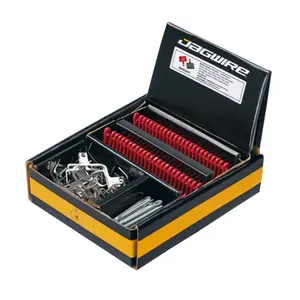
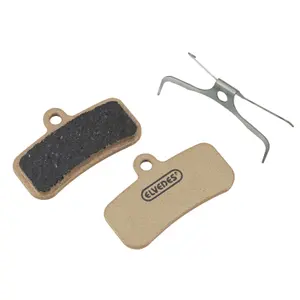
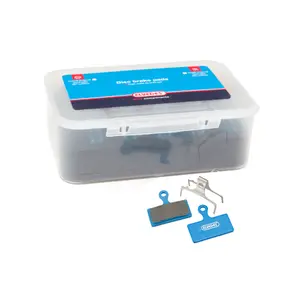
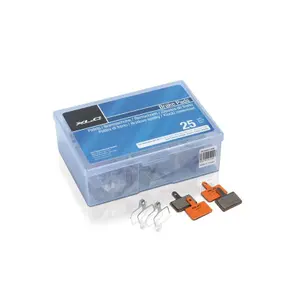
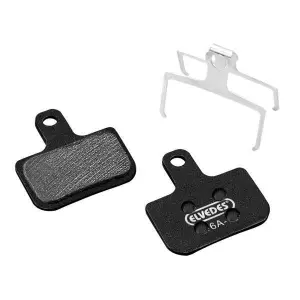
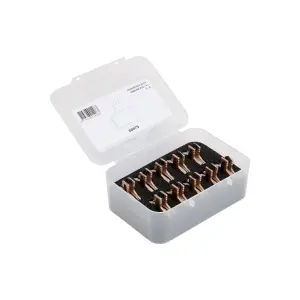
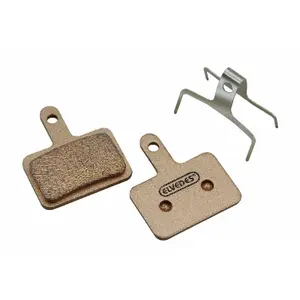
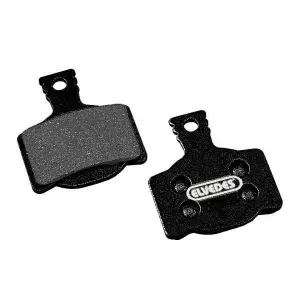
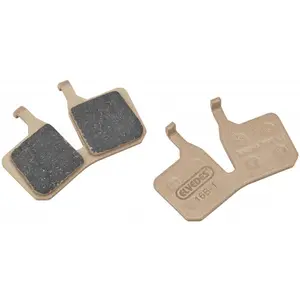
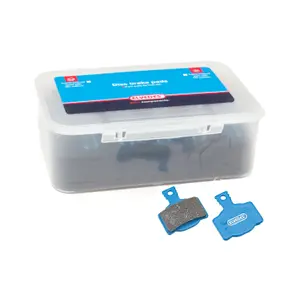
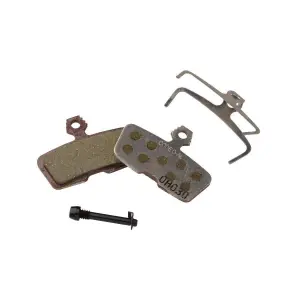
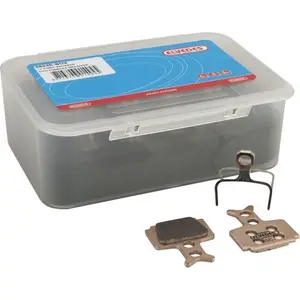
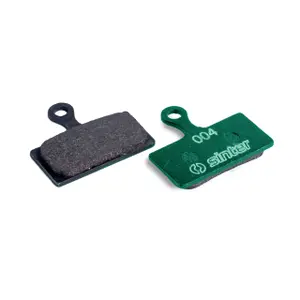
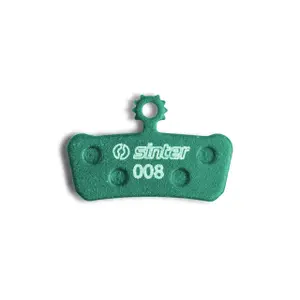
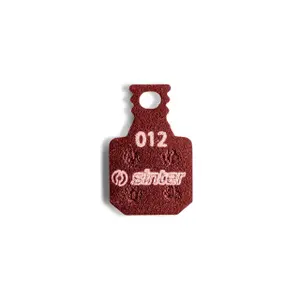
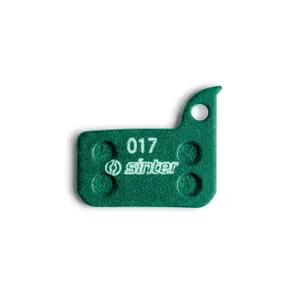
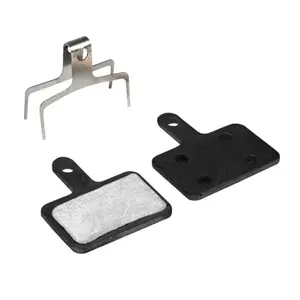
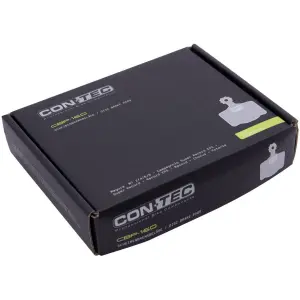
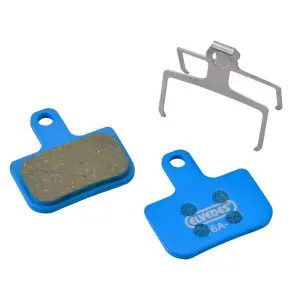
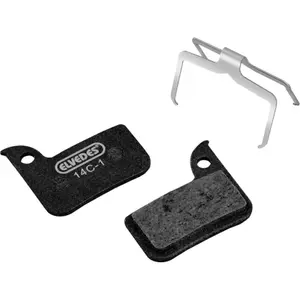
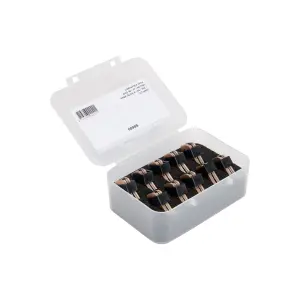
Bike disc brake pads are chosen first according to your calliper model: each disc brake has its own pad shape, identified by a reference. Then choose the compound, organic resin for smooth, quiet braking, sintered metal for endurance, rain and heat, and check that your rotors accept it. Single pairs and workshop boxes are gathered here.
How do you find the right pads for your brake?
The shape of a pad depends on the calliper, not on the make of the bike. Note the brand and model of the brake, engraved on the calliper or given in the bike's documentation, or compare with your worn pads: outline, position of the retaining pin hole and shape of the spring must be identical. Each product on this page lists the brakes it is compatible with; at Shimano, a short reference designates both the shape of the pad and its compound.
Resin or sintered metal: which compound should you choose?
- Resin, or organic: a progressive bite, quiet braking once bedded in and less heat passed to the calliper; it wears faster, especially in mud and on long descents.
- Sintered metal: metal powders fused together, very durable and stable at high temperatures, effective in the rain, but slower to bed in and more abrasive on rotors.
- Semi-metallic: a compromise offered by several manufacturers, more durable than resin and quick to bed in.
Before switching to metal, check your rotors: at Shimano, the SM-RT10, SM-RT30, SM-RT56 and RT-EM300 only accept resin pads. The Shimano reference also tells you about the pad: R for a resin compound, M for metal, F for a pad with cooling fins, X for a pad without fins, as with the L05A-RF or the N04C-MF.
When should you change your disc brake pads?
Shimano says a pad should be replaced once its compound is down to 0.5 mm thick: below that, the return spring comes into contact with the rotor. Look at the calliper from above, or remove the wheel for a better view. A metallic scraping sound, braking that fades or a lever whose travel changes are other signs of wear. Always change both pads in the same calliper together and take the opportunity to measure the rotor, which Shimano says should be replaced at 1.5 mm.
Bedding in, contamination and noise
New pads only reach full efficiency after bedding in. Shimano advises riding at moderate speed and braking with one lever down to walking pace, repeating the operation ten to twenty times per brake depending on its manuals, with the assistance switched off on an e-bike. Sintered compounds need more patience; a few racing pads skip this step. A pad contaminated with oil, chain lube or a cleaning product slips and squeals: it has to be replaced, while the rotor can be cleaned with a brake cleaner.
Rotors, callipers and other brake parts
Changing pads is an opportunity to check the brake rotors, which wear at the same time. To replace a complete brake, see disc brakes and brake callipers; on a bike with rim brakes, it is the brake blocks that wear. Bleed kits and adaptors are in bike brake parts.
Which disc brake pad brands should you choose?
Shimano sells its pads in pairs and in workshop boxes of twenty-five pairs, from the resin B05S for entry-level brakes to the finned metal N04C-MF.
Elvedes, a Dutch family company whose name is taken from its founder's initials, started out making control cables; it offers organic, metal or metal-carbon pads for the brakes of the main manufacturers.
CL Brakes, heir to the brake division of Carbone Lorraine, makes sintered metal pads derived from motorcycling in Gennevilliers: VX for leisure riding and enduro, VRX for downhill, and a road range.
Galfer, a friction material manufacturer based near Barcelona, offers its pads in compounds suited to each use, such as the Advanced, designed for mud and wet conditions.
Sinter, a Slovenian manufacturer from Ljubljana, despite its name, only produces resin-bonded organic pads, offered here in workshop boxes for Shimano and Sram brakes.
Swissstop, a Swiss friction specialist based in Mendrisio, offers the Disc E organic compound, durable and easy to modulate, and EXOTherm2, whose finned backing plate, on the Disc 34 for Shimano road callipers, dissipates heat.
Disc brake pads on sale
Discounted pads are gathered in our brake clearance, and new references in new arrivals. Workshop boxes, which bring together dozens of pairs, suit clubs, families who ride a lot and workshops.
Frequently asked questions
Which brake pads for an electric bike?
Heavier and more often ridden at a sustained speed, an e-bike makes its brakes run hotter. Several manufacturers offer dedicated, more durable compounds; failing that, a metal or semi-metallic compound copes with heat better than resin, provided your rotors accept it.
Can you replace resin pads with metal pads?
Yes, if the shape is the same and the rotor accepts metal: some rotors are marked for resin only and would quickly be damaged. Metal brings endurance and grip in the rain, at the cost of a little more noise and a longer bedding-in period.
Should you change front and rear pads at the same time?
No, each calliper wears at its own rate, and the front, which does more of the braking, often wears faster. On the other hand, the two pads in the same calliper are always changed together, and it is wise to check the other brake at the same time.
Why are my new pads not braking well?
They are not yet bedded in: the compound has to lay down a thin layer on the rotor before reaching full efficiency. If braking remains weak after bedding in, check that no lubricant has touched the rotor and that the lever stays firm; a soft lever calls for a bleed.
How long do bike brake pads last?
Their lifespan depends on the terrain, the weather, the rider's weight and the compound: mud and rain wear them much faster than a dry road, and resin does not last as long as sintered metal. Rather than relying on mileage, keep an eye on the remaining thickness, especially before a long descent.







