
Bike brake parts, levers and bleed kits

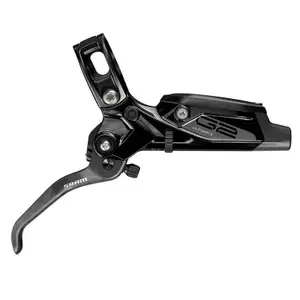
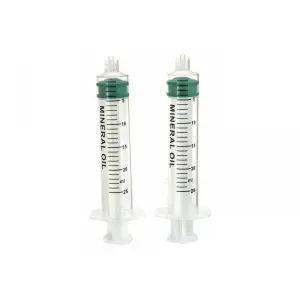
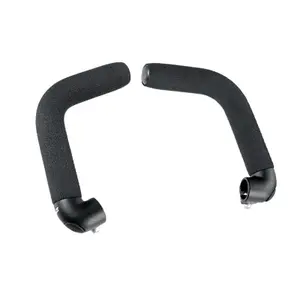
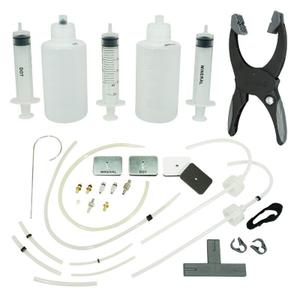
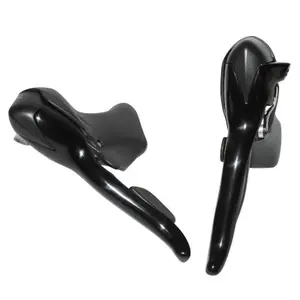
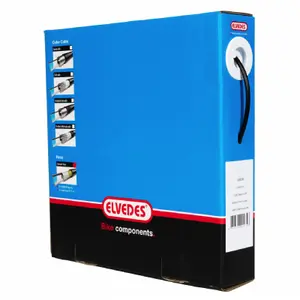
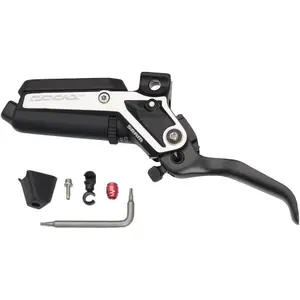
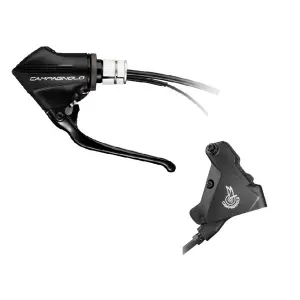
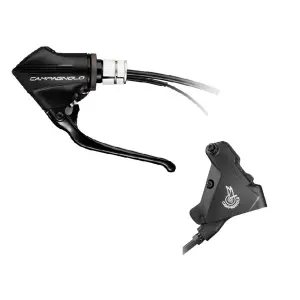
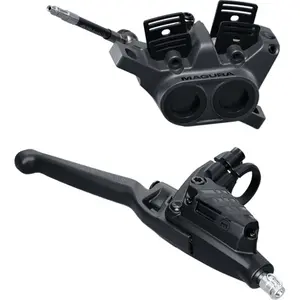
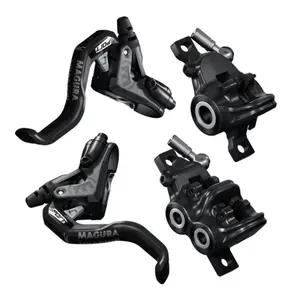
Bike brake parts repair or upgrade your braking without replacing the whole system: a broken lever, a hose that is too short, a spongy hydraulic brake that needs bleeding, an adaptor to fit a larger rotor. First note the brand and model of your brakes, mechanical or hydraulic, then choose the part designed for them.
Which brake parts will you find on this page?
This page brings together everything around the wearing parts of a braking system, for every kind of riding:
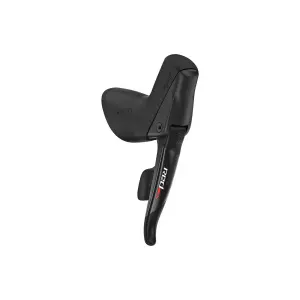
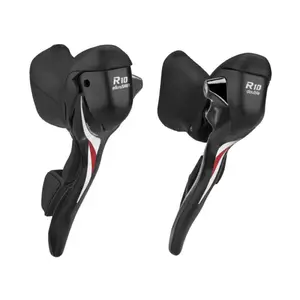
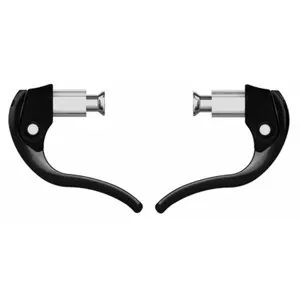
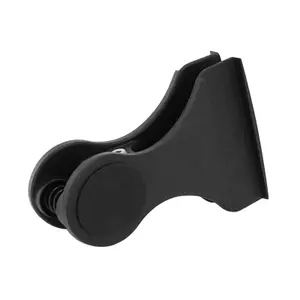
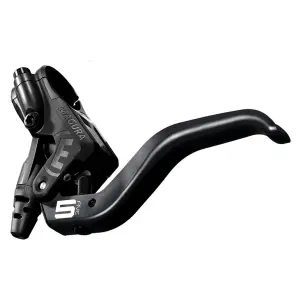
- Brake levers for flat handlebars, road shifters, drum brake levers and lever parts: bodies, hoods, reservoir covers.
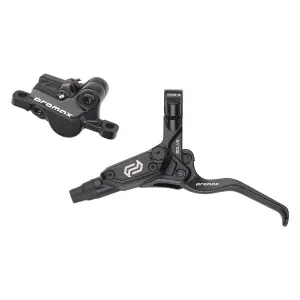
- Complete brake sets, with lever, hose and calliper supplied assembled and filled.
- Calliper adaptors, to change rotor diameter or mounting standard.
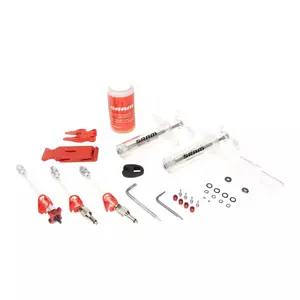
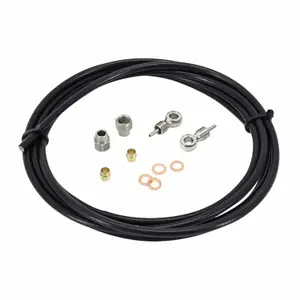
- Hoses, olives and inserts for hydraulic brakes, along with bleed kits and fluids.
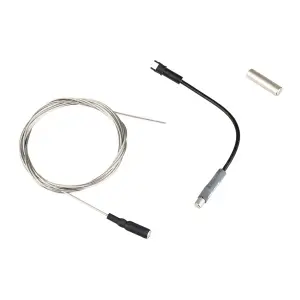
- Cables, end caps and cable guides for mechanical brakes.
Brake levers: mechanical or hydraulic, each brake has its own
A mechanical lever pulls a cable, and its pull must match the brake. A V-brake lever pulls more cable than a lever designed for calliper or cantilever brakes: fitted to a brake it was not designed for, it gives hard, weak braking or unsuitable lever travel. A hydraulic lever, on the other hand, pushes fluid down the hose: it works with a calliper from the same manufacturer, filled with the same fluid.
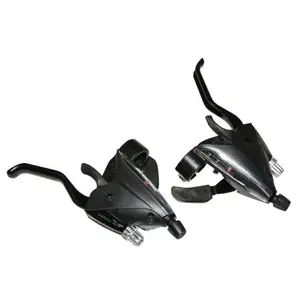
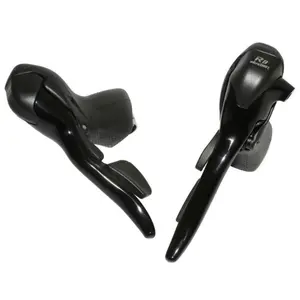
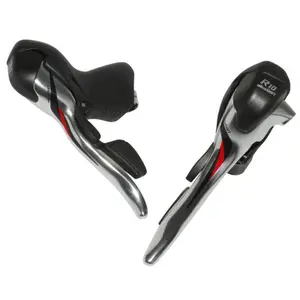
On a road bike, the brake lever is built into the gear shifter: this is known as a combined brake and gear lever, or shifter, sold as a right-hand or left-hand unit and compatible with a specific drivetrain. Drum brake levers, finally, operate the hubs with built-in brakes found on many city bikes.
Hoses, fluid and bleeding: maintaining a hydraulic brake
A lever that turns spongy or whose travel gets longer usually indicates air in the system. Bleeding means driving it out by pushing fresh fluid through between the lever and the calliper. A bleed kit brings together syringes, fittings and sometimes the fluid; it is specific to each system.
The fluid depends on the system: Shimano, Tektro, TRP and Sram Maven brakes run on mineral oil, while Sram Level and Rival brakes, like the Hayes Dominion, use DOT 5.1 fluid. Only use the fluid specified by the manufacturer: Shimano warns that any other fluid can make the brake unusable.
To shorten or replace a hose, have a new olive and insert ready for the cut end: they are what makes the connection leak-proof.
Adaptors: changing rotor size or calliper mount
The calliper attaches to the frame and fork using one of three standards: Post Mount, with two bolts parallel to the rotor, the most common on mountain bikes; IS, an older standard with bolts perpendicular to the rotor; and Flat Mount, compact and bolted from underneath, on most road and gravel bikes. An adaptor fits a calliper to a different standard, or moves it away from the hub to take a larger rotor, from 160 to 180 mm for example. Respect the maximum diameter allowed by the frame and fork: Shimano even recommends keeping its 140 mm rotors for the rear wheel.
Cables, pads, rotors: the other braking parts
A brake cable ends in a barrel-shaped nipple for flat bar levers, or a pear-shaped one for road levers. Its outer casing is spiral-wound: gear outer casing, with lengthwise strands, must never be used for braking. Cables and outers are in brake cables and outers, and levers on their own in brake levers.
For wearing parts, see disc brake pads and brake rotors for disc brakes, or brake blocks for rim brakes. To change your brakes, see complete disc brakes or brake callipers on their own; all bike brakes and parts are gathered on one page.
Which brake part brands should you choose?
Shimano, the Japanese group from Sakai, near Osaka, covers everything from Deore XT BL-M8100 levers for mountain bikes to Nexus BR-C6000 roller brakes, fitted to the hub of city bikes, as well as lever parts.
Sturmey-Archer, founded in Nottingham and now part of the Taiwanese company Sun Race, is known for its internal gear hubs; it supplies the aluminium levers that operate its drum brakes.
Sram, the American group based in Chicago, offers DOT 5.1 bleed kits for its hydraulic brakes, lever bodies for the road and service kits for its G2 levers.
TRP, short for Tektro Racing Products, is the high-end brand of the Taiwanese manufacturer Tektro: EVO Comp and EVO Expert levers, the DH-R EVO lever for downhill, bleed kits and calliper adaptors.
Hayes, a Wisconsin manufacturer that designed its first callipers for karting, builds levers, hoses and adaptors for 180 to 220 mm rotors around its Dominion brake.
Jagwire, a bike controls specialist that started out with cables and outer casing, offers Kevlar-reinforced hoses, hose kits for Shimano and Sram brakes and end caps in workshop boxes.
Bike brake parts on sale
Levers and kits from previous generations move to our brake clearance, a good opportunity to put together a spare lever or hose; recently added references are in new arrivals. The seasonal sales are a good time to get your bike ready before the long rides.
Frequently asked questions
How do you know if a hydraulic brake needs bleeding?
The lever goes soft, its travel gets longer or varies from one stop to the next, and you sometimes have to pump it to get pressure back. A visible leak at the lever or the calliper, on the other hand, means replacing the part concerned.
Can you combine a lever and a calliper from different brands?
With mechanical brakes, yes, if the lever pull matches the brake. With hydraulic brakes, it is not recommended: each manufacturer specifies its own fluid and designs its levers for the callipers in its range. Keep the lever and calliper from the same system, or replace both with a complete set.
How do you replace a brake lever on a flat handlebar?
Remove the grip, loosen the lever clamp and slide the lever off the handlebar. On a mechanical brake, detach the cable at the brake; on a hydraulic brake, the lever stays connected to its hose, and fitting a new lever on its own means connecting the hose and then bleeding the system. Finally, position the lever so that your index finger falls naturally on it.
What is a complete brake set for?
It brings together a lever, a hose and a calliper that are already assembled and filled: you just attach it to the handlebar and frame, then adjust the position of the calliper over the rotor. It is the simplest way to replace a worn brake or move up to a more powerful model, with no bleeding needed if the hose is the right length.
Why does my brake lever return slowly?
On a mechanical brake, a dirty cable, kinked outer casing or a tired brake spring slow the return: clean and lubricate the cable, or replace the cable and outer casing. On a hydraulic brake, dirty pistons or old fluid are often the cause; clean the pistons and bleed the system.