
MTB V-brake pads and cantilever brake blocks
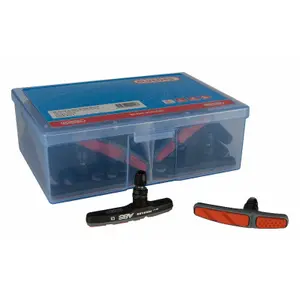
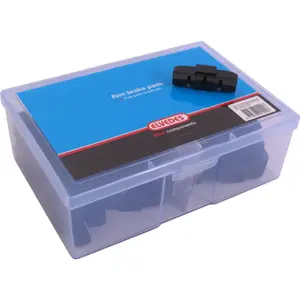
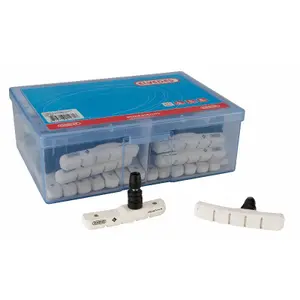
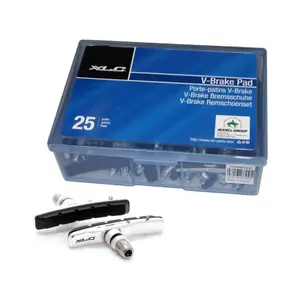
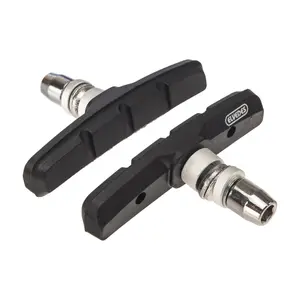
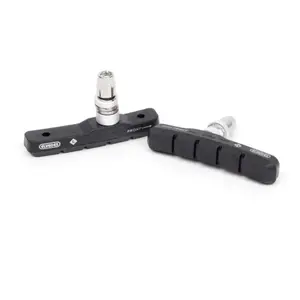
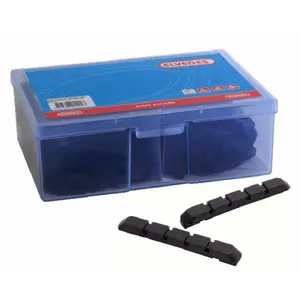
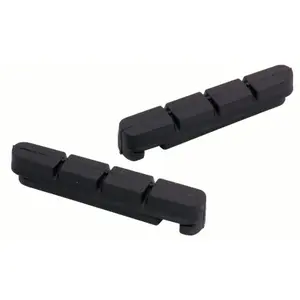

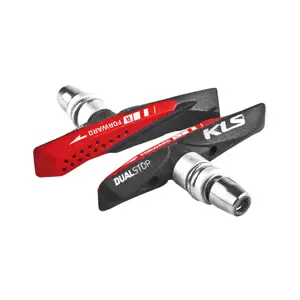
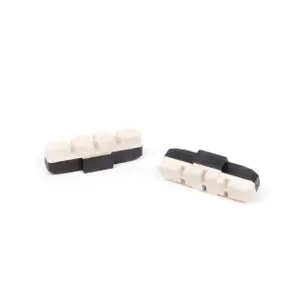
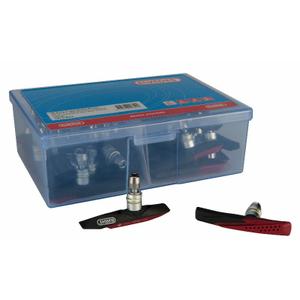
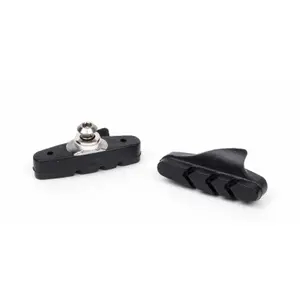
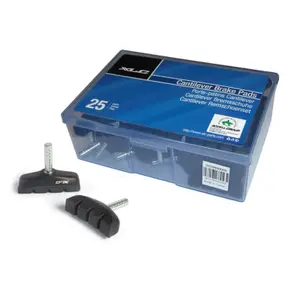
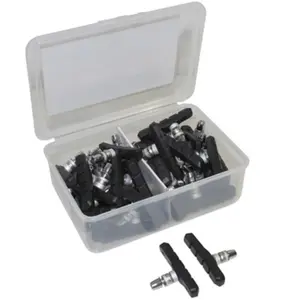
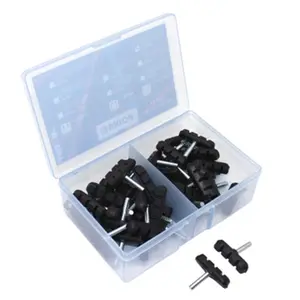
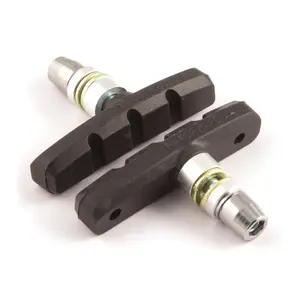
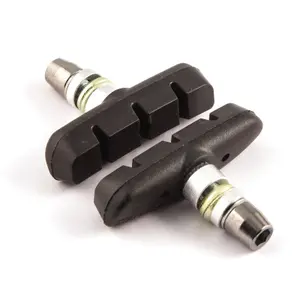
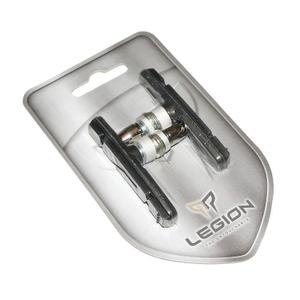
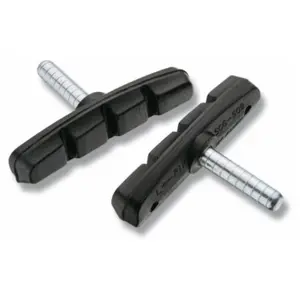
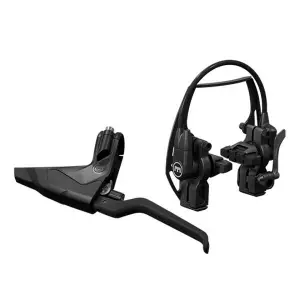
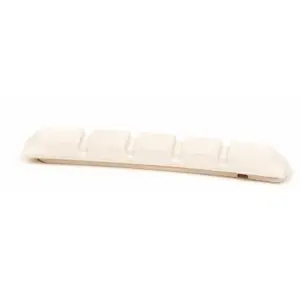

V-brake pads, or brake blocks, grip the rim to slow down bikes fitted with V-brakes, cantilevers or hydraulic rim brakes. Choose them according to your brake and the type of mounting, one-piece or cartridge, where only the rubber insert is replaced, then according to the compound: standard, for wet conditions or for carbon rims. Careful adjustment, parallel to the rim, prevents squealing.
Which brake pad for which rim brake?
A brake pad combines a special rubber compound with a mounting post. Its shape depends on the brake:
- V-brake: the most widespread rim brake on mountain bikes, with long vertical arms. Its pads have a threaded post, tightened with a nut and curved washers that let you angle the pad.
- Cantilever: an older brake, found on vintage mountain bikes and some kids' bikes. Depending on the model, it takes pads with a smooth post, clamped in an eye bolt, or with a threaded post.
- Hydraulic rim brake: its pads have a shape specific to the system, to be chosen according to the brake reference.
One-piece or cartridge, symmetrical or directional
A one-piece pad is replaced in a single unit, post included. A cartridge pad consists of an aluminium holder, fixed permanently to the brake, and an insert that slides into its slot and is then locked with a pin: replacement is quicker and the original adjustment is kept. Some pads are symmetrical and can be fitted on either the left or the right; others are directional, with an arrow showing the direction of wheel rotation. Respect it, as well as the left or right side engraved on the holders.
Which compound for mud, rain or a carbon rim?
A standard compound suits dry-weather riding. Wet-weather compounds, softer or loaded with additives, regain their bite more quickly when the rim is wet, at the cost of faster wear. Carbon rims require specific pads: a pad designed for aluminium overheats them and brakes poorly, and a carbon pad that has been used on an alloy rim can hold metal particles that would scratch the carbon. On a mountain bike, mud acts as an abrasive: clean rims and pads regularly.
Adjusting your pads for powerful, quiet braking
The pad should hit the braking surface squarely, neither on the tyre nor below the edge of the rim. Give it a slight toe-in, with the front of the pad touching the rim just before the rear, to eliminate squealing. Then centre the brake with the spring tension screws, so that both pads sit the same distance from the rim, and adjust the cable tension until the lever travel feels comfortable. Change the pads when their grooves disappear or the rubber hardens and cracks.
Levers, cables and other brake parts
A V-brake needs long-pull MTB brake levers and a cable in good condition, to be found in brake cables and outer casing. Disc brakes, for their part, use disc brake pads. For a road bike, calliper brake pads are presented in road brake pads.
MTB brake pad brands
Elvedes, a Dutch supplier of brake parts, covers every configuration: symmetrical V-Type pads, for wet conditions or for carbon rims, cantilever pads and replacement pads for Magura HS11 and HS33 hydraulic brakes, often in boxes of twenty-five pairs.
Shimano offers the original pads for its V-brakes, such as the M70R2 for difficult conditions or the S65T, in pairs or in workshop boxes.
Jagwire, whose catalogue runs from cables to rotors, offers its Mountain Sport pads for V-brakes and cantilevers, in a workshop version of fifty pairs.
Kellys, a bike maker that also produces its own components, offers its pads in three families, Dualstop, Controlstop and Powerstop, one-piece or cartridge.
Clarks Cycle Systems, an English company from Derby, offers hybrid pads, asymmetric pads and pad holders with posts.
Magura, a pioneer of hydraulic rim braking with its HS range, supplies the pads for these brakes, front and rear.
Brake pads on sale
When a range is replaced, its pads are offered in MTB brakes clearance; new arrivals are in new arrivals. Boxes of twenty-five or fifty pairs suit clubs, families and workshops.
Frequently asked questions
When should you change your brake pads?
When the grooves in the rubber have disappeared, when the rubber hardens, cracks or wears unevenly, or when braking weakens despite good adjustment. Do not wait until the metal part touches the rim.
Why do my rim brakes squeal?
Most often, the pad meets the rim flat or rear edge first: give it a slight toe-in. A greasy rim or hardened pads with embedded grains of sand also produce this noise.
Do V-brake pads fit a cantilever?
Not always: many cantilevers expect pads with a smooth post, whereas V-brake pads have a threaded post. Check your brake's mounting before ordering.
Can you fit standard pads on a carbon rim?
No, a carbon rim requires pads designed for it, which withstand heat and protect the braking surface. Never reuse on carbon a pad that has been used on aluminium.
How can you brake better in the rain?
Choose a wet-weather compound, keep your rims clean and anticipate: a few light squeezes of the levers wipe the rim before you brake for real.







