
Gravel and road power meter pedals


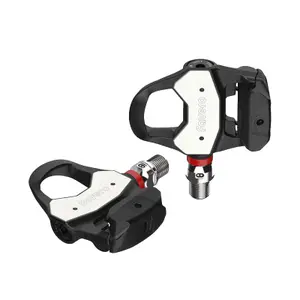


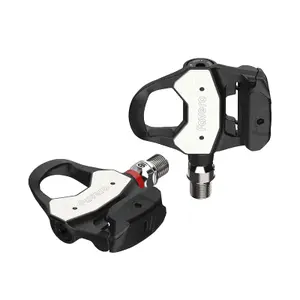


A power sensor pedal measures your watts as close to the shoe as possible and can be easily moved from gravel to road bike or home trainer without special tools. First, choose the cleat system, SPD with two holes for walking or three holes for road cycling, then one or two sensors. The page also features pedals without sensors.
Why measure power at the pedal?
A gravel bike often changes cranksets, chainrings, or gearing depending on the events and travels. Placed in the pedal, the sensor is independent of these choices: it doesn’t rely on axle standards, chainring spacing, or the number of chainrings. It can be removed with a pedal wrench and follows the cyclist across their other bikes, maintaining a single power reference for all rides. In return, it requires its own cleat system and is exposed to shocks, close to the ground.
SPD, Look Keo or SPD-SL: which cleats for which use?
- SPD two-hole: the cleat fits into the notched sole, allowing walking and pushing the bike in steep sections. The double-sided mechanism engages quickly and clears mud better: it’s the common choice for gravel.
- Look Keo and SPD-SL three-hole: the wide cleat spreads the load over a large area, suited for a smooth gravel ride or a road bike with stiff shoes. Walking remains awkward.
- Speedplay: the mechanism is housed in the cleat rather than the pedal, with adjustable float; a system mostly used on the road.
If you share your pedals between a gravel bike and a road bike, check that your shoes accept both types of cleats, or choose a system that allows you to swap the pedal body.
One or two sensors: which measurement to keep?
Single-sensor versions, placed on the left, measure that leg and multiply the result by two. They are sufficient for following a training plan and are often later complemented by adding the equipped right pedal. Dual-sensor versions measure each leg and display left-right balance, useful for detecting an imbalance after an injury or a long break. In both cases, keep the same measurement from one ride to the next to compare your sessions.
Mud, shocks, and battery life: the challenges of gravel
On trails, the pedal receives water, dirt, and mud splashes. Prefer a model without a battery hatch or port to open, whose waterproofing is certified with an IP67 or IPX7 rating, and recharge via a magnetic connector. Recent models claim 60 to 75 hours of battery life, enough to last through a weekend of bikepacking. A pedal can also strike a stone in a rut: some brands sell the pedal body separately, avoiding the need to replace the sensor when only the outer part is damaged.
Installation, calibration, and compatibilities
A sensor pedal screws in like any other, with a 9/16 inch thread and a reverse left-hand thread. Then, input your crank arm length in the manufacturer's app, and start zero calibration from the computer, with pedals stationary. The measurement is transmitted via ANT+ and Bluetooth to your computer, watch, or indoor training software. Finally, check the clearance between the pedal and shoe, as well as the spacing between pedals, if indicated.
Sensors, computers, and gravel electronics
If you prefer to keep your pedals, gravel power sensors can be fitted on the crank, spider, or bottom bracket axle. The watts are displayed on gravel computers and GPS or smartwatches, and one of the heart rate monitors adds heart rate to gauge effort response. Gravel electronics brings together all these devices.
Which brands of power sensor pedals?
Favero, an Italian manufacturer, offers its Assioma PRO line in three pedal bodies that share the same measurement axle: MX compatible with SPD for MTB and gravel, RS compatible with SPD-SL, and RL compatible Look Keo, with one (1) or two (2) sensors. The MX, certified IP67, recharge via a magnetic connector.
Shimano, responsible for the SPD system, provides the SM-SH51 cleats with which the Assioma PRO MX are compatible, and SPD pedals without sensors like the PD-M520 double-sided.
Look has added power measurement to its Keo Blade pedal, whose carbon blade secures the cleat: the Single version measures the left leg, and the Dual version each leg, with a rechargeable battery advertised for about 60 hours.
Wahoo, which has taken over the Speedplay system, offers the Powrlink Zero, a dual-sensor pedal that measures each leg and claims up to 75 hours of battery life, based on the Speedplay Zero with adjustable float.
Discounted sensor pedals
End-of-line sensor pedals and replaced versions go to the road clearance, which also includes gravel; new models appear in new arrivals. A sensor prepares in advance: Black Friday allows time to check shoes and cleats before the event season.
Frequently asked questions
Do power sensor pedals suit gravel?
Yes, as long as you choose a compatible SPD model if you need to walk, and ensure they are waterproof for muddy rides. Avoid rubbing the pedals against rocks in ruts, as the pedal body absorbs shocks closest to the sensor.
Can you switch power sensor pedals from gravel to road bike?
Yes, that’s their main advantage: a few minutes with a pedal wrench is enough. If both bikes don’t have the same crank arm length, update it in the app before riding.
Do you need to change shoes for pedal sensors?
No, if they use the same cleat system as your current shoes. Gravel shoes with two holes fit SPD cleats, road shoes with three holes fit Look Keo or SPD-SL cleats; some accept both.
What if a sensor pedal hits a rock?
Check that the axle turns without any sticking and that the measure remains consistent with your usual rides. If only the body is scratched or broken, the manufacturer sometimes offers a replacement part; if you have any doubts about the axle, contact their customer service.
Do sensor pedals also display cadence?
Yes, they calculate pedaling cadence at the same time as power, without magnets or additional sensors. Dual-sensor models add leg balance, and some apps analyze the regularity of your pedal stroke.







