
Gravel power sensor, 1x or 2x
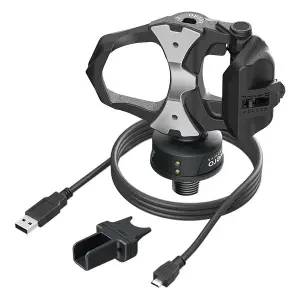
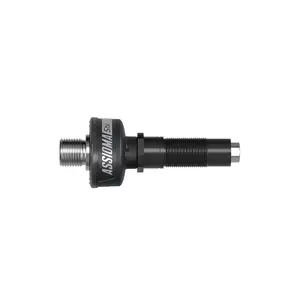
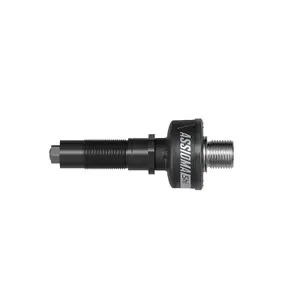
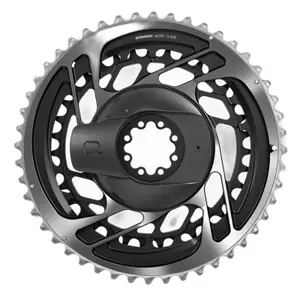
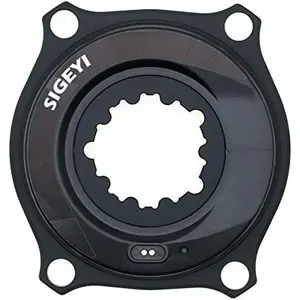
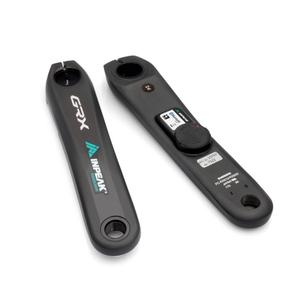
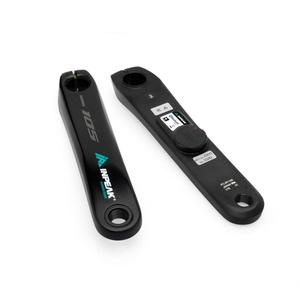
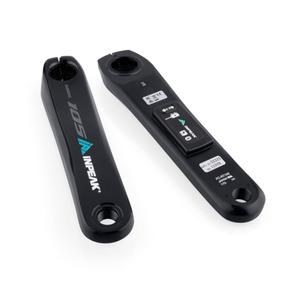
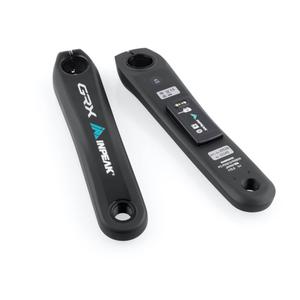
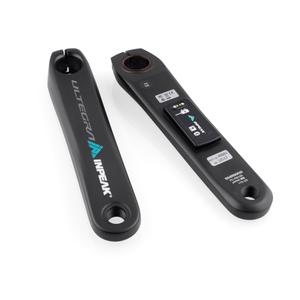

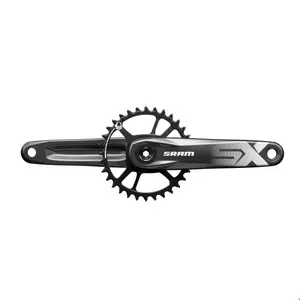


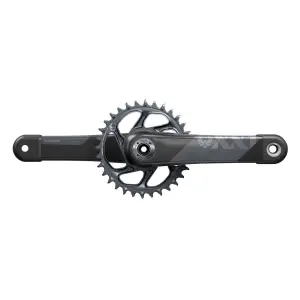


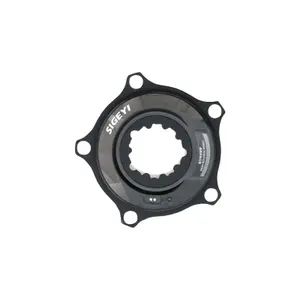
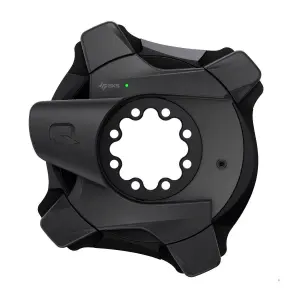
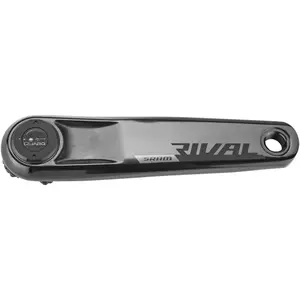
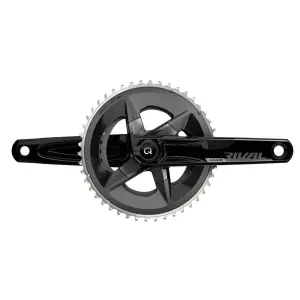
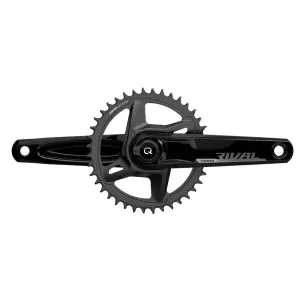
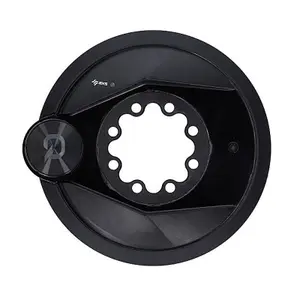
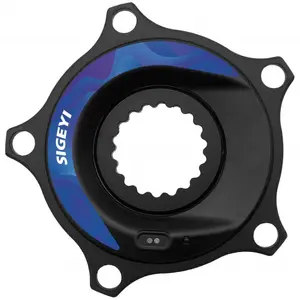
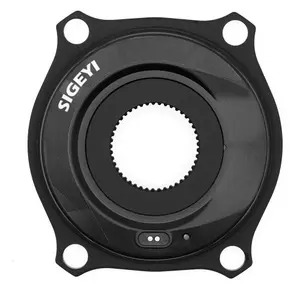
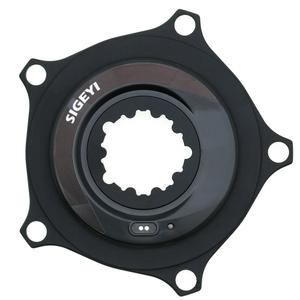
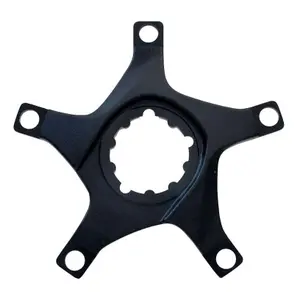
A gravel power sensor measures your watts regardless of the surface, where speed no longer means much on a rough path. It fits into the crank, axle, or spider of the crankset: start with your crankset, Shimano GRX, Sram, or another, its number of chainrings, and their attachment to choose.
Why measure your power on gravel?
On a path, speed depends as much on the surface as on your legs: thick gravel, sand, or muddy earth will slow you down even with the same effort. Power, it, remains a stable measurement of effort. It helps maintain a steady pace during a multi-hour challenge, prevents you from tiring out on the initial climbs of a loaded journey, and supports training by zones, on paths as well as on a home trainer.
Crank, axle or spider: where to place the sensor?
- Crank: a complete crankset comes equipped to replace the old one in a block; depending on the models, it measures one leg and deduces the total, or measures both.
- Axle: housed in the pedal axle, the sensor measures the left side without requiring specific chainrings.
- Spider: placed between the right crank and the chainrings, it measures the effort of both legs together, whether in single or double chainring setups.
Single or double chainring: the compatibilities
Note the brand and series of the crankset, the type of axle, DUB for Sram or 24 mm for Shimano, and the length of the cranks. For a spider sensor, count the fixing screws for the chainrings and measure their spacing: 110 mm for many double chainrings, 104 mm for numerous single chainrings from original MTB. A complete crankset is also chosen based on its teeth: double chainring for large gradient differences, single chainring around 40 teeth for simplicity. Finally, check the clearance between the chainring and the rear base if you ride with wide tires.
Mud, rain and power supply
A gravel sensor lives under splashes. Prefer a model with sealed electronics and check its power supply: a replacement button battery, or a rechargeable battery whose port must remain clean. After a muddy ride, clean the crankset with a sponge rather than a high-pressure hose, and start the zero calibration before heading out again, especially if the temperature has changed.
Sensor pedals and gravel electronics
To transfer the measurement from one bike to another without touching the crankset, check out the power sensor pedals. To read your watts while riding, pair the sensor with one of the gravel displays and GPS or a smartwatch; a heart rate belt complements the measurement with heart rate data.
What power sensor brands are available for gravel?
INPEAK equips its sensor with complete Shimano cranksets, including the GRX FC-RX820 designed for gravel, but also the 105, Ultegra, Dura-Ace, SLX and XT, in Powercrank and Powercrank-E versions.
Sram integrates Quarq measurement into its Rival cranksets, in double chainring 46-33 or 48-35 and in single chainring of 40 teeth, and offers a Red AXS version of its gravel XPLR range.
Sigeyi offers its AXO spider according to the crankset and the chainring fixing: Sram with three or eight screws, Rotor, Cannondale, Specialized or Cane Creek eeWings, with spacings from 104 to 130 mm.
Quarq, the power measurement brand of the Sram group, sells cranksets with spider sensors, like the DZero in 52-36 teeth at 110 mm spacing or the XX1 Eagle Boost with a single 32-tooth chainring.
XCadey designs G2 spiders with 104 mm spacing for single chainring, to be mounted on Shimano, Sram with three or eight screws, Race Face, or Cannondale cranksets.
Gravel power sensors on sale
An instrumented crankset replaced by a new version may be found in the road and gravel clearance sale; new references are available in the new arrivals. Winter sales allow for gearing up before event preparations.
Frequently asked questions
Is a power sensor useful for gravel?
Yes, perhaps even more than on the road: speed varies with the terrain, while power directly reflects effort. It's the most accurate tool for managing a long event or structured training.
What sensor for a Shimano GRX crankset?
The simplest is a GRX crankset supplied with its sensor, which replaces the old one without further modification. A spider sensor may also fit if available for your model and the fixing of your chainrings. Check the crank length and the number of chainrings.
Does a spider sensor work in single chainring?
Yes, if it’s designed for your crankset and for the fixing of your chainring. Several manufacturers offer spiders for single chainring, often with 104 mm spacing. It then measures the effort of both legs without distinguishing between them.
Do I need to change the bottom bracket?
Not necessarily: if the new axle follows the same standard as the old one, the existing bottom bracket is fine. Several cranksets with sensors are actually sold without a bottom bracket. Take the opportunity to check the condition of the bearings during installation.
Is the sensor resistant to rain and washing?
Sensors are designed to ride in the rain and mud. Just avoid directing high-pressure water towards the electronics and bearings, and ensure the battery compartment is closed properly if it has one.







