
Gravel brake disc 140, 160 mm, Center Lock
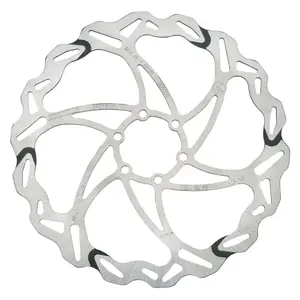
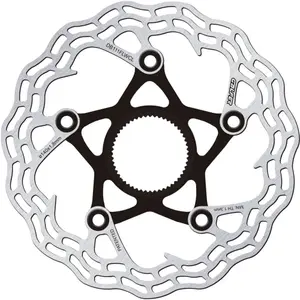
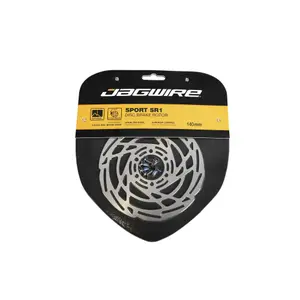
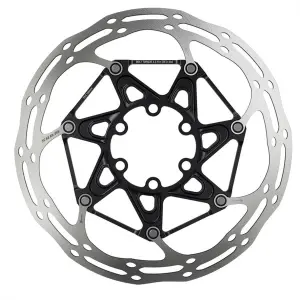
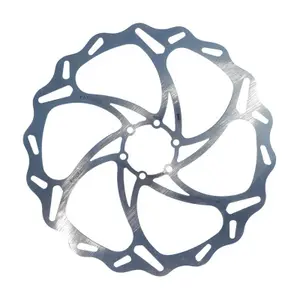
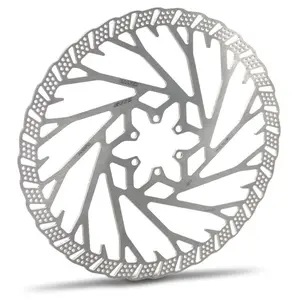
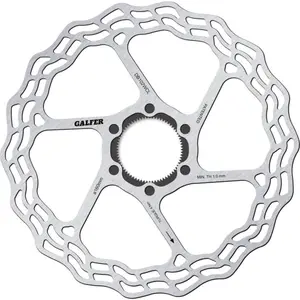

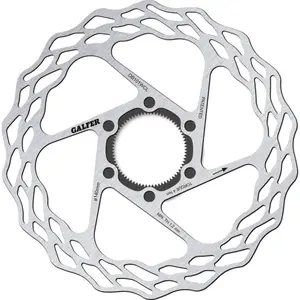
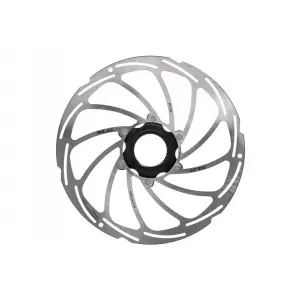
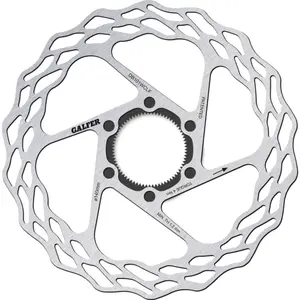
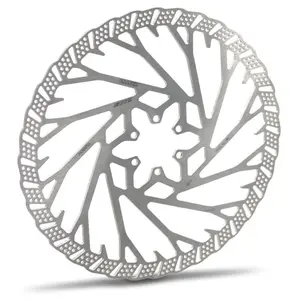
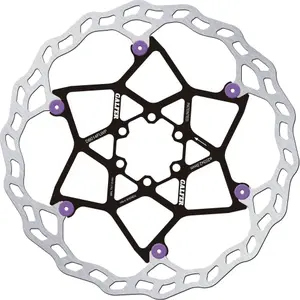
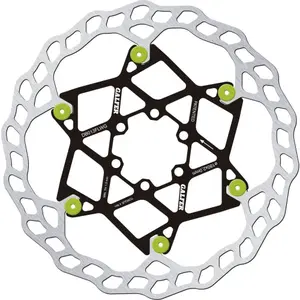
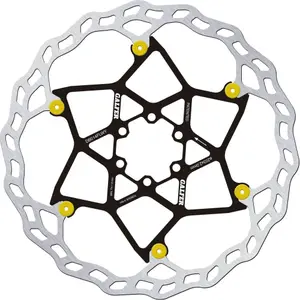
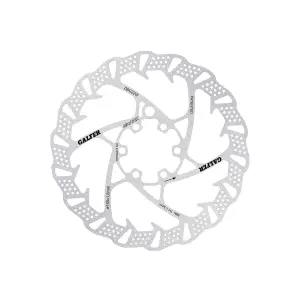
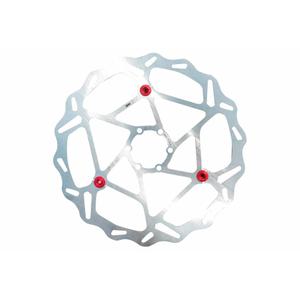
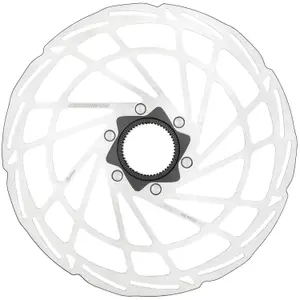
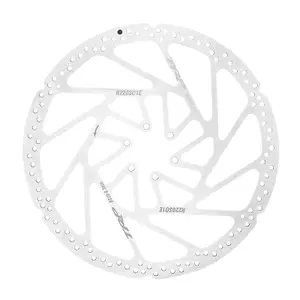
A gravel brake disc is chosen based on the diameter allowed by your frame and fork, often 160 mm at the front and 140 or 160 mm at the rear, and then based on the fixing of your hubs, Center Lock or six bolts. Finally, check that it accepts the pads you use, resin or metallic. Discs Shimano, Sram, Galfer, Campagnolo and others are gathered here.
Why does the disc matter so much in gravel biking?
A gravel bike brakes in tougher conditions than a road bike: water, sand, and mud hitting the disc at every bump, long descents with a bike sometimes loaded with panniers, repeated braking on surfaces where grip varies. The disc absorbs the heat from every stop and wears down due to the pads carrying abrasive particles. A disc suited to your weight and terrain maintains consistent braking at the end of a descent, whereas a disc that is too small or thin heats up, may warp, and causes noisy braking.
What disc diameter for a gravel bike?
Gravel bikes use flat mount fittings, originally sized for 140 mm discs. Many bikes have a 160 mm at the front, where most of the braking occurs, and a 140 mm at the back. Switch to 160 mm on both wheels if you’re riding loaded on a trip, if you're heavier built, or if your rides involve long descents: the dissipating surface increases and braking power improves. The frame and fork set a maximum diameter, as indicated by their manufacturer; an adapter shifts the caliper for a larger disc, within this limit. Changing diameter means you need to change the adapter at the same time as the disc.
Mounting, thickness, and pads: the compatibilities
- Mounting: Center Lock, grooved and secured by a ring, or six Torx screws. A Center Lock hub accepts a six-screw disc with an adapter, but not the other way around.
- Thickness: it varies by brand and model, and the caliper is set for it. Stick to the thickness specified by the brake manufacturer, and change the disc when it reaches the minimum size, often engraved on its surface.
- Pads: some discs only accept resin pads, while others can also use metallic ones. This information is often found on the disc itself.
- Disc edge: several road and gravel discs have a rounded edge, like the "rounded" models from Sram.
Mud, rain, and dust: choosing and maintaining discs and pads
Resin pads brake smoothly and in silence, but wear out quickly in mud and sand. Metallic pads perform better in these conditions and at high temperatures, at the cost of a bit more noise, provided the disc accepts them. After a muddy ride, rinse the calipers with clear water, without any degreaser or lubricant, which would contaminate the braking surface. A new disc needs to be bedded in with a series of progressive brakes, whether using new pads or not, to lay down a fine layer of friction material on its surface.
Mechanical or hydraulic: what to change on a gravel bike?
The disc is the same regardless of the system; only the caliper differs. Changing from a mechanical disc brake to a hydraulic brake, however, requires changing the levers, since cable levers do not push fluid: you need hydraulic levers and matching calipers. A semi-hydraulic caliper, activated by cable, allows you to keep the existing levers.
Calipers, levers, and other gravel braking parts
The disc works with the gravel brake calipers, which hold the pads, and the gravel brake levers, which control them. For a cable brake, the gravel cables and housing are replaced at the same time as the pads; the gravel brake pads are for cyclo-cross bikes with rim brakes. The gravel braking encompasses all these parts, and road bikes have their own page, road bike disc brakes.
Which gravel brake disc brands to choose?
Shimano offers its Center Lock Ice Technologies Freeza RT-CL800 and RT-CL900 discs, designed to dissipate heat during long descents, alongside SM-RT64 discs and six-screw models.
Galfer, a Spanish braking brand based in Granollers near Barcelona, offers its Wave discs, with a wavy edge, and its Shark models, including road versions in Center Lock.
Sram features its Centerline discs, including Centerline X Road and XR two-piece models of 140 and 160 mm, the latter with a rounded edge, and its Paceline and Aceline discs in Center Lock.
Campagnolo provides AFS discs in Center Lock and C3 discs in 140 mm for its road and gravel disc brake groups.
Gravel brake discs on sale
Previous generation discs and end-of-line products go through road clearance sales, which also include gravel braking parts; new references appear in the new arrivals. Before winter and its muddy rides, take advantage of Black Friday to have a spare set of discs on hand.
Frequently asked questions
What diameter of brake disc for a gravel bike?
The most common is 160 mm at the front and 140 mm at the rear. For loaded use, a heavier build, or many descents, 160 mm on both wheels provides extra power and heat margin, within the limits set by the frame and fork.
Does a gravel disc wear out faster?
Yes, mud and sand accelerate wear on discs as well as pads. Check the thickness with calipers, at the point where the pads contact, and replace the disc when it's below the manufacturer's minimum thickness or if it rubs despite caliper adjustment.
Can you put a Sram disc on a Shimano brake?
Often yes, if the mounting, diameter, and thickness are suitable for the caliper, and if the disc accepts your pads. Manufacturers recommend their own discs: a thickness discrepancy may cause the brake to rub or change the lever travel.
Do you need metallic pads for gravel?
They perform well in mud and long descents, provided the disc accepts them. Resin pads remain quieter and smoother to modulate in dry conditions. Many cyclists choose based on the season.
Why does my gravel disc brake squeak after rain?
Water and mud deposit particles between the disc and pads, causing everything to vibrate. The noise usually goes away after a few brakes. If it persists, clean the disc with a special brake cleaner and check the caliper alignment.







