
Hydraulic or mechanical gravel brake lever


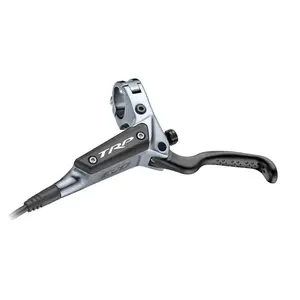
A gravel brake lever is chosen based on your system: hydraulic lever-controller of the same brand as the caliper, cable lever for a mechanical disc brake, electronic or wireless control if your transmission is. On the trails, you mainly brake with your hands on the hoods: shape, grip and adjustment are just as important as power. Complete levers, bodies and spare parts are gathered here.
What changes with a gravel brake lever?
On the road, cyclists drop into the curve of the handlebars to brake hard. On gravel, the vibrations and corrections to the line mean that riders often keep their hands on the hoods, the lever bodies where the palms rest. Gravel-specific levers therefore make this braking from above easier: with Shimano, the GRX controls place the pivot point of the lever higher than on road models and cover the hoods with a textured coating that improves grip. The lever itself is often designed to keep fingers in place during bumps. On a gravel bike with a flat handlebar, it's mountain bike levers that do the job.
Hydraulic, mechanical or wireless: which lever for which brake?
- Hydraulic brake lever: the most common in gravel, it houses the master cylinder in the hood. It is paired with a caliper of the same brand, designed for the same fluid.
- Cable lever: it pulls the cable of a mechanical disc brake or a cantilever brake for cyclo-cross. Mechanical disc calipers come in both road and mountain bike versions, depending on the length of cable they require: with a road handlebar lever, choose the road version.
- Electronic or wireless control: the brake remains hydraulic, but the gear changing is done via buttons. The lever must belong to the same system as the derailleurs.
Whatever the type, a left or right lever control also depends on the number of speeds and the brand of transmission, as it operates the gears.
Position of the hoods: tilt, height and reach
Well-positioned hoods prevent wrist strain on long rides. Set the bike level and align them in line with the top of the handlebars, or raise them slightly towards the sky for a more upright position; both sides must be at the same height, which can be checked with a ruler laid across. On a flared gravel handlebar, tilt them slightly inwards so that the levers fall under the fingers at the bottom of the handlebars. Smaller hands reduce the reach, which is the gap between the lever and the handlebars, with the adjustment screw of the lever if it has one. After any adjustment, tighten the clamp to the specified torque and replace the handlebar tape.
Additional levers: braking with hands on the handlebars
Inherited from cyclo-cross, additional levers attach to the right side of the handlebars, near the stem, allowing you to brake without leaving this position, handy on long downhill paths. Cable models are mounted in series on the housing of a mechanical brake. For a hydraulic brake, only an additional lever designed by the system manufacturer is suitable. In all cases, check the handlebar diameter at the mounting point.
Calipers, cables and other braking parts
A hydraulic lever works with its gravel brake calipers and is often purchased with them from the gravel disc brakes range. For a cable brake, renew the gravel cables and housings at the same time; gravel brake pads are used on cyclo-cross bikes with cantilever brakes. For another bike, check out the mountain bike brake levers or all the bike brake levers.
Which brands of gravel brake levers to choose?
Shimano offers GRX levers, available in hydraulic or mechanical, designed for braking from the hoods, alongside its Ultegra, 105 and Dura-Ace Di2 road lever controls and its XT mountain bike levers for flat handlebars.
Sram has hydraulic road levers, from Apex to wireless AXS Force and Red versions, some supplied with their own flat mount caliper, as well as G2, Code and Maven mountain bike levers.
Microshift, a Taiwanese manufacturer, offers cable lever controls compatible with Shimano transmissions, available in double or triple chainring versions, a simple base for a mechanical brake gravel bike.
Campagnolo supplies Ergopower replacement levers for its groups, including the Ekar, its 13-speed gravel group, alongside the Chorus, Record, and Super Record groups.
Gravel brake levers on sale
When a group changes, its controls from the old series go to the road clearance, which also lists gravel braking parts; new controls appear in the new arrivals. Take advantage of the winter sales to refresh the cockpit before the season resumes.
Frequently asked questions
How to adjust the tilt of hoods on a gravel bike?
Remove the handlebar tape on the top of the curve, loosen the lever clamp and slide it. A hood aligned with the top of the handlebars, or slightly raised, suits most cyclists. Check the symmetry with a ruler, tighten to the prescribed torque, then ride before re-taping the handlebars.
Can road levers be mounted on a gravel bike?
Yes, a gravel bike with road handlebars accepts road lever controls, as long as they match the brake type, brand and speed of the transmission. Gravel levers mainly provide better grip and easier braking from the hoods.
Can a Shimano lever be paired with a Sram caliper?
Not with hydraulics: both brands don’t use the same fluid, and their master cylinders are designed for their own calipers. With mechanical brakes, it is possible if the lever throw suits the caliper, road version with a road handlebar lever.
How to bring the lever closer for small hands?
Many lever controls have a reach adjustment screw, hidden under the hood cap or behind the lever. After adjustment, check that the brake isn’t rubbing and that the lever has sufficient travel before contacting the handlebars; a cable brake may sometimes require retightening the cable.
Is a special lever needed for an electric gravel bike?
The lever remains that of the installed braking system. However, some electric bikes may require a lever equipped with a sensor that cuts off assistance when braking: check the bike’s manual before replacing the original lever.







