
Gravel brake cable and casing for disc brake


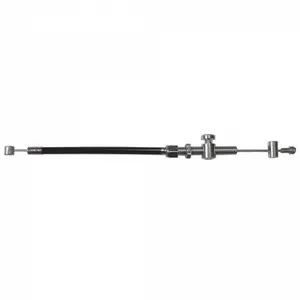
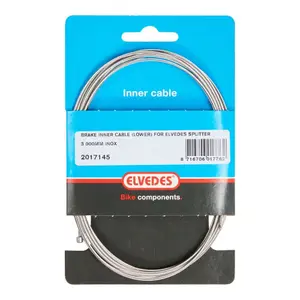
A gravel brake cable usually operates a mechanical disc brake, with the rear caliper located at the bottom of the frame: make sure to have a long enough cable, a quality brake housing that doesn't compress, and, on muddy paths, a continuous housing up to the caliper when the frame allows it. Cables, housings, complete kits, and hydraulic hoses are gathered here.
Cables and housings on a gravel bike: what’s different
Many gravel bikes use cable-actuated disc brakes, a simple solution that can be repaired anywhere and compatible with mechanical levers. Others, older or oriented towards cyclo-cross, have cantilevers or mini V-Brakes. In all cases, the cabling works in harsher conditions than on the road: mud and water splashes, dust infiltrating the housing openings, constant vibrations. It gets dirty faster, and it’s often it, more than the pads, that makes a lever hard to pull or a brake slow to return.
Mechanical disc brake: a precise cable and a housing that doesn’t crush
A mechanical disc caliper only moves its pads by a few tenths of a millimetre: any loss in the cabling is felt at the lever. A good quality spiral brake housing with a smooth inner liner limits the spongy feel; a polished or coated cable glides smoothly along the long route to the rear caliper, which is often fixed at the base of the frame. A road handlebar lever pulls less cable than a mountain bike lever: the caliper must be designed for this range.
When installing, route the housing through gentle bends, cut it squarely, and put a brake end cap on each end. Then adjust the pad spacing at the caliper, followed by the cable tension at the barrel, and repeat this adjustment as it wears.
Mud, water, and internal routing: protect the cabling
On a gravel bike, every section of exposed cable is an entry point for mud. Where the frame and its stops allow, a continuous housing from the lever to the caliper keeps the cable protected. On a bike with internal routing, keep a reference point in the front tube before disassembling everything, like a guide wire or the old inner housing, to avoid fishing out the new housing blindly. Coated cables and housings with an inner liner work dry: do not add oil or grease, which would trap dust. After a winter of muddy trails, replace cables and housings together.
Hydraulic brakes: hoses and kits
On a gravel bike with hydraulic brakes, the cable and housing are replaced by a hose. The kits on this page allow you to replace a damaged hose or to fit a longer one, with connectors suitable for the brand of the brake. After any work on the hose, the system is bled with the manufacturer’s fluid.
Levers, calipers, and other gravel brake components
A new cable is adjusted with the gravel brake levers and gravel brake calipers, highlighting the wear on gravel brake discs or cantilever brake pads. Gears use different cables and housings, featured with road gear cables. Road bikes have their own page, road brake cables, and gravel braking brings it all together.
What brands are good for gravel brake cabling?
Shimano sells polymer-coated brake cables, PTFE or stainless steel cables, SIL-TEC coated sets with their end caps, and hydraulic hoses like the SM-BH90.
Jagwire combines cables, housings, and end caps in its Universal Sport and Elite kits to redo a complete braking system, and offers hydraulic hose kits Pro with adapters for Shimano brakes.
Velox packs its galvanized or stainless steel brake cables in workshop boxes, from short cable for the front to a 3 m cable for the longest bikes.
Sram includes a polished cable, a 5 mm brake housing, and end caps in its Slickwire and Slickwire Pro kits, and adds hooks and guides to secure hoses and cables along the frame.
Elvedes offers 19-strand brake cables, cable kits by head type, and housings with an inner liner, including the Superflex.
Cables and housings on sale
To stock up your workshop, check out the road clearance, which sells off kits and boxes of cables from discontinued ranges, and the new arrivals for the latest kits. Redoing all the cabling before the wet trail season should be done during the winter sales.
Frequently asked questions
What cable for a mechanical disc brake on a gravel bike?
A brake cable with a suitable head for the lever, pear-shaped for a road lever, long enough to reach the rear caliper, and preferably polished or coated to reduce friction. Pair it with a brake housing, never a derailleur housing.
Continuous housing or exposed cable under the frame: what to choose?
The continuous housing better protects the cable from mud and water, at the cost of a bit more friction. Exposed cable sections, being lighter, get dirty faster on trails. The choice also depends on the stops provided by the frame manufacturer.
Why is my mechanical disc brake getting hard?
Most often due to a dirty housing or a cable dragging at the exit of a badly cut housing. Also check the return spring of the caliper and the pad adjustment. If the cable is rusty or frayed, replace it along with its housing.
How often should I change cables and housings on a gravel bike?
As soon as the lever becomes stiff, returns badly, or if the braking is lacking in precision, and at least after a season of muddy rides. A new cabling often provides more bite than simply changing the pads.
How to run a brake cable through a bike with internal routing?
Before removing the old housing, slide a guide wire or a thin inner housing through the frame, then route the new housing following this guide. Cut to length by turning the handlebars to check that nothing is pulling.







