
Road bike brake cables and outer housing
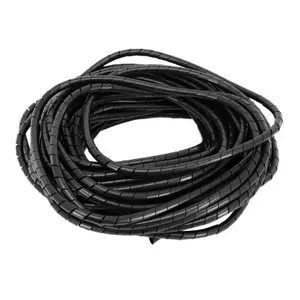
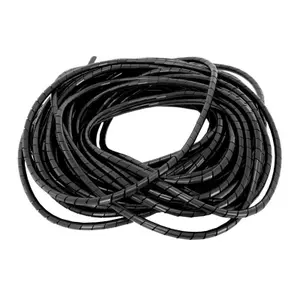
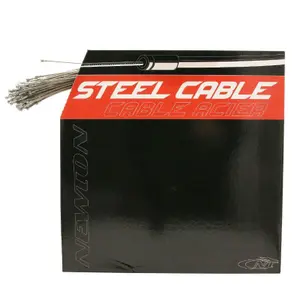


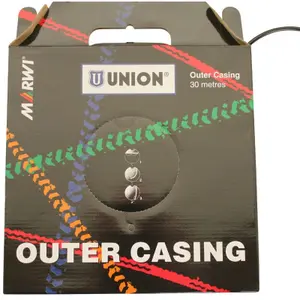
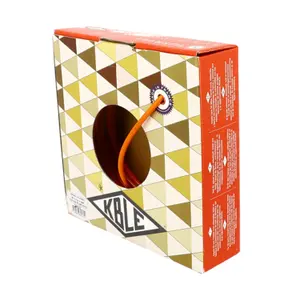
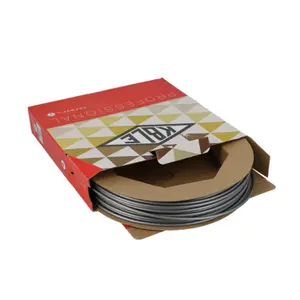
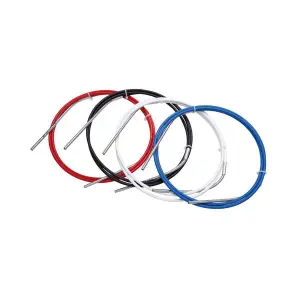
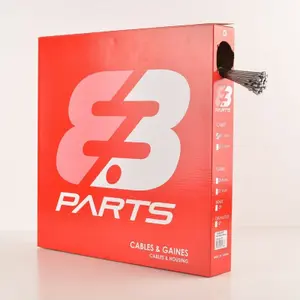
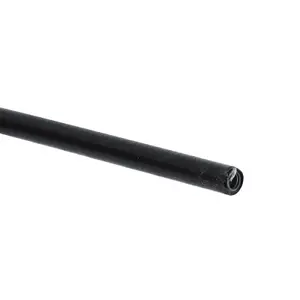
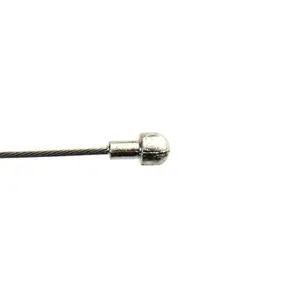
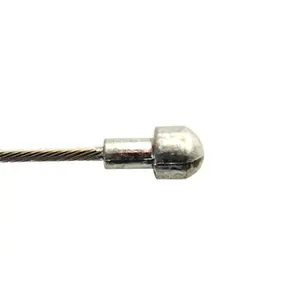
Choose a road bike brake cable by its head, to suit your levers, Shimano and Sram or Campagnolo, and by a length long enough to reach the rear caliper. It slides inside a 5 mm spiral-wound brake housing, finished with ferrules. Stainless or coated cables, housing by the metre, ferrules, complete kits and hydraulic brake hoses are gathered here.
Brake cable and housing: what do they do on a road bike?
On a road bike with mechanical brakes, the cable transmits the force from the lever to the caliper, whether it clamps the rim or operates a cable disc brake. The housing takes the tension between the lever and the frame, then between the frame and the caliper, and guides the cable through the bends. Together, they determine the quality of braking: a cable that drags makes the lever stiff and the brake slow to return, and housing that compresses gives a spongy feel and imprecise braking. Replace them together, at the first sign of hesitation at the lever or when the cable frays.
Head, diameter, material: choosing your brake cable
The cable head sits in the lever. Road levers use a pear-shaped head, flat-bar levers a cylindrical head; some cables have both, and you cut off the one you do not need. Campagnolo uses a smaller head: choose a cable designated for that brand. A brake cable measures 1.5 to 1.6 mm in diameter, considerably more than a gear cable, because it takes much greater loads.
- Galvanised steel: the most economical, suited to city bikes and routine replacements.
- Stainless steel: resistant to corrosion, it is the most widespread choice on the road.
- Polished, PTFE or polymer-coated stainless steel: the cable slides with less friction, a real plus in frames with internal routing and long runs of housing.
Brake housing, ferrules and length
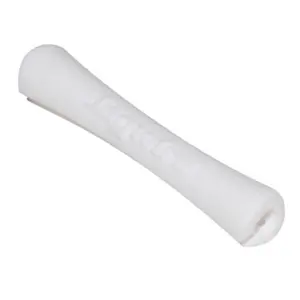
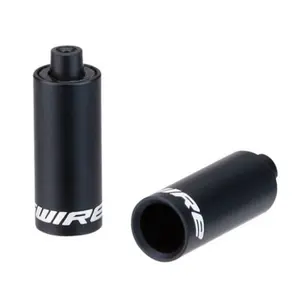
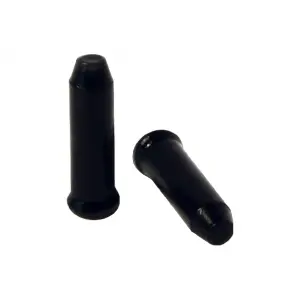
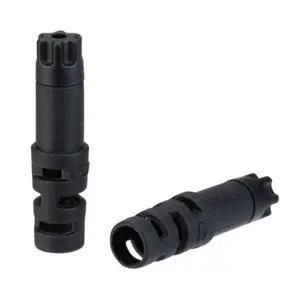
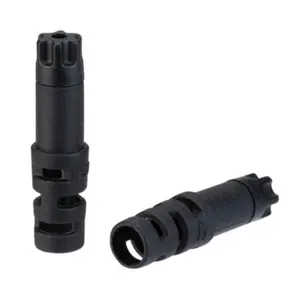
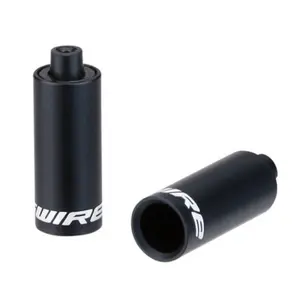
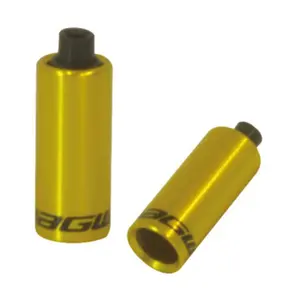
Brake housing is made of a steel wire wound in a spiral around a slippery inner liner, most often in PTFE, and generally measures 5 mm in diameter. This construction withstands the pull of an emergency stop: it must never be replaced by gear housing. Each end takes a ferrule of the right diameter, 5 mm for brake housing, which spreads the load on the cable stop; the end of the cable, once cut, is protected by a small crimped end cap that stops it fraying.
As for length, a 1.7 to 2 m cable serves the rear brake of most road bikes, and a shorter cable the front brake. A time trial bike, a frame with winding internal routing or a tandem needs a long cable, over 2.5 m. Cut the housing so that it forms smooth curves without pulling when you turn the handlebar: a loop that is too short stiffens the lever, a loop that is too long adds friction.
Hydraulic disc brakes: hoses and fittings
On a hydraulic brake, cable and housing give way to a hose filled with fluid. Shortening or changing a hose requires a new olive and insert at each connection, followed by a bleed with the fluid specified by the brake manufacturer. Hoses are chosen according to the brand of brake, as each manufacturer has its own diameter and fittings.
Other road braking parts
A new cable deserves road brake pads that still work well and well-centred road brake calipers; the controls are presented with road brake levers. To operate a derailleur, the cables and housing are different: see gear cables and housing. Road bike brakes brings all these families together.
Which brake cable and housing brands to choose?
Jagwire supplies workshops with its Workshop line: 5 mm brake housing with a lubricated liner on rolls, ferrules in every size and colour, cables with Campagnolo heads in boxes of 25, as well as complete Elite brake kits.
Shimano offers BC-9000 kits with polymer-coated cable, its SLR housing, PTFE or stainless cables with a road head, double-ended cables and the SM-BH90 hydraulic hose.
Velox, a spare parts manufacturer from Brittany, sells its stainless or galvanised brake cables in boxes of 10 or 25, in lengths from 0.80 to 3 m.
Sram combines polished cable, 5 mm brake housing and ferrules in its Slickwire and Slickwire Pro kits, and offers a 2,750 mm cable for time trial bikes and tandems.
Elvedes, whose range goes from cables to hydraulic brakes, offers housing with an inner liner, including Superflex, 19-strand brake cables and brake cable kits by head type.
Clarks Cycle Systems, a British manufacturer based in Derby, supplies its stainless or galvanised brake cables in boxes of 100 and its brake housing on rolls, in workshop format.
Brake cables and housing on sale and new arrivals
End-of-line boxes of cables and rolls of housing end up in our road braking clearance, enough to equip several bikes at once; recent kits join new arrivals. The winter sales are a good time to renew your cables before the new season.
Frequently asked questions
What is the difference between a road and an MTB brake cable?
The diameter is the same; only the head changes. A road lever takes a pear-shaped head, an MTB or flat-bar lever a cylindrical head. A double-ended cable suits both: simply cut off the one you do not need.
What length of brake cable for a road bike?
Allow around 1.7 to 2 m for the rear brake and a shorter cable for the front. Measure the old cable or take a long cable that you cut to length, leaving a few centimetres below the caliper's clamp bolt.
Do you need a ferrule at each end of the housing?
Yes: the ferrule guides the cable as it leaves the housing and spreads the load on the cable stop on the frame or lever. Without it, the housing gradually compresses and the brake becomes spongy. Choose the ferrule diameter to match that of the housing.
Should you grease a coated brake cable?
No: a coated cable or housing with a PTFE liner runs dry, and grease would trap dust. On a bare stainless cable in older housing, a drop of light oil is enough.
Can a brake cable snap?
It is rare, but a cable that is frayed at the head or rusty can give way under hard braking. Inspect the head in the lever and the visible part near the caliper, and replace the cable at the first broken strand.







