
BMX handlebars: race, freestyle, number plates
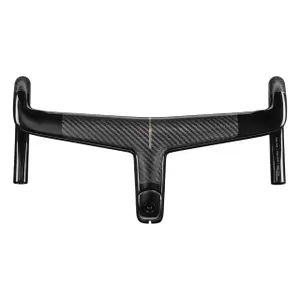
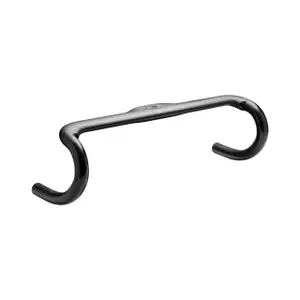

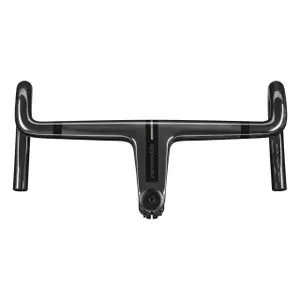
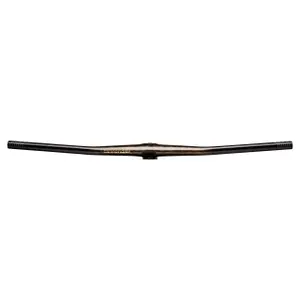
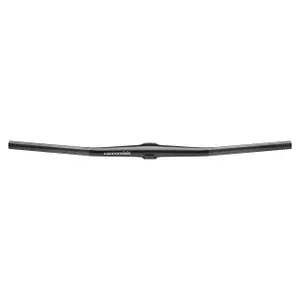
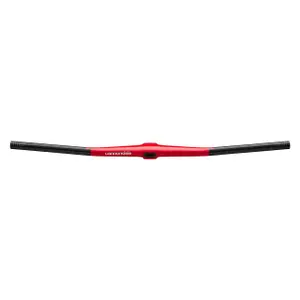


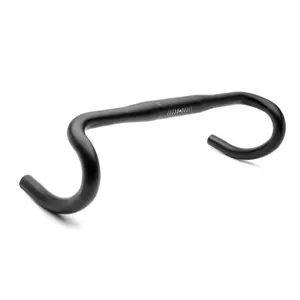
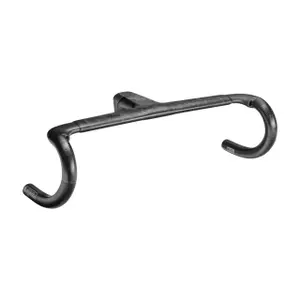


BMX handlebars are chosen by their rise, given in inches, their width and their clamp diameter, then by discipline: chromoly, aluminium or carbon for BMX racing, taller and tougher steel bars for freestyle. Mini, expert and cruiser bars, number plates, letters and bar ends are gathered here, alongside road and MTB handlebars.
Race or freestyle BMX handlebars: two different briefs
In BMX racing, the handlebar has to be light and stiff to transmit every pull out of the gate and over the rollers. Race models are made of chromoly steel, aluminium or carbon, with a rise suited to the size of the rider and the frame. In freestyle, whether street, park or dirt, the bars take landings and repeated impacts: they are almost always chromoly, taller and made of two pieces, a U-shaped bend reinforced by a crossbar, or of four welded pieces.
Rise, width, backsweep and upsweep: how BMX bars are measured
The rise is measured from the centre of the clamping area to the top of the grips and is given in inches. On this page, race bars range from about 4.5 to 8.5 inches depending on the size of the bike, and cruiser models are around 5.75 inches; in freestyle, adults most often ride between 9 and 10 inches.
Width generally ranges from 28 to 32 inches and can be cut down if needed. Backsweep, the angle of the grips towards the rear, is around 10 to 12 degrees on a classic bar, and upsweep, the upward angle, 1 to 3 degrees. These two angles set the position of your wrists and elbows: a bar with less backsweep feels noticeably different.
Clamp diameter: 22.2 or 31.8 mm
Most BMX handlebars clamp at 22.2 mm, or 7/8 inch. Some race bars use an oversized 31.8 mm clamp, which is stiffer, such as the Box One 31.8 or the Pride Racing 373 Replica V2: they require a stem of the same diameter. The ends, where the grips fit, remain 22.2 mm.
Number plates: required for racing
In BMX racing, every bike carries a soft plastic number plate fixed to the front of the handlebar, and a side plate is also required at many national and international races. The colours and format of the numbers depend on the category and the federation: check with your club before ordering plate backgrounds, letters and numbers.
The other parts of the cockpit
The handlebar is chosen together with its BMX stem, whose clamp must match, and finished with BMX grips that close off its ends. To renew the whole front end of the bike, also see BMX forks; all the parts are gathered in BMX components.
Which BMX handlebar brands should you choose?
Box, a Californian brand founded by Toby Henderson after a long career as a professional racer, offers the Box One in carbon, in 4.5 and 6 inches, or in chromoly, a titanium Hex Lab, and its Box Two plates in mini, cruiser and pro sizes.
Insight, focused on racing, supplies number plates, letters and numbers for the pro, mini and cruiser categories, as well as bars from 7 to 8.5 inches and a 5.75-inch cruiser model.
Elevn, created to supply BMX racing with high-end parts, made its name with very light chromoly bars and forks; its SLT bar comes in 4.25 and 5.75 inches, in standard and cruiser versions.
Pride Racing, a French BMX racing brand based between Lyon and Saint-Étienne, where it has its own track, designs the Sevenmotion and Flowmotion bars as well as the 31.8 mm Replica V2.
Cult, founded in California by rider Robbie Morales, offers two-piece freestyle bars, including the Devon Smillie signature model, the Begin Cuatro and a bar for younger riders, the Crew Juvi.
BMX handlebars on sale
An end-of-line bar or plate can often be found in our BMX clearance; recent references are in new arrivals. Black Friday is a chance to prepare for the racing season, and the summer sales to change bars before park sessions.
Frequently asked questions
What size BMX handlebars do you need?
It depends on your height, the size of the frame and your discipline. Start from the rise recommended by the manufacturer for the size of your BMX, then adjust by half an inch according to feel. In freestyle, tall riders often choose the tallest bars.
Are carbon BMX handlebars suitable for freestyle?
No, carbon is aimed at BMX racing, where every gram counts and impacts are occasional. In freestyle, repeated impacts and crashes onto the bars favour chromoly steel, which is more forgiving. After a crash in a race, inspect a carbon bar and replace it at the slightest doubt.
Can you cut down BMX handlebars?
Yes, most steel and aluminium bars can be cut down to reduce their width: remove the same length from each side with a pipe cutter, then deburr. For a carbon bar, follow the manufacturer's instructions strictly, and always leave enough length for the grips.
Why should the ends of the handlebar be plugged?
An open tube can cause serious injury in a crash. Grips with closed ends or separately sold bar end plugs remove this risk and also protect the grips from wear. Replace a split or lost plug straight away.
How do you fit a number plate on BMX handlebars?
Place the plate in the centre, in front of the stem, and fix it with cable ties around the handlebar and its crossbar, without pinching the brake outer. Tighten enough so that it does not turn over the rollers, then trim the excess from the ties neatly.







