
Bike power meters: crank, spider or spindle
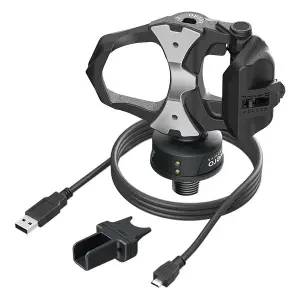
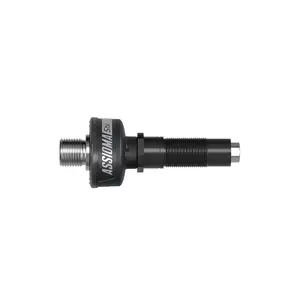
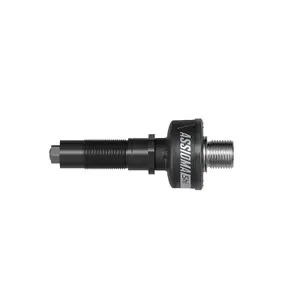
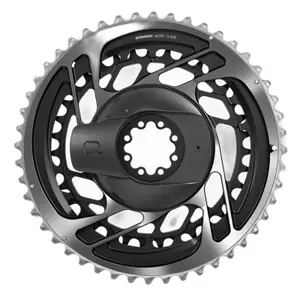



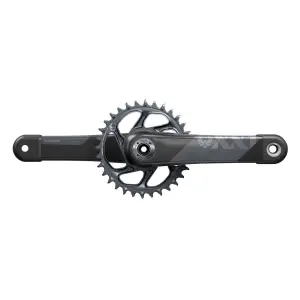


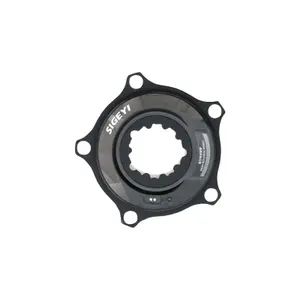
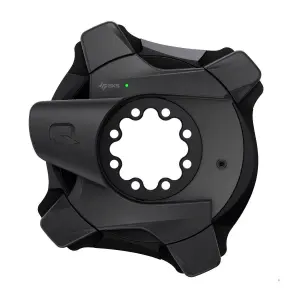
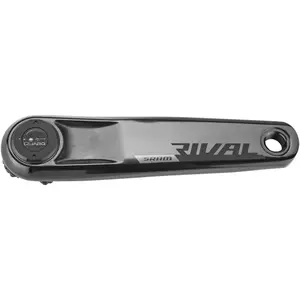
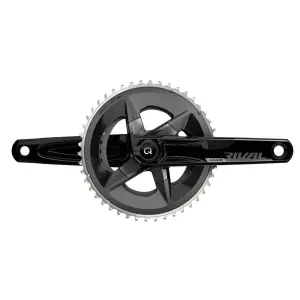
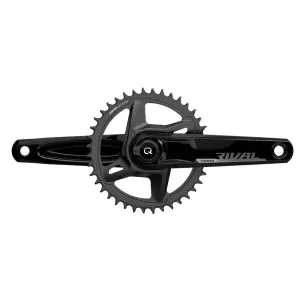
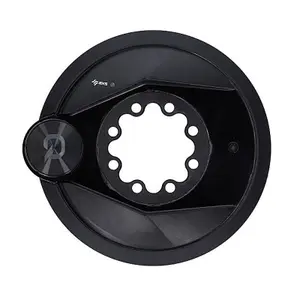
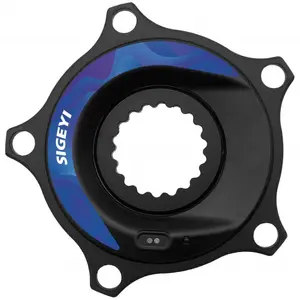
A bike power meter measures, in watts, the effort you put through the crankset: an instant figure that neither wind nor heat can distort, for zone-based training and for pacing a race. This page brings together power meters fitted to the crank arm, the spider or the crank spindle, for Shimano, SRAM and other set-ups. Check compatibility with your crankset first.
What does a bike power meter do?
Power is the product of the force applied to the pedals and the speed at which they turn. A power meter calculates it using strain gauges, which measure the tiny deformation of a crankset part with every pedal stroke, then transmits the result in watts. Unlike speed, which depends on wind and gradient, and heart rate, which lags behind and varies with heat or fatigue, power describes your effort at the very moment you produce it.
It is the foundation of structured training: from the power you can hold for about an hour, often called FTP, you set precise training zones. In a race, a time trial or a long climb, it helps you pace your effort so you do not blow up in the first few minutes. And it measures your progress objectively, ride after ride.
Crank arm, spider, spindle or pedal: where does the power meter go?
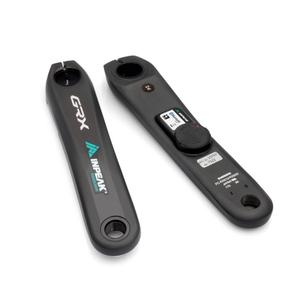
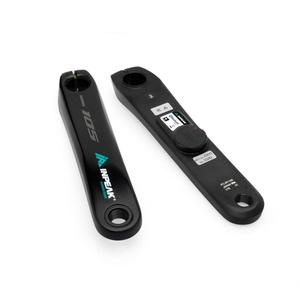
- On the crank arm: a pod bonded to the crank arm, or a crank arm supplied with the sensor already fitted. Usually on the left, it measures one leg and estimates the total; some versions equip both crank arms.
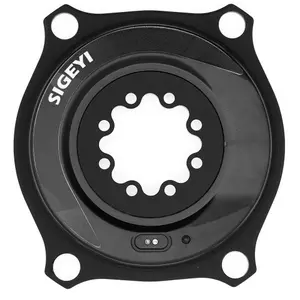
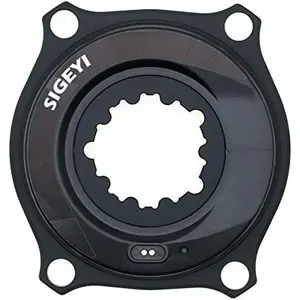
- In the spider: the part that connects the chainrings to the drive-side crank arm houses the sensor. It measures the combined effort of both legs, but requires chainrings that match its bolt circle diameter.
- In the crank spindle: the sensor, housed inside the spindle, measures the left side, without changing the chainrings.
- In the pedals: the easiest option to move from one bike to another. These models are listed with our bike pedals, including power meter pedals.
Single or dual-sided: should you measure each leg?
A single-sided power meter doubles the value measured on one leg to estimate the total. That is enough to follow a training plan, provided you keep the same power meter to compare your rides. But the split between your legs is never perfectly even and it shifts with fatigue, so the estimate can stray from your real output. Dual-sided systems measure each leg separately and display left-right balance, useful after an injury or to analyse your pedalling in detail. Spider-based power meters measure the total effort without separating it.
Checking compatibility with your crankset
A crankset power meter is chosen for a specific set-up. Note the brand and series of your crankset, the crank length and the axle type, such as the SRAM DUB spindle or the Shimano 24 mm spindle. For a spider power meter, count the chainring bolts and check their bolt circle diameter, or BCD: 110 mm on most road double chainrings, 104 mm on many MTB cranksets. Finally, check the clearance between the crank arm and the frame if you are adding a pod.
Some power meters come without a bottom bracket: choose the one that matches your frame from our bottom brackets. Matching chainrings are in our chainrings range, and complete sets in cranksets.
Battery, connectivity and calibration
Power meters transmit over ANT+, Bluetooth or both, to a GPS bike computer, a watch or an indoor trainer app. Depending on the model, power comes from a replaceable coin cell or a rechargeable battery. Before you set off, run a zero offset calibration from your bike computer, especially after a change in temperature: it corrects strain gauge drift. The manufacturer's app also lets you update the power meter's firmware and set the crank length.
Which power meter brands to choose?
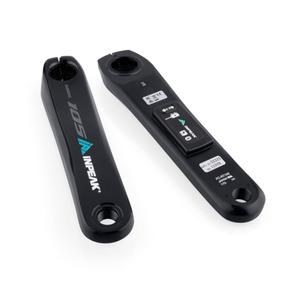
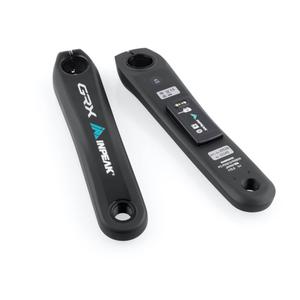
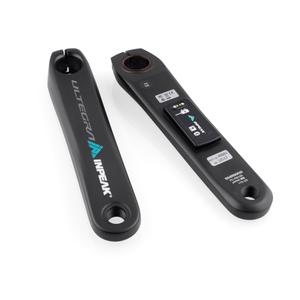
INPEAK offers Shimano 105, Ultegra and GRX cranksets fitted with its power meter, in Powercrank and Powercrank-E versions with a rechargeable battery.
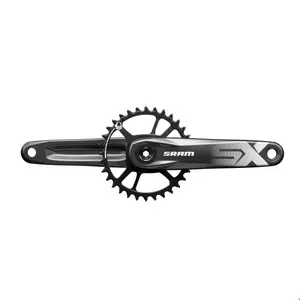
Sram builds power measurement into its cranksets: on Rival AXS, the sensor housed in the spindle measures the left leg; on Red AXS it sits in the spider that carries the chainrings; Eagle MTB cranksets are also available with it.
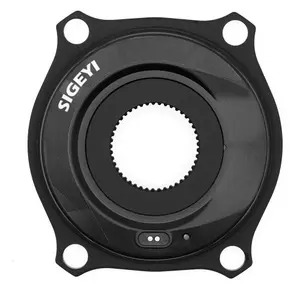
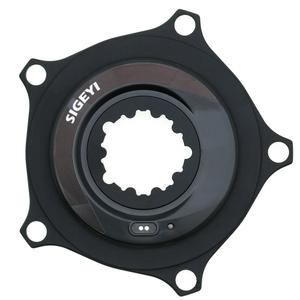
Sigeyi offers its AXO spider power meter, which measures the effort of both legs, in versions for Sram, Rotor, Cannondale or Cane Creek eeWings cranksets, depending on the chainring BCD.
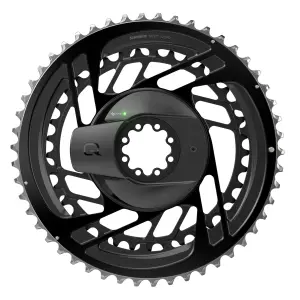
Quarq, the SRAM group's power meter brand, offers the DFour, a spider power meter for Shimano chainrings with a 110 mm BCD.
4iiii, a Canadian company, fits its Precision 3+ power meter to Shimano Dura-Ace, Ultegra and XT crank arms.
XCadey makes spider power meters that fit onto your existing crankset; its G2 versions with a 104 mm BCD are designed for MTB.
Power meters on sale
End-of-line power meters, cranksets and chainrings move to our clearance crank and pedal parts; the latest references are listed under new arrivals. A power meter is a considered purchase: Black Friday and the seasonal sales give you time to check compatibility before you order.
Frequently asked questions
Power meter or heart rate monitor: which should you choose?
The two complement each other. Power describes the effort you produce, instantly; heart rate describes your body's response to that effort. Comparing them on the same ride tells you about your form and your fatigue.
Is a single-sided power meter reliable?
It is reliable for tracking your training, because it always measures in the same way. Its estimate of the total assumes balanced legs: if your pedalling is asymmetric, the value displayed may differ from your actual power.
Can you fit a power meter yourself?
A crankset or crank arm with a built-in power meter is fitted like an original part, with the right tools and the correct torque. Replacing a spider or a bottom bracket takes more know-how: if in doubt, have a workshop fit it.
Is a power meter useful on a mountain bike?
Yes, especially for cross-country and marathon training. There are power meters for MTB cranksets, on the crank arm or in the spider, as well as power meter pedals compatible with two-bolt cleats.
Should you calibrate your power meter before every ride?
It is recommended. Zero offset calibration, run from the bike computer with the bike stationary and the cranks still, corrects the effects of temperature and tightening. Some power meters do it automatically while you freewheel.







