
Cycling cleats for road and MTB pedals


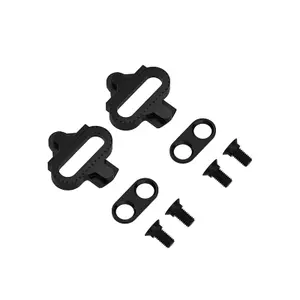
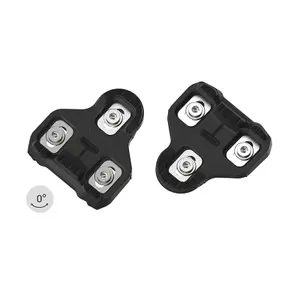
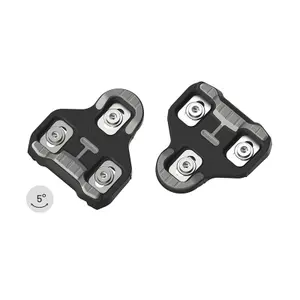
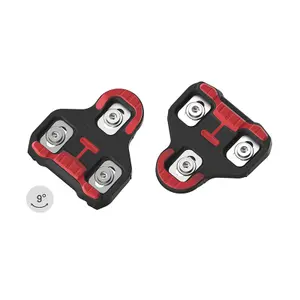


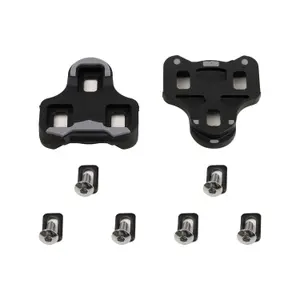
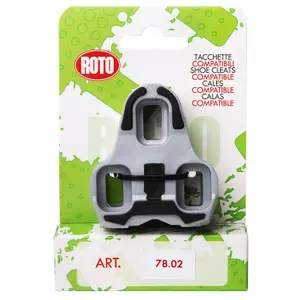
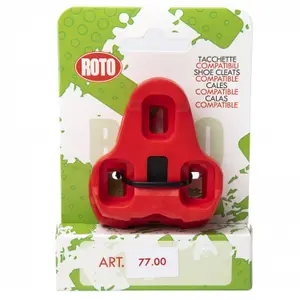
Cycling cleats bolt under the shoe and clip into the pedal: they must match your pedal system exactly, Look Keo, Shimano SPD-SL or SPD, Time or crankbrothers. Then choose their float, from a fixed cleat to one that lets your heel swivel, and replace them as soon as they wear. Protective covers, cleat shims and a set-up tool complete the page.
Cycling cleat types: one cleat per pedal system
Every clipless pedal has its own cleat, and a cleat from another system will not clip in. Two families share the market, described in detail on the bike pedals page:
- 3-bolt road cleats: wide and protruding, they are fixed under a stiff sole. Look's Keo, Shimano's SPD-SL and Time cleats belong to this family, each specific to its system; Look's older Delta standard, still used on indoor cycling bikes, is not compatible with Keo.
- 2-bolt cleats: small and recessed into a treaded sole, they let you walk. Shimano's SPD cleat is the reference, adopted by many MTB, gravel and urban pedals; crankbrothers and Time Atac pedals use their own 2-bolt cleats.
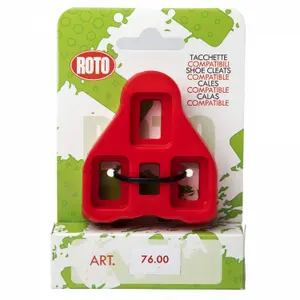
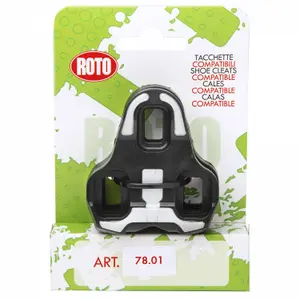
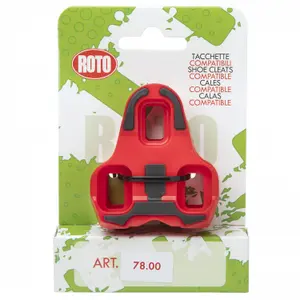
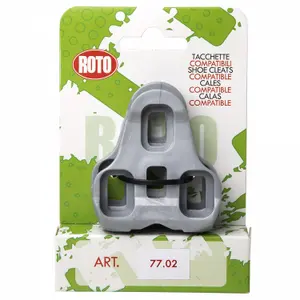
Specialist manufacturers offer cleats compatible with the Keo or SPD systems: check the exact system stated before you order.
Float and release angle
Float is the rotation the cleat allows your foot before it releases. A foot that cannot pivot imposes its position on the knee: a cleat with float spares the joints, a fixed cleat transfers your effort without loss. Manufacturers indicate it by colour:
- Look Keo: black at 0°, fixed, for racers; grey at 4.5°, supplied with Look pedals; red at 9°, for beginners or sensitive knees.
- Shimano SPD-SL: red at 0°, blue at 2°, yellow at 6°, the most widespread.
- Shimano SPD: the SM-SH51 only releases when you twist your heel outwards; the SM-SH56, with multi-directional release, comes free more easily, which reassures beginners but can release the foot unintentionally.
With Time and crankbrothers, the release angle also depends on the cleat chosen, and the pedal's spring tension, where it can be adjusted, completes the set-up.
How to set up cycling cleats, step by step
Set your saddle first, height, setback and tilt, and only then the cleats. Find the head of the first metatarsal by feel, the joint at the base of the big toe, mark it on the edge of the sole and line up the cleat axis with this mark, the cleat centred and pointing along the axis of the foot. Tighten the bolts to the torque specified by the manufacturer, then check on an indoor trainer that your knees move up and down in line with your ankles. Pain at the front of the knee suggests moving the cleat back; discomfort on the inside or outside of the knee, moving the cleat inwards or outwards. Before replacing a worn cleat, trace its outline with a marker so you can fit the new one in exactly the same place.
When should you replace your cleats?
Replace a cleat straight away if its nose breaks or cracks. The other signs of wear are felt in use: a less positive engagement, irregular release, a foot that floats on the pedal, unusual noises, a sole that slips when you walk. Visually, look for worn anti-slip pads, grooves dug by the mechanism and blackened surfaces. Walking is the main cause of wear on road cleats: a protective cover preserves them between the bike and the café, and a rinse after a muddy ride keeps them working well.
Pedals, power meters and crank parts
Cleats are chosen together with the bike pedals that take them. Pedals with a power meter also use standard cleats, Keo or SPD depending on the model. The rest of the drivetrain at the bottom bracket end, from cranks to chainrings, is in our crank and pedal parts.
Which cycling cleat brands to choose?
Shimano supplies the cleats for both its systems: SM-SH10, SM-SH11 and SM-SH12 for the road, SM-SH51 for SPD, as well as the covers and cleat protectors that limit wear when walking.
Favero, the Italian maker of Assioma power meter pedals, offers Keo-compatible cleats at 0, 5 or 9° and the cleat for its Assioma Pro MX pedals for MTB and gravel.
Look, which brought the clipless pedal into the professional peloton, offers Keo Grip cleats, with anti-slip pads for surer footing when walking, Delta cleats for indoor cycling bikes and cleats for its X-Track MTB pedals.
TIME offers the cleats for its Xpresso road pedals and Atac MTB pedals, with a release angle of 13 or 17°, or 10° for the Easy version.
Bikefitting, the bike fitting arm of the Shimano group, based in Valkenburg in the Netherlands, designs a tool that aligns the cleat with the first and fifth metatarsals.
crankbrothers offers its cleats with standard or easy release, with 0 or 6° of float, as well as shims that adapt the cleat to the recess in the sole.
Cycling cleats on sale
Cleats and crank parts from discontinued ranges move to our pedalling parts clearance, and recent references to new arrivals. Keeping a spare pair of cleats saves you from being caught out by a broken cleat the day before a ride.
Frequently asked questions
Do pedals come with cleats?
Usually yes: Look, for example, supplies its Keo pedals with grey 4.5° cleats. As cleats wear much faster than pedals, you then have to buy them separately.
Which cycling cleats are best for beginners?
A cleat with plenty of float, such as the red Keo or the yellow SPD-SL, forgives an imperfect position. With SPD, a multi-release cleat makes your first stops easier.
Can you walk in road cleats?
Only for a few metres: the protruding cleat makes walking slippery and wears quickly. Covers or a cleat with anti-slip pads help; if you walk a lot, choose a 2-bolt system.
Are compatible cleats as good as the original ones?
They clip into the pedals of the stated system, Keo or SPD. Check their float, which may differ from that of the original cleats, and retighten the bolts after the first ride.
Should you replace both cleats at the same time?
Yes, to keep the same behaviour on both sides. Keep a particular eye on the cleat of the foot you put down at every stop, which works harder.







