
Road bike shifters and gear levers

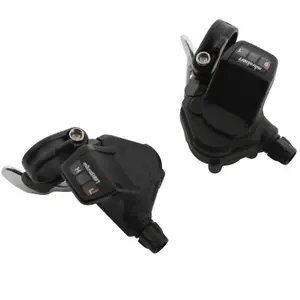
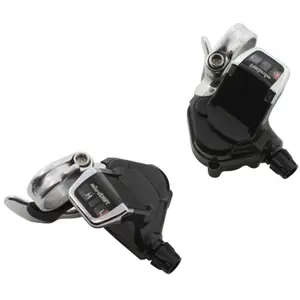
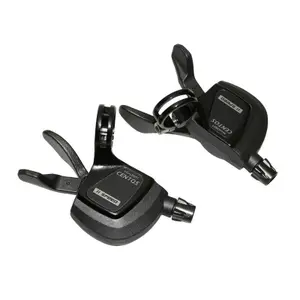
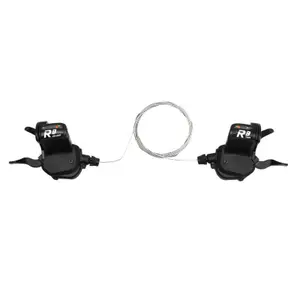

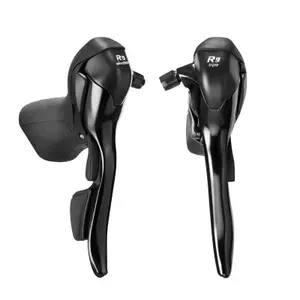
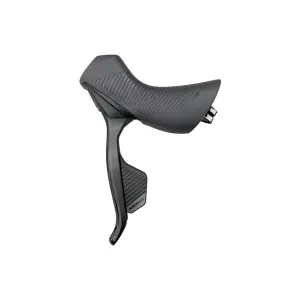
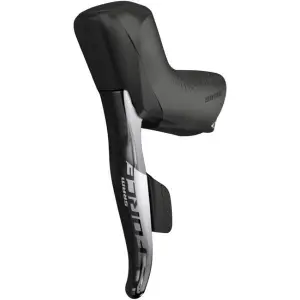
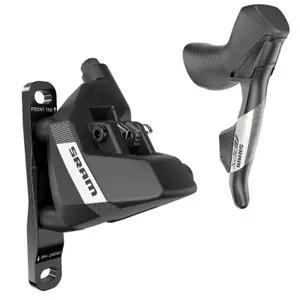
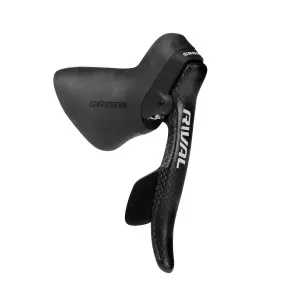
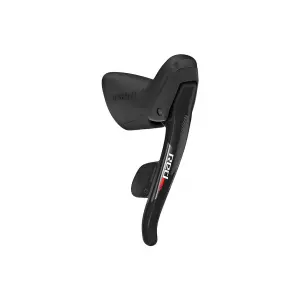
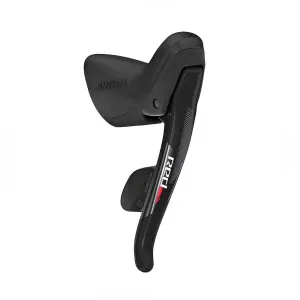


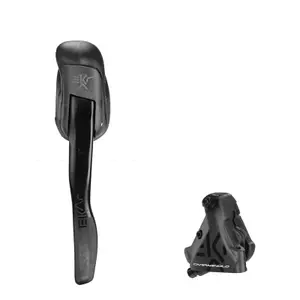
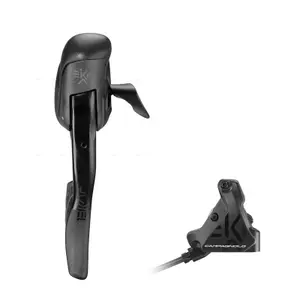
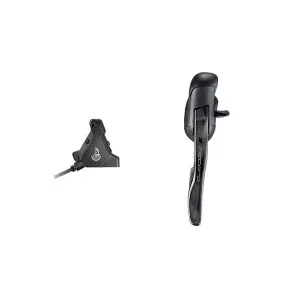
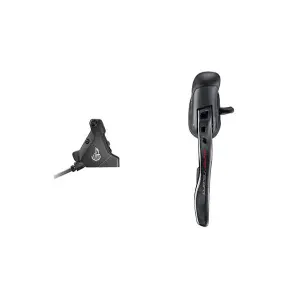
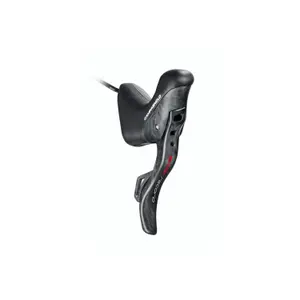
Road bike shifters, or combined brake and gear levers, put braking and gear changes under the same hand. To replace one, note three things: the brand and number of speeds of your drivetrain, the type of brake, rim or hydraulic disc, and the side, as the right-hand shifter controls the rear derailleur. Shimano, Sram and Campagnolo levers, mechanical or electronic, and spare parts are gathered here.
How do road bike shifters work?
On a drop handlebar, the shifter is fixed to the front of the bar and doubles as a handhold: your hand rests on its body, covered by a rubber sleeve usually called the hood. The lever pulls the brake cable or hose, and a built-in mechanism moves the derailleur. The right-hand shifter controls the rear derailleur and the cassette, the left-hand one the front derailleur and the chainrings; on a single-chainring drivetrain, the left-hand lever is only used for braking. Before this integration, gears were changed with shifters fixed to the down tube of the frame, still offered for classic bikes, or with bar-end shifters on time trial bikes.
Shimano, Sram, Campagnolo: three types of road bike shifter
- Shimano: the brake lever swings inwards to shift onto a larger sprocket, and a second lever placed behind it shifts down to the smaller sprockets.
- Sram: on mechanical groupsets, a single paddle sits behind the brake lever; a short push shifts onto a smaller sprocket, a longer push onto a larger one. Electronic groupsets entrust gear changes to two wireless paddles.
- Campagnolo: a thumb button on the inside of the shifter body shifts down to the smaller sprockets, and a lever behind the brake lever shifts up to the larger ones.
These actions do not mix: choose a shifter to match the rest of a drivetrain of the same brand, and usually of the same groupset.
Mechanical or electronic shifters?
A mechanical shifter pulls a cable that moves the derailleur with each click: simple and repairable anywhere, it needs its cable tension adjusting over time. An electronic shifter sends a signal, wired or wireless, to motorised derailleurs powered by a battery: shifting is precise and consistent, with no cable to stretch, but the system has to stay complete. An electronic shifter does not control a mechanical derailleur, and vice versa. Both technologies exist for rim brakes and for hydraulic disc brakes, with double or single chainrings.
Compatibility: what to check before you buy
- The number of speeds: the right-hand shifter is indexed for a specific number of sprockets, which must match your cassette and your derailleur.
- The type of brake: a shifter for rim brakes pulls a cable, while a shifter for hydraulic disc brakes contains a master cylinder connected to the caliper by a hose. Switching from one to the other also means changing the brakes, and possibly the frame and wheels.
- The derailleur: cable pull differs from one brand, and sometimes from one range, to another, including between road and MTB with the same number of speeds.
- The side and the packaging: many shifters are sold individually, right or left, others as a pair. Also check the number of chainrings the left-hand shifter controls.
Replacing a shifter and completing the drivetrain
Before replacing a shifter that skips gears, check the condition of the cables and housing: a frayed cable or dirty housing often mimics a worn shifter. Road bike cables and housing can be replaced for a fraction of the cost. A new shifter sometimes comes with new road bike derailleurs and a new cassette and chain when moving up to more speeds; in that case, a complete road groupset guarantees that every part is compatible. For a flat handlebar, see MTB shifters.
Which road bike shifter brands to choose?
Shimano covers every range of road shifters, from the Claris, Sora and Tiagra groupsets up to 105 and Ultegra, in mechanical or Di2 electronic versions, with the GRX range for gravel.
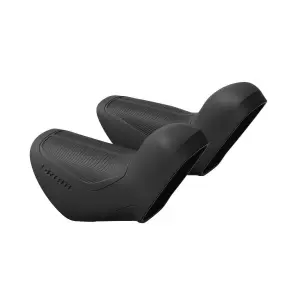
Sram, an American group based in Chicago, offers road shifters from its Apex, Rival, Force and Red groupsets, in a single-paddle mechanical version or a wireless eTap AXS electronic version, as well as replacement hoods.
Campagnolo, a road, gravel and track drivetrain specialist, calls its shifters Ergopower; here you will find Chorus, Record and Super Record levers, mechanical or EPS electronic in 12-speed, and the hydraulic Ekar levers of its gravel groupset.
Sunrace, a Taiwan-based maker of drivetrain components, offers pairs of Braser shifters that fit on the frame bosses, to restore a classic road bike.
Microshift, which designs its own road, MTB and gravel groupsets, is represented here by a pair of aluminium double-chainring road levers.
Road bike shifters on sale
Shifters from previous groupsets and spare parts leaving the catalogue join road drivetrain clearance, a good lead for replacing an older shifter like for like; the latest arrivals are in new arrivals. A groupset upgrade is worth planning during the seasonal sales or on Black Friday, before the new season gets going.
Frequently asked questions
Can you use a Shimano shifter with a Sram derailleur?
As a general rule, no: the cable pull at each click differs from one brand to another, and the derailleur does not line up properly with the sprockets. Stay with the same brand, and check compatibility between ranges within that brand, especially between road and gravel.
Does an 11-speed shifter work with a 10-speed cassette?
No, the shifter has a fixed number of clicks, designed for a specific sprocket spacing. To move to a cassette with more sprockets, you need to change the right-hand shifter, the chain and often the rear derailleur.
What are shifter hoods?
They are the rubber covers over the shifter body, where your hands rest. They wear, split or slip over time and can be replaced without changing the shifter, provided you choose the model designed for your lever.
Do electronic shifters need charging?
On several wireless groupsets, the shifters run on a coin cell battery that lasts a long time and can be replaced in a few minutes, while the battery that powers the derailleurs is recharged regularly. Check your groupset's manual for battery life and the type of coin cell.
Do you need to bleed the brakes after changing a hydraulic shifter?
Yes: replacing a shifter for hydraulic disc brakes means disconnecting the hose, then bleeding the system with the fluid recommended by the manufacturer, mineral oil or DOT fluid depending on the brand. Without the right tools, leave the job to a workshop.







