
MTB body armour for enduro, downhill and kids


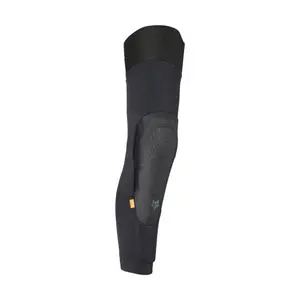
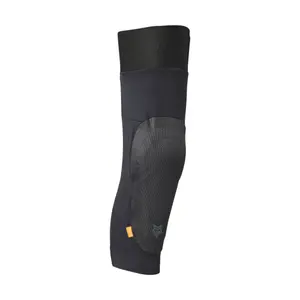
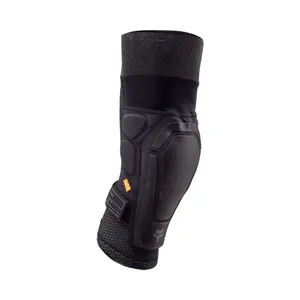


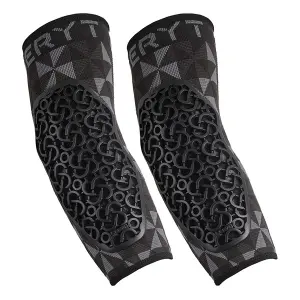
MTB body armour is chosen according to the terrain and how much climbing you do. For trail and enduro, soft knee pads and a light back protector stay on for the whole ride; for downhill and the bike park, hard-shell knee pads, elbow pads and a full vest take high-speed crashes. Kids' sizes protect young mountain bikers discovering technical trails.
Which protection for which kind of mountain biking?
On a mountain bike, the knees, elbows, shoulders and back are the areas most exposed in a crash. The level of protection depends above all on your speed downhill and the time you spend pedalling.
- Cross-country and leisure rides: thin knee pads, optional, for technical sections.
- Trail and enduro: pedal-friendly knee pads, light elbow pads and often a back protector worn under the jersey or built into the backpack.
- Downhill, freeride and bike park: knee pads with shin guards, often reinforced with a hard shell, full-coverage elbow pads and a vest protecting the back, chest and shoulders.
With an electric mountain bike, climbing costs less time and energy: you fit more descents into the day, which argues for downhill protection even on a trail ride.
Pedalling or descending: flexibility versus coverage
An enduro knee pad must protect without locking the knee at the top of the pedal stroke. Manufacturers fit them with foams that stay soft when worn and harden on impact, such as D3O or SAS-TEC, or very light Koroyd honeycomb inserts, in a breathable fabric sleeve with silicone bands that stop it slipping. Downhill models add a rigid shell, sometimes removable, that slides over rocks instead of catching on them, and extend down the shin to protect it from the pedals.
Certification to the EN 1621-1 standard classes these protectors in two levels: level 2 absorbs more than level 1, at the cost of a little thickness. A light level 1 knee pad that you actually wear is better than a level 2 protector left in your pack because it gets too hot on the climb.
Back protector, vest or backpack: protecting your back and upper body
Three solutions protect the upper body. A back protector on its own, in the form of a sleeveless vest or a plate held by shoulder straps, covers the spine and leaves your arms free. A full protective vest adds reinforcements on the chest, shoulders and sometimes the elbows, the benchmark for the bike park. A backpack with a built-in back protector carries water and tools while protecting your back, a popular solution in enduro.
For the back, the reference standard is EN 1621-2: level 2 transmits about half as much force as level 1. Chest protectors refer to EN 1621-3. Check on the label which area is certified, and to which level.
Size and fit: what to check
MTB body armour is chosen from precise measurements: thigh and calf circumference for a knee pad, arm circumference for an elbow pad, chest circumference and torso length for a vest or back protector. Try the knee pad on with your mountain bike shorts, then pedal a few strokes: it should neither rub behind the knee nor slide down the shin. A back protector should cover the spine from the shoulders to the lower back without touching your helmet when you lift your head. For children, go for adjustable junior sizes with hook-and-loop straps.
The rest of the mountain biker's kit
Body armour complements a mountain bike helmet, full face for downhill or with a removable chin guard for enduro, and long-fingered MTB gloves. Knee pads are worn under loose MTB shorts, and your eyes are protected by MTB glasses or goggles. Track riders will find models suited to their discipline in BMX protection, and the full outfit can be browsed in MTB gear.
Which MTB body armour brands should you choose?
7iDP, a specialist in mountain bike protection proven in enduro racing as in the bike park: the Seven Transition knee pad is worn like a sleeve and reaches level 2 of the EN 1621-1 standard; the Seven Project and the Seven Transition elbow pad complete the range, with a kids' version.
Kenny, an outfitter from Picardy with roots in motocross, also kits out mountain bikers: the Bike Reflex vest, a long-sleeved protective vest, the Tracer Water+ vest and Kontact knee pads.
IXS, a Swiss brand from Sursee that gives its name to downhill cups, grades its protection from the lightest to the most protective: Flow and Trigger vests, Flow Light and Carve Race knee pads, the Hack Evo+ elbow pad.
Evoc, which also designs backpacks with built-in back protectors, offers the Torso Protector, which protects the back to level 2 of EN 1621-2 and the chest to level 1 of EN 1621-3 and is worn over the jersey, as well as the LS Flex Lite knee and elbow pads.
Leatt, founded in South Africa by Chris Leatt, a doctor and motocross rider who invented a neck brace, offers the ReaFlex UltraLite, FlexMesh, 3DF 6.0 and Airflex Pro knee pads here.
Fox Racing offers the Launch Pro D3O knee pad, whose front shell can be removed and replaced, the Enduro Pro with Koroyd inserts and Launch models with shin guards, as well as kids' sizes.
MTB body armour on sale
When a protector changes colour or generation, the previous model moves to the MTB outlet; recently listed protection is grouped in new arrivals. Winter, between the sales and Black Friday, leaves time to get equipped before the bike parks open.
Frequently asked questions
What protection do you need to start mountain biking?
A well-fitting helmet and long-fingered gloves first, then a pair of soft knee pads as soon as you tackle technical trails. This trio covers most minor crashes. A back protector and elbow pads come next, as your speed increases.
What protection is required in enduro races?
It depends on the event: each enduro race sets out its kit list in its rules, which often covers a helmet with a chin guard on the timed stages, long-fingered gloves, knee pads and back protection, sometimes certified, worn as a protector or built into a backpack. Elbow pads are often recommended. Read the rules of each event before entering.
Is a back protector enough or do you need a full vest?
In enduro, a light back protector or a backpack with a built-in protector is often enough, as you soon forget it on the climbs. In downhill and at the bike park, where crashes happen faster and against obstacles, a vest that also protects the chest and shoulders brings extra safety.
Can you pedal uphill in downhill knee pads?
It is possible on a short link, but a hard-shell knee pad gets hot and hampers pedalling. Some mountain bikers keep it in their pack and put it on at the top. For a ride that alternates climbs and descents, a soft, ventilated enduro knee pad remains more comfortable.
What protection for a child who rides a mountain bike?
Junior knee pads that are easy to put on and, for a child who rides at the bike park or downhill, a protective vest in their size. Take their measurements, since age alone is not enough to choose the size, then have them pedal in it: a child will happily keep on protection they forget while riding.







