
Mountain bike indoor trainer accessories and parts

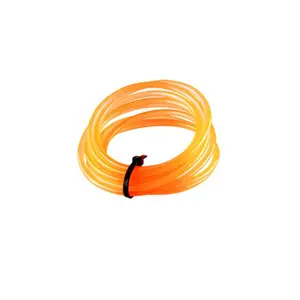
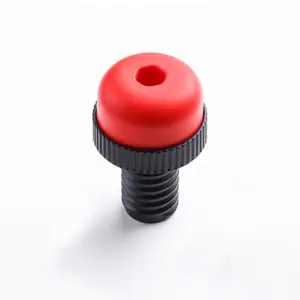
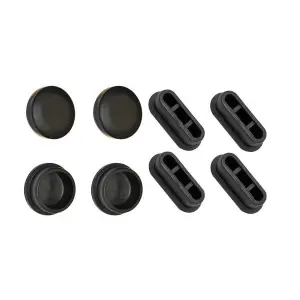
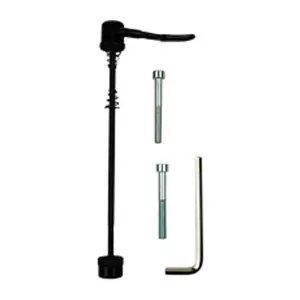
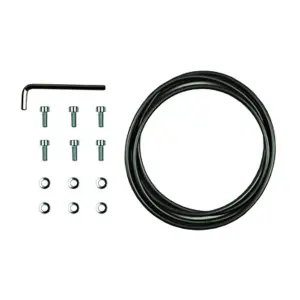
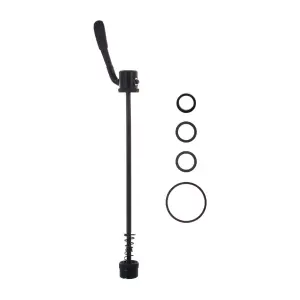
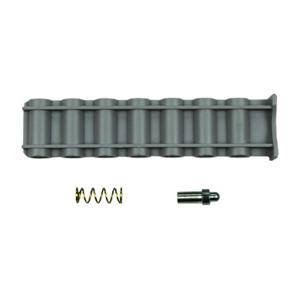
Putting a mountain bike on an indoor trainer means checking the rear axle, quick release or 142 or 148 mm thru-axle, and the freehub body for the cassette. This page brings together the accessories and spare parts that go with indoor training: mats, legs, power cables, clamping levers, belts and connection kits.
Can you use a mountain bike on an indoor trainer?
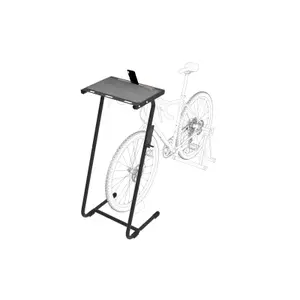
Yes, most indoor trainers accept a mountain bike, provided you check three points: the rear axle standard, the cassette and, on a wheel-on model, the tyre and wheel diameter. On an indoor trainer, the rear of the bike is raised: a riser block under the front wheel levels it again, for a mountain bike as for a road bike.
Direct-drive indoor trainer: axle and cassette
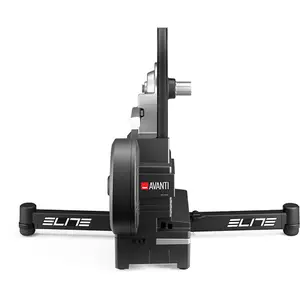
On a direct-drive indoor trainer, you remove the rear wheel and fix the frame directly to the unit, which takes its own cassette. Wheel diameter no longer matters. Recent models often accept, with the adapters supplied, 130 and 135 mm quick releases and 12 x 142 and 12 x 148 mm thru-axles, the latter corresponding to the Boost standard on mountain bikes.
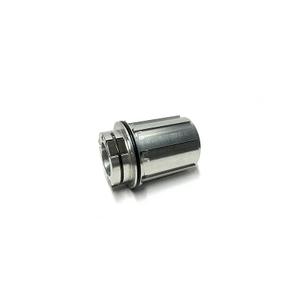
Then check the freehub body. The Shimano HG standard takes 8 to 12-speed cassettes; SRAM XD cassettes need a specific body, and some indoor trainers do not offer a Shimano Micro Spline body, common on 12-speed mountain bikes. The cassette on the indoor trainer must have as many sprockets as the one on the bike.
Wheel-on trainers and rollers
A wheel-on indoor trainer keeps the rear wheel, held by its axle in a clamp. A knobbly tyre vibrates on it, makes noise and wears quickly: fit a slick tyre or a dedicated wheel. Also check the wheel size accepted, as some wheel-on trainers only take 700 wheels, and whether there is an adapter for thru-axles. Rollers, on which the bike is not fixed, accept every wheel size but call for balance.
Indoor trainer accessories
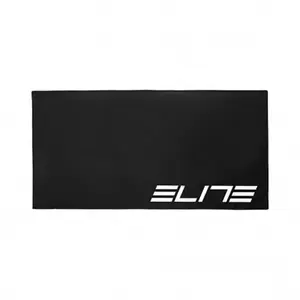
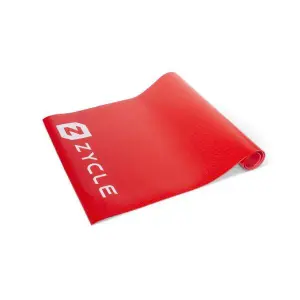
- Mat: protects the floor from sweat and damps the vibrations transmitted to the floor.
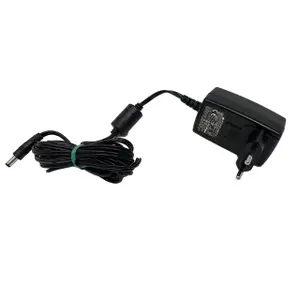
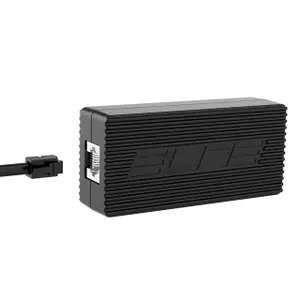
- Power cables and power supplies: essential for smart models, and specific to each brand.
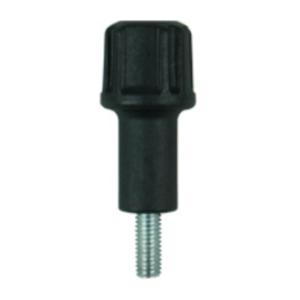
- Clamping levers: a quick release with end caps suited to the clamp of a wheel-on trainer.
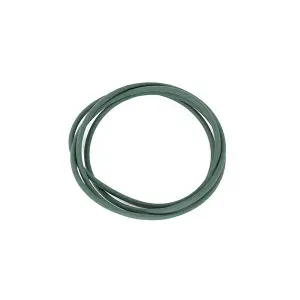
- Legs, belts, connection kits: the spare parts for rollers and smart models.
Indoor trainers and mountain bike electronics
The indoor trainers themselves, wheel-on or direct-drive, are presented on the indoor trainers page in the road section. To track your sessions, bike computers and GPS and smartwatches connect to most models. Everything is gathered in mountain bike electronics.
Indoor trainer accessory brands
Wahoo offers for its KICKR range a mat, a leg and a power cord shared by the KICKR, SNAP, CORE and CLIMB, as well as a smart roller.
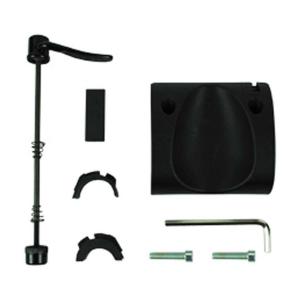
Tacx, Garmin's indoor trainer brand, supplies connection kits for the Neo and Neo 2 and rubber caps for the Flux.
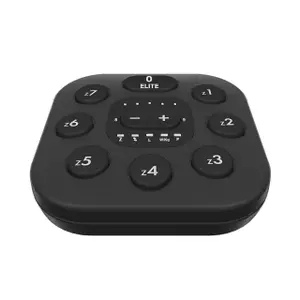
Elite covers the upkeep of its units: 180 x 90 mat, power supply and cable, Zona control, cover and spare parts.
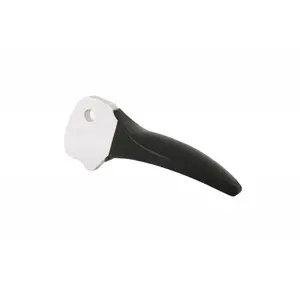
Massi completes the page with the Zpro mat, a strap for rollers and a clamping lever for indoor trainers.
Indoor trainer accessories on sale
Mats and accessories from discontinued ranges are offered in mountain bike electronics clearance, and recently listed products in new arrivals. With winter arriving and shorter rides in the woods, Black Friday is a chance to complete your set-up.
Frequently asked questions
Which indoor trainer for a 29-inch mountain bike?
A direct-drive model suits every wheel size, since the rear wheel is removed; just check the axle. For a wheel-on model, check that 29 inch is among the sizes accepted.
My mountain bike has a Boost thru-axle: is it compatible?
Boost corresponds to a 12 x 148 mm axle. Many direct-drive indoor trainers accept it with an adapter, supplied or sold separately. Note the dimensions engraved on your axle before ordering.
Do you need to buy a cassette for your indoor trainer?
Often, yes: a direct-drive indoor trainer comes with or without a cassette depending on the model. Choose one with as many speeds as your drivetrain, and compatible with the unit's freehub body.
Do you need a special tyre on a wheel-on trainer?
It is advisable. A slick tyre designed for indoor trainers makes less noise and stands up better to roller wear than a knobbly mountain bike tyre.
What is an indoor trainer mat for?
It protects the floor from sweat, stops the unit from sliding and reduces vibrations.







