
Turbo trainers, smart trainers and rollers
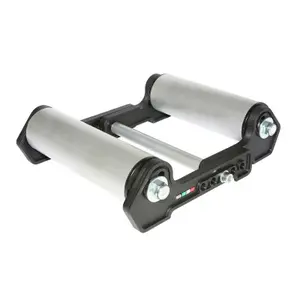
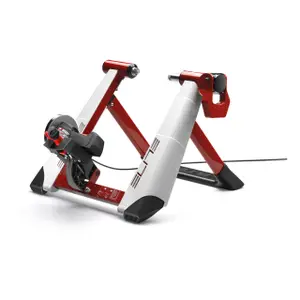
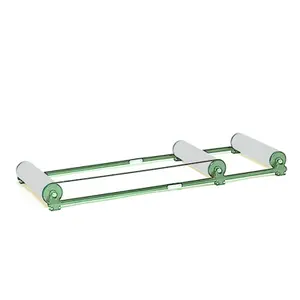
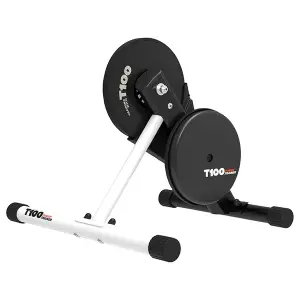
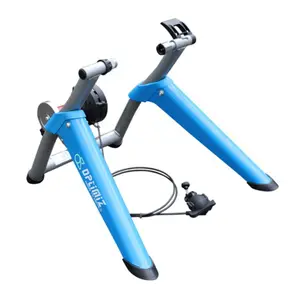
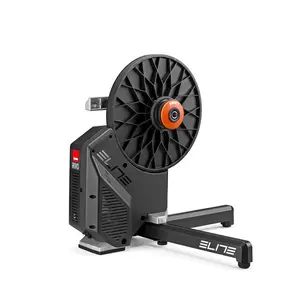
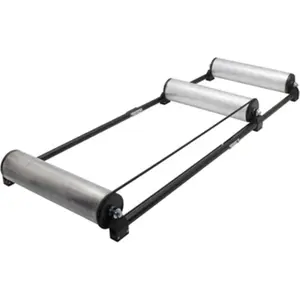
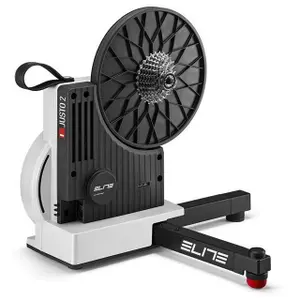
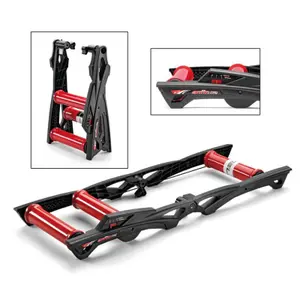
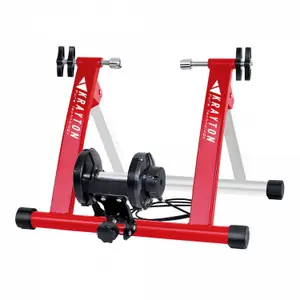
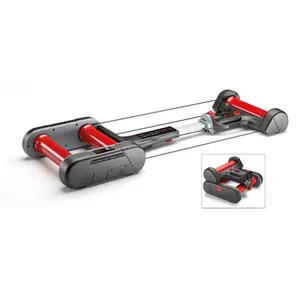
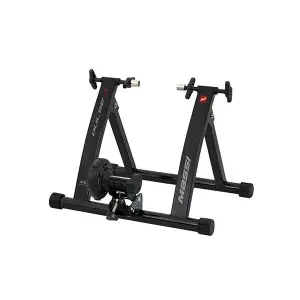
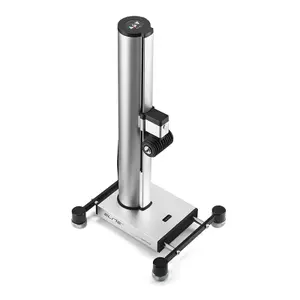
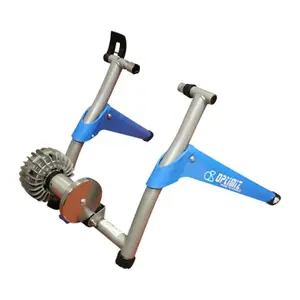
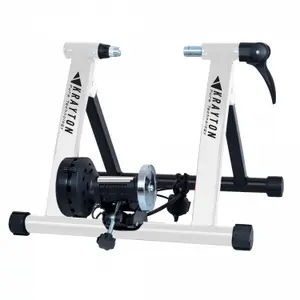
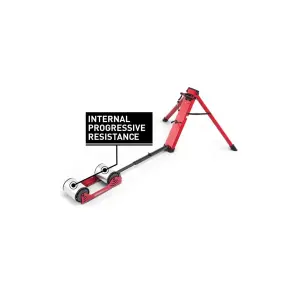
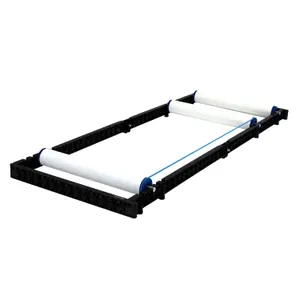
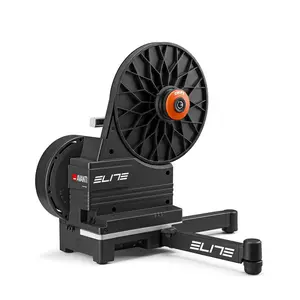
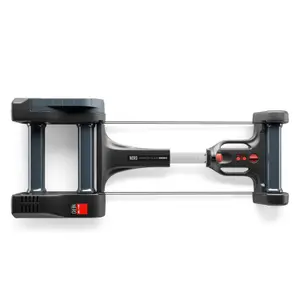
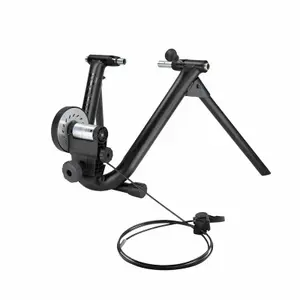
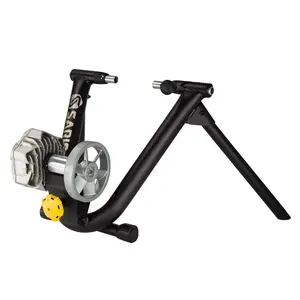

A turbo trainer, or indoor bike trainer, turns your road bike into an indoor bike so you can train whatever the weather. Direct drive models, fitted in place of the rear wheel, are the quietest and most accurate; wheel-on trainers and rollers are simpler to set up. Mats, legs and spare parts are also on this page.
Direct drive, wheel-on or rollers: which turbo trainer should you choose?
- Direct drive: the rear wheel is removed and the chain drives a cassette fitted to the trainer. The connection is direct, power is measured more accurately and noise is reduced: the choice of riders who follow a training plan.
- Wheel-on: the rear tyre presses against a roller braked by magnets, fluid or a motor. Setting up is quick, but the tyre wears and the pressure against the roller has to be adjusted at each session.
- Rollers: the bike sits freely on three drums and you keep your balance as on the road, which works on a smooth pedal stroke. They are also used to warm up before a race.
Smart or not: what controlled resistance changes
A smart trainer communicates over Bluetooth and ANT+ with an app, a bike computer or a watch: it sends power, cadence and speed, and receives resistance commands. Depending on the mode chosen, ERG or simulation, it adjusts the resistance itself to the programmed session or to the gradient of the virtual route, as on apps such as Zwift. A non-smart model, whose magnetic or fluid resistance is set by hand or increases with speed, is enough for warming up or keeping fit.
Compatibility: axle, cassette and space
Check that the trainer accepts your rear wheel's axle, quick release or 12 x 142 or 12 x 148 mm thru-axle, often thanks to the adaptors supplied. On a direct drive model, the cassette is not always included: it must have as many sprockets as your drivetrain. Plan for the space, a power socket for smart models, and a mat that protects the floor from sweat and dampens the vibrations passed to the floor.
Bike computers, watches and MTB trainers
To record your sessions, a GPS bike computer or a smartwatch picks up the trainer's data. Mountain bikers have their own selection of MTB turbo trainers; the rest of the road bike electronics has its own page.
Which turbo trainer brands should you choose?
Wahoo offers the belt-driven Kickr Core 2, supplied with thru-axle adaptors and available in a Zwift Cog & Click version, and the Kickr, which handles up to 2,200 watts and also connects over wifi.
Elite, an Italian manufacturer from Fontaniva, near Padua, started out with training rollers: its Arion rollers with parabolic drums help you hold your line, and the Justo 2 has a built-in power meter and a 12-speed cassette.
Tacx, a Dutch turbo trainer manufacturer bought by Garmin, is represented here by its spare parts: legs, knobs and connection kits for the Neo and Flux.
Saris, a manufacturer from Madison, Wisconsin, offers the M2, a wheel-on smart trainer, and the Fluid 2, with fluid resistance.
Turbo trainers on sale
When a brand updates a trainer, the previous model may move to our road bike electronics clearance, and the latest listed models are in new arrivals. Black Friday falls just as indoor sessions start up again.
Frequently asked questions
Do you need a special bike for a turbo trainer?
No, your road bike is fine, provided the trainer accepts its rear axle and, for a direct drive model, the cassette matches your drivetrain.
Does a smart trainer work with Zwift?
Yes, smart models communicate with Zwift and most training apps. Some come in a Zwift Cog & Click version: a single sprocket replaces the cassette and two handlebar controls shift through 24 virtual gears.
Turbo trainer or exercise bike?
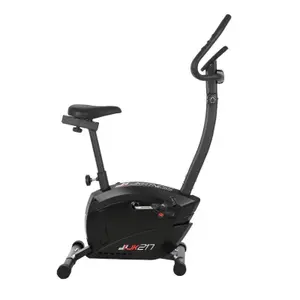
A turbo trainer uses your own bike, with its position and settings, and can be put away once winter is over; an exercise bike stays set up and is easier to share between several people.
Is a turbo trainer noisy?
Direct drive models are the quietest, since no tyre rubs on a roller: what you mainly hear is the drivetrain. A mat reduces the vibrations passed to the floor.
How do you set up your bike on a turbo trainer?
On a direct drive model, remove the rear wheel, put the chain on the smallest sprocket and tighten the axle with the adaptor supplied. On a wheel-on model, clamp the bike by its axle and adjust the pressure of the roller against the tyre. Raise the front wheel on a block to keep the bike level.







