
GPS watches for cycling, heart rate and multisport

A GPS watch for cycling records your rides, measures your heart rate and also tracks you when running or hiking. This page brings together multisport smartwatches, heart rate straps and accessories such as a handlebar mount. For cycling, look at GPS accuracy, compatibility with your sensors, navigation and battery life while recording.
GPS watch or bike computer: which is best for cycling?
A bike computer remains the easiest tool to read while riding: a large screen fixed to the handlebar, plenty of data pages, comfortable navigation. A GPS watch plays a different card: versatility. It records an MTB ride as well as a run or a hike, can be worn all day to track activity, sleep and recovery, and brings all your sessions together in a single app. Its screen is harder to check while you are riding: a mount lets you fix it to the handlebar for the duration of a ride. Many cyclists combine the two, with the watch serving as both a heart rate monitor and a training log.
What makes a good GPS watch for cycling
- GPS accuracy: watches that combine several satellite constellations, or even dual-frequency reception, keep a more faithful track under trees, in the mountains or between buildings.
- Barometric altimeter: it measures elevation gain more precisely than GPS alone, useful for mountain biking and hiking.
- Navigation: from a simple return to your starting point to following a route, up to offline maps on outdoor-focused models.
- Sensors: check that the watch accepts your speed, cadence or power sensors, over Bluetooth or ANT+ depending on the model.
- GPS battery life: it is counted in hours of recording, not in days of everyday use; dual-frequency and mapping use more power.
The screen matters too: an AMOLED display offers vivid colours and good readability, while a transflective screen stays readable in bright sunlight and uses less power.
Heart rate: wrist sensor or chest strap?
All the watches on this page measure your pulse at the wrist with an optical sensor. It is convenient, but on a bike, vibrations, the angle of your wrist on the handlebar and the cold can disrupt the reading, especially during short, intense efforts. A chest strap, which picks up the heart's electrical activity, reacts faster and remains the benchmark for interval training. It sends its data to the watch, a bike computer or an indoor trainer app: a single sensor then serves all your devices.
Running, outdoor or multisport: which type of watch?
Running watches are light and easy to use, with GPS and often an altimeter. Outdoor watches, more rugged, add long battery life, maps and impact-resistant glass: they suit mountain biking and long days in the mountains. High-end multisport watches combine all of this with dedicated cycling and triathlon profiles. Finally, fitness and wellbeing watches focus on daily tracking: some have no built-in GPS and use the phone's, which you then have to carry.
Completing your electronic kit
To read your data at a glance, bike computers and GPS remain the natural companion to a watch, and bike computer mounts put them in your line of sight. In winter, a heart rate strap and a watch also connect to indoor trainers to track your sessions at home. All electronic accessories for mountain biking are in our MTB electronics section.
GPS watch brands
Garmin, the GPS specialist, offers on this page rugged Instinct outdoor watches, including the Instinct Crossover with analogue hands, the Tactix 7, the Venu 2S smartwatch with an AMOLED screen, and a bike mount to fix your watch to the handlebar.
Polar, the Finnish company behind the first wireless wearable heart rate monitor, offers the Vantage V3, a multisport watch with an AMOLED screen, dual-frequency GPS and maps, the Grit X2 Pro for outdoor use, with sapphire glass, the Pacer Pro, a running watch with a barometric altimeter, as well as the more fitness-oriented Ignite 3 and Unite, and the H10 heart rate strap.
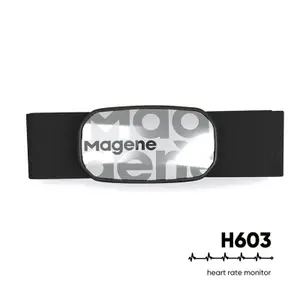
Magene, a specialist in sensors, bike computers and indoor trainers, offers the H603 heart rate monitor to measure your heart rate during exercise.
GPS watches on sale
End-of-line watches and electronic accessories move to our MTB electronics clearance, and newly listed models appear in new arrivals. A GPS watch makes a welcome gift: keep an eye on Black Friday, the festive season and the seasonal sales.
Frequently asked questions
Can you use a GPS watch instead of a bike computer?
Yes, it records speed, distance, elevation gain and heart rate just like a bike computer. To read the screen without letting go of the handlebar, fix it to a bike mount, then put it back on your wrist for the rest of the day.
Is wrist-based heart rate reliable on a bike?
It gives a good trend on steady efforts. On short, intense efforts, or in cold weather, a chest strap is more responsive and more accurate.
Does a watch measure speed on an indoor trainer?
Not with GPS, since the bike does not move. You need a speed sensor on the wheel or a connection to the indoor trainer, and the heart rate strap keeps measuring your pulse.
What battery life can you expect from a GPS watch?
It is counted in days of everyday use and in hours of GPS recording. The most accurate reception modes, mapping and an always-on display reduce it: check the stated battery life in the mode you will actually use.
Do you need a watch with maps for mountain biking?
It is not essential if you ride familiar trails. To explore new areas or head off on long rides, offline maps and route following save you from getting your phone out at every junction.







