
MTB saddles: comfort, enduro and e-MTB
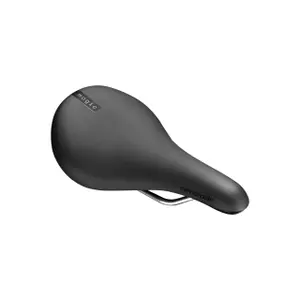


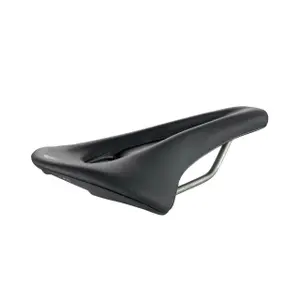
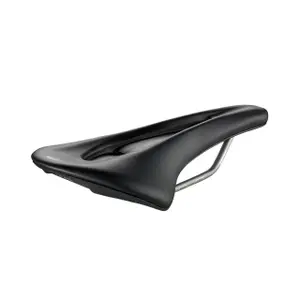


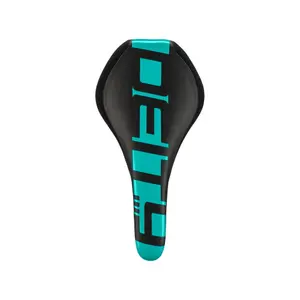
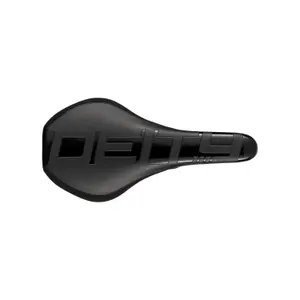
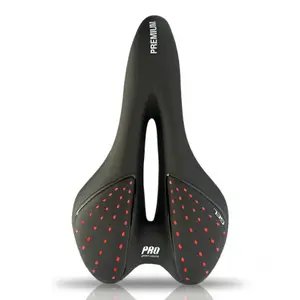
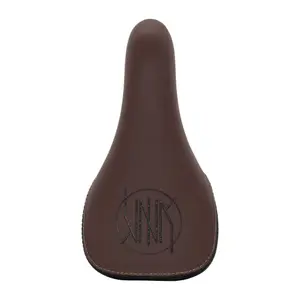
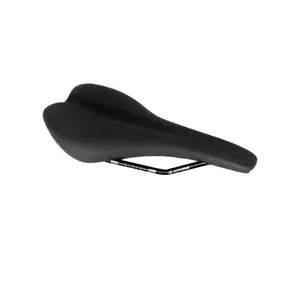
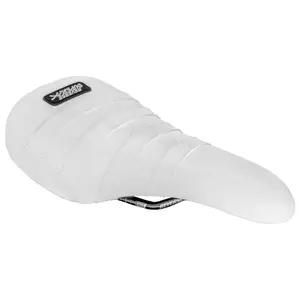
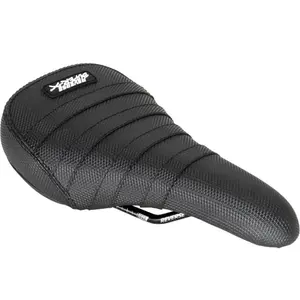
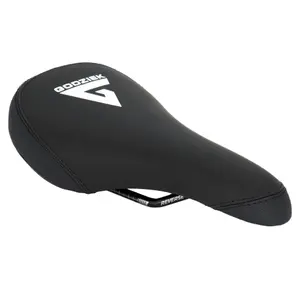
An MTB saddle has to support you when you pedal seated, then get out of the way as soon as you stand up to descend. Its shape depends on how you ride: slim and light for cross-country, short and reinforced for enduro, with a raised rear on an electric mountain bike so you can climb without sliding back. Its width is then chosen according to your sit bones. MTB saddles and seat clamps are all on this page.
What do you need from a mountain bike saddle?
On a mountain bike, you constantly switch between sitting and standing. The saddle therefore has to support your pelvis on long climbs, then let your thighs and the seat of your shorts pass when you move back over the rear wheel. It also takes what a road saddle never has to: crashes, branches and mud spray. Hence rounded edges, sides that are reinforced or treated against abrasion, and a cover that can be washed. Since dropper posts began lowering the saddle on descents, many models have been designed above all for pedalling seated.
Which saddle for your kind of mountain biking?
- Cross-country and marathon: a light, slim saddle, often with titanium or carbon rails, with a nose long enough to move your pelvis forward on steep climbs.
- Trail and enduro: a shorter saddle, flat or slightly raised at the rear, with reinforcements on the sides to withstand crashes.
- Downhill and freeride: a flat, lightly padded saddle that you rarely sit on; it is used mainly to steer the bike with your thighs.
- Electric mountain biking: a clearly raised rear so you can wedge yourself in on climbs without sliding back, and slightly more generous padding for longer rides.
- Dirt and slopestyle: a compact saddle, sometimes in Pivotal format, that you grip between your legs during jumps.
A comfortable MTB saddle for long rides: the right criteria
Lasting comfort depends first on width. Measure the distance between your sit bones on corrugated cardboard or foam, then add enough to suit your position: a rider leaning forward on a cross-country bike needs only a small margin, while a more upright mountain biker needs a wider saddle. Most brands offer two or three widths of the same model, for example 135, 142 and 150 mm at WTB.
Shape comes next. Short-nose saddles, wide at the front, support your pelvis when you move forward to climb, and a central channel or cut-out relieves pressure on the perineum. Choose firm, evenly distributed foam over thick gel, which compresses over the hours, and pair the saddle with good-quality padded shorts: they often make the difference on long rides.
Rails, I-Beam, Pivotal and clamps: how the saddle is fixed
Most MTB saddles sit on two round 7 mm rails. Steel and chromoly stand up well to crashes, titanium and stainless steel save weight and filter a little better, and carbon, lighter still, needs a suitable clamp head and moderate tightening. On a single-bolt dropper post, check that the usable length of the rails allows the setback you want. Two standards stand out: I-Beam, a single central rail that requires a post of the same system, and Pivotal, where the saddle is fixed by a bolt through the seat, common in dirt jumping.
The seat clamp is chosen according to the outside diameter of the seat tube, to be measured on the frame and not on the post. With a dropper post, choose a bolt-up clamp tightened to the specified torque: too tight, it can hinder the post's movement.
Seat post, handlebar and saddles for other disciplines
The height and setback of the saddle depend on what carries it: dropper or rigid, MTB seatposts have their own page. At the other end of the bike, MTB handlebars set the position of your upper body. For another bike, see gravel saddles, BMX seats or the full range of bike saddles, including road and city models.
Which MTB saddle brands to choose?
Chromag offers the Overture, its slim slopestyle saddle signed by Brandon Semenuk, in limited editions with Ravens, Denim or Vintage Wax finishes; the Juniper, with chromoly rails, is also on this page.
WTB, short for Wilderness Trail Bikes, was founded in California by mountain biking pioneers including Charlie Cunningham and Steve Potts. Most of its Volt, Silverado, Koda and SL8 saddles come in several widths, from Narrow to Wide, and with steel, titanium or carbon rails.
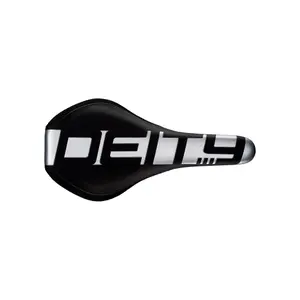
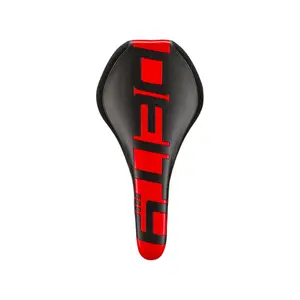
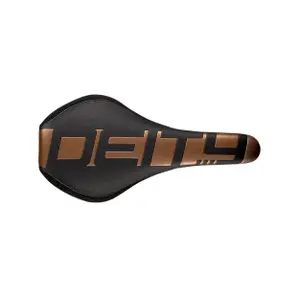
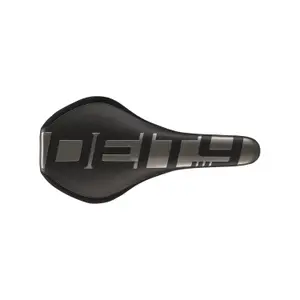
Deity covers three mounting systems: the Speedtrap with classic rails, the Sidetrack with a single I-Beam rail, which needs a compatible post, and the Frisco in Pivotal format for dirt jumping.
Pro has adapted its short-nose Stealth saddle for off-road riding: the Stealth Offroad, 142 or 152 mm wide, adds a central channel and an opening that lets water and mud drain away.
Ergon designs its MTB saddles by discipline, from the SM Enduro to the SM Downhill; the SM E-Mountain, designed for electric mountain bikes, raises the rear to give stable support on climbs and has sides treated against abrasion.
MTB saddles on sale
End-of-line saddles and replaced colours end up in MTB component clearance. The latest saddles added to the catalogue are in new arrivals. The summer sales and Black Friday are a chance to try a different saddle shape before the season of long rides.
Frequently asked questions
How do you set the saddle height on a mountain bike?
Set it with the post fully extended, in the pedalling position: leg almost straight at the bottom of the pedal stroke, without your pelvis rocking. With a dropper post, this setting applies to climbs, as the post takes care of lowering the saddle on descents. Start with a level seat and adjust the tilt in small increments.
Is a suspension or gel MTB saddle worthwhile?
On a full-suspension mountain bike, rarely: the rear shock already absorbs impacts. On a hardtail, a suspension seatpost filters better than a heavily padded saddle. Gel offers immediate comfort on short rides, but firm foam is less tiring over time.
How do you relieve perineal pressure on an MTB saddle?
First check the width and the tilt: a nose that is tilted up too far concentrates pressure at the front. A saddle with a central channel or a short nose, well-fitting shorts and breaks out of the saddle also help. If the discomfort persists despite these adjustments, talk to a health professional.
Can you fit a road saddle on a mountain bike?
The fixing is the same, but a road saddle is often longer and less protected on the sides. It suits a cross-country bike on smooth trails; for enduro or technical trails, a shorter MTB saddle with reinforced edges gets in the way less and stands up better to crashes.
How long does it take to get used to a new saddle?
Allow a few rides: your body has to adapt to new contact points. Sharp pain, numbness or chafing that persists, on the other hand, points to an unsuitable or badly adjusted saddle rather than a simple adaptation period.







