
Gravel bike chains from 9 to 13-speed


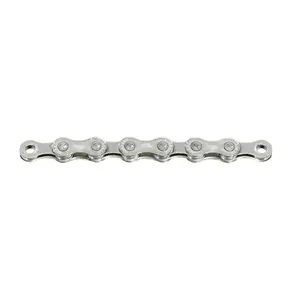
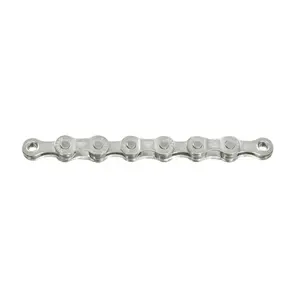


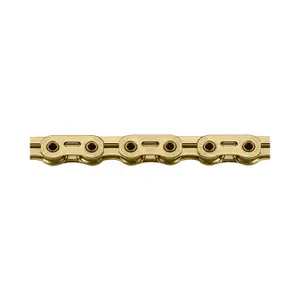
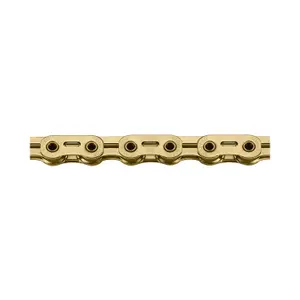


A gravel bike chain is chosen first on the number of speeds of the drivetrain, then on compatibility with the groupset: Shimano, Sram and Campagnolo do not all use the same profile. On tracks, dust and mud wear it faster than on the road; a suitable lubricant and regular wear checks protect the cassette and the chainrings.
Which chain for a gravel bike?
A gravel bike chain is nothing special in its construction: it is the chain of the road or MTB groupset its drivetrain comes from. What matters is compatibility. The more speeds a drivetrain has, the closer together the sprockets and the narrower the chain must be: a 12-speed chain is slimmer than a 10-speed one, and a chain that is too wide rubs on the neighbouring sprocket. The pitch, on the other hand, is the same on every derailleur chain: half an inch, or 12.7 mm between two pins.
Shimano, Sram, Campagnolo: a chain for each groupset
- Shimano uses the same family of 12-speed Hyperglide+ chains for road, gravel and MTB: a CN-M7100 or a CN-M8100 suits a 12-speed GRX as well as a 105 groupset. GRX 11-speed groupsets take an 11-speed HG chain.
- Sram designed the Flattop chain for its AXS road groupsets, with a flattened top edge, narrower and stronger, and its XPLR groupsets use it too. A set-up with an Eagle MTB derailleur and cassette, however, requires an Eagle chain, and T-Type drivetrains have their own chain.
- Campagnolo designs a chain for each generation of groupset; the 13-speed Ekar gravel groupset has its own, closed with a specific C-Link.
Chain specialists, such as KMC or Yaban, offer models compatible with Shimano and Sram: each product page specifies the groupsets accepted.
Gravel bike chain length and quick links
The chains on this page have from 110 to 138 links and can be shortened with a chain tool. With a single chainring, a cassette of 44 teeth or more calls for a long chain, especially on a large frame with long chainstays: check the number of links before you order. The length is calculated using the manufacturer's method, with the chain on the largest chainring and the largest sprocket.
The quick link closes the chain without a pin to press in and lets you open it, with suitable pliers, for a thorough clean. It must match the number of speeds, and some models are single-use, such as the Quick-Link supplied with Shimano 12-speed chains: keep a spare in your repair kit.
Gravel bike chain wear and lubrication
A chain does not really stretch: its pins and rollers wear, and the gap between the links increases. On a gravel bike, sand and dust speed up the process. A chain checker, placed between two rollers, shows whether the chain has reached the limit beyond which it wears into the teeth of the cassette and chainrings. Replaced in time, the chain protects these more expensive parts; changed too late, it often means replacing the cassette too, on which the new chain starts to skip.
As for maintenance, a dry lube or a wax holds less dust on dry tracks; a wet lube, more tenacious, stands up better to rain and mud but attracts dirt. Some chains arrive already waxed from the factory, such as KMC's Waxed versions, while others receive a surface treatment to reduce friction. Apply the lubricant to the rollers, let it penetrate, then wipe off the excess: a chain that is dry on the surface picks up less sand.
Cassettes, chainrings and gravel drivetrain
A new chain is best paired with a gravel cassette in good condition and chainrings whose teeth are not worn. If shifting is poor despite a new chain, the derailleur or its hanger may be the cause. Gravel groupsets and chainsets complete the gravel drivetrain, and all chains, city and MTB included, are listed in our bike chains.
Which gravel bike chain brands to choose?
Shimano supplies its 12-speed chains, such as the CN-M7100, with a Quick-Link and a SIL-TEC surface treatment to reduce friction; the CN-HG601 and CN-HG701 serve 11-speed drivetrains.
Yaban, a chain manufacturer also known by the initials YBN, offers so-called self-lubricating chains thanks to a coating designed to reduce friction and maintenance, in 10 and 11-speed, including a titanium version.
KMC, which describes itself as the world's leading chain manufacturer, offers models from 1 to 12-speed compatible with Shimano and Sram, including factory-waxed versions such as the X12 Waxed and the Flattop Waxed.
Campagnolo reserves dedicated chains for its groupsets, from the 12-speed Chorus with its C-Link to the 13-speed Super Record.
Sram offers its Flattop Rival, Force and Red E1 chains for AXS road and gravel groupsets, as well as PC chains closed with a PowerLock link for 8 to 11-speed drivetrains.
Gravel bike chains on sale
End-of-line chains move to our road clearance, and new references are grouped in new arrivals. Make the most of Black Friday or the winter sales to keep a spare chain in reserve.
Frequently asked questions
Which chain for a Shimano GRX groupset?
It depends on the number of speeds. An 11-speed GRX uses an 11-speed HG chain, such as the CN-HG601 or the CN-HG701. A 12-speed GRX takes a 12-speed Hyperglide+ chain, the same family as on MTB groupsets, such as the CN-M7100 or the CN-M8100, in a length suited to a 1x or 2x set-up.
Can you fit a KMC chain on a Shimano or Sram drivetrain?
Yes, if the chain has the same number of speeds and its product page states compatibility. The exceptions concern systems with a particular profile: Sram's Flattop chains and those for T-Type drivetrains can only be replaced by models designed for them.
How long should a gravel bike chain last?
There is no fixed lifespan: it depends on the terrain, the weather, the power transmitted and maintenance. A chain that often runs through mud or sand wears much faster than one confined to dry tracks. The chain checker remains the only reliable guide: check the chain every few rides.
Should you wax your gravel bike chain?
Wax suits rides in dry weather well: it leaves the chain clean to the touch, and it picks up little dust. On the other hand, it needs reapplying more often and stands up less well to rain. For mixed and wet riding, a wet lube remains more practical.
How do you shorten a new chain?
Work out the number of links to remove using the manufacturer's method, then push out a pin with a chain tool. If you close the chain with a quick link, cut it so that both ends are inner links: the quick link forms the missing outer link. Then check the tension on the largest sprocket.







