
BMX pedals: flat, race and freestyle


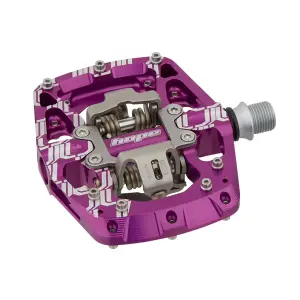


BMX pedals are chosen according to how you ride: lightweight plastic that is cheap to replace for freestyle, aluminium with pins for maximum grip, clipless pedals for racing once you reach a certain level. Then check the thread, 9/16 inch on most cranks, and the type of bearings.
Which pedal for which kind of BMX riding?
In freestyle, plastic flat pedals, made from glass-fibre-reinforced nylon or polycarbonate, slide over ledges, are kinder to your shins and can be replaced without regret. In dirt, park or racing, machined aluminium pedals offer a thin, stiff platform, fitted with pins that hold the sole of your shoe. The youngest riders start out with mini pedals suited to their feet.
Plastic or metal BMX pedals?
Plastic is light, cheap and quiet on rails; its moulded pins wear down over time. Aluminium lasts longer and takes screw-in, replaceable pins, but it is harder on your shins and costs more. To get started in freestyle, plastic is more than enough.
Loose ball bearings or sealed bearings
Pedals with loose ball bearings are simpler and can be stripped down and greased; they let water and dust in more easily. Pedals with sealed bearings spin more freely and need less maintenance. Several models come in both versions, such as the Salt Plus Stealth.
BMX pedal thread: 9/16 or 1/2 inch
On most BMX bikes, the three-piece crankset takes pedals with a 9/16-inch thread. One-piece cranks, still found on some entry-level or kids' BMX bikes, need 1/2-inch pedals. The left pedal has a reverse thread: it screws in anticlockwise.
Clipless pedals for BMX racing
In racing, experienced riders often use clipless pedals, which keep the foot in place on the start and over the jumps. UCI regulations allow them for riders aged 13 and over and require flat pedals for riders aged 12 and under. Models designed for BMX, such as the HT T2-SX, combine a clipless mechanism with a platform so that you still have support if your foot unclips.
Parts to pair with your pedals
Together with grips and the seat, pedals are the rider's contact points. For another kind of bike, see MTB pedals, city bike pedals and the full range of bike pedals.
Which BMX pedal brands to choose?
Wellgo, a family company from Taichung, Taiwan, is one of the largest pedal manufacturers supplying bike brands; here it brings the B087 with loose balls, the B219 and the LU-204 mini pedals.
Insight offers thermoplastic pedals, mini pedals for the youngest riders and the Pro.
Eclat, a premium brand from Cologne, offers the Juggernaut in glass-fibre-reinforced nylon, as well as the Contra, Surge, Slash and Plaza.
HT offers with the T2-SX a clipless pedal dedicated to BMX racing, combining a machined aluminium body, a chromoly axle, sealed bearings and adjustable tension.
Salt Plus, the top line of the German brand Salt, offers the Echo, the polycarbonate HQ and the Stealth with loose balls or sealed bearings.
BMX pedals on sale
For bargains, BMX clearance takes in end-of-line pedals, and new arrivals the models that have just landed. The summer sales come just in time for the holidays at the skatepark.
Frequently asked questions
How do you remove a BMX pedal?
Depending on the model, an open-ended spanner or an Allen key inserted from the back of the axle does the job. The right pedal has a standard thread, the left one a reverse thread: to loosen them, turn the key towards the back of the bike on both sides. Grease the thread before refitting.
Plastic or aluminium to get started in freestyle?
Plastic: light and affordable, it slides over ledges and is kinder to your shins. Aluminium comes later, when grip becomes the priority.
When should you switch to clipless pedals in BMX racing?
Once you have mastered the start and bike handling on flat pedals, and from age 13 in competition under UCI regulations. Ask your club coach to help you set up the cleats and learn to unclip.
Will my pedals fit a one-piece crank?
Only if they have a 1/2-inch thread. Most BMX pedals are 9/16 inch and will not screw into a one-piece crank.
How do you change the pins on a pedal?
Screw-in pins come out with a small Allen key, from the top or the bottom of the pedal. Replace any that are torn out or worn down, keeping the same height across the whole platform.







