
Road bike wheels: carbon or aluminium


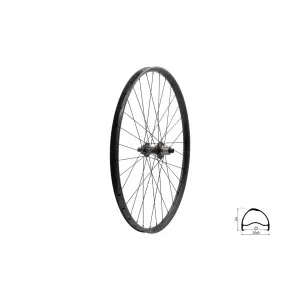
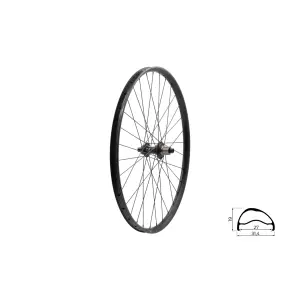
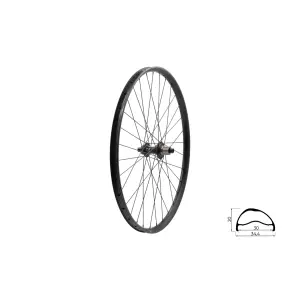
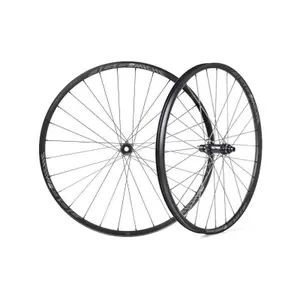
Changing your road bike wheels is often the most noticeable upgrade you can make to an existing bike: weight, stiffness and rim profile can be felt from the very first accelerations. First decide between disc and rim brakes, which your frame dictates, then between carbon and aluminium, and check the axle and freehub body. Gravel wheels are also listed on this page.
Disc or rim brake: which wheels for your road bike?
The frame decides. A bike with rim brakes needs wheels with a braking surface, usually fitted with a quick release and a 130 mm rear hub. A bike with disc brakes takes wheels without a braking surface, with a six-bolt or Center Lock hub for the rotor, and almost always a 12x100 mm thru-axle at the front and a 12x142 mm thru-axle at the rear. Freed from braking duties, disc rims can be wider and lighter at the same level of the range.
On a rim-brake wheel, the braking surface of an aluminium rim wears with the miles; a wear indicator tells you when to replace it. Carbon rim-brake rims require specific brake pads.
Carbon or aluminium road wheels: what difference does the rim make?
At equal depth, a carbon rim is lighter than an aluminium rim, and carbon makes it possible to design deep, aerodynamic profiles without a weight penalty. It is the choice for racing and for riders looking for speed on the flat. Aluminium remains more robust against impacts and potholes and suits everyday training as well as spare wheels for winter. Between the two, the hub also makes a difference: bearing quality, freehub engagement speed and weight.
Which rim depth should you choose?
- Shallow rim, up to about 35 mm: light and stable in crosswinds, at ease in the mountains and on rolling routes.
- Mid-depth rim, from 40 to 50 mm: the most versatile compromise, with a noticeable aerodynamic gain as soon as the speed rises.
- Deep rim, 60 mm and more: the fastest on the flat and in time trials, but more exposed to gusts.
- Disc wheel: a solid rear wheel, reserved for time trials and triathlon.
Track wheels form a separate category: fixed-gear hub, no brake, for the velodrome.
Clincher, tubeless or tubular: which set-up?
Most road wheels take a standard clincher tyre with an inner tube. Tubeless-ready rims are run without a tube, with airtight rim tape, a specific valve and sealant that plugs small punctures; you can then lower the pressure without risking a pinch flat. Hookless rims, such as those on the Zipp 303 S, only accept tyres approved for them, and the ETRTO and ISO standards limit their pressure to 5 bar. Finally, a tubular tyre is glued onto a specific rim: it remains popular in racing for how it holds up in the event of a puncture.
Internal width matters too: given in millimetres, for example 17C or 21C, it determines which tyres you can use, as the same tyre comes up a little wider on a wider rim.
Axle and freehub body: compatibility
The freehub body must take your cassette. The Shimano HG road body accepts 11-speed cassettes and Shimano 12-speed road cassettes. SRAM 12-speed cassettes require an XDR body, and Campagnolo cassettes a dedicated body. Many wheels come in several versions, and some hubs can switch body with a conversion kit: check the description before you order.
Tyres, tubulars and inner tubes for your wheels
A new wheel is generally supplied without a tyre. Choose the width that suits your rim from our road bike tyres, or tubulars for a tubular wheel, and complete the set-up with an inner tube with a Presta valve long enough for a deep rim. Tyre levers, sealant and pumps are in our pumps and repair accessories. For a city or touring bike, the general bike wheels page covers the other diameters, and MTB wheels the off-road standards.
Which road bike wheel brands to choose?
Shimano spans its road wheels from the WH-RS100, a robust rim-brake wheel for training, to Dura-Ace carbon wheels from 40 to 50 mm, clincher or tubular, in disc or rim-brake versions.
Zipp, the American carbon wheel pioneer now part of SRAM, offers the 303 S for versatile use, the deeper 404 and 808, and the 858 NSW, its top-of-the-range model.
Mavic, whose Cosmic and Ksyrium are among the best-known road ranges, also offers the aluminium Aksium for training and the Allroad for gravel.
Miche, an Italian manufacturer based in San Vendemiano, produces aluminium and carbon racing wheels, such as the Kleos, as well as the Pistard, a track wheel.
Vision, the FSA group's wheel brand, born in triathlon, brings together the carbon Metron range, including the Metron TTW, a time trial rear disc wheel, and the aluminium Team range.
Campagnolo, the Vicenza company whose founder invented the quick release, offers the carbon Bora and the aluminium Zonda, with a Campagnolo or Shimano body depending on the version.
Where can you find road bike wheels on sale?
Models replaced by a new version move to our road wheels and tyres clearance, and the latest arrivals are grouped in new arrivals. To move up to a lighter wheelset, Black Friday and the seasonal sales also deserve your attention.
Frequently asked questions
What size wheels does a road bike use?
Almost all road bikes use 700c wheels, meaning a 622 mm rim. A few small frames and triathlon bikes use 650C, at 571 mm, and some adventure bikes use 650B, at 584 mm, to fit wider tyres. These diameters are not interchangeable without the frame manufacturer's approval.
Does wheel weight matter as much as people say?
Weight at the rim is felt more than weight in the frame, because it has to be set spinning with every acceleration and on every climb. On the flat and at high speed, aerodynamics take over, hence the appeal of deep rims. A lighter, stiffer wheelset clearly changes how a bike feels.
Do carbon rims need specific brake pads?
Yes. A carbon rim-brake rim requires pads designed for this material, often supplied or recommended by the wheel manufacturer. Never use pads that have been used on an aluminium rim: embedded metal particles would scratch the braking surface.
What are the advantages of a tubeless wheel on the road?
Without an inner tube, the tyre can no longer pinch against the rim, and the sealant plugs most small punctures without you having to stop. You can ride at a slightly lower pressure, which improves comfort and grip on rough roads. In return, the sealant has to be topped up regularly.
Is a deep rim a problem in crosswinds?
The deeper the profile, the more the wheel catches gusts, especially at the front. Lighter riders and exposed routes are better suited to a mid-depth rim at the front, while keeping a deeper rim at the rear, which is less sensitive to the wind.







