
Mountain bike wheels: 26, 27.5 and 29-inch
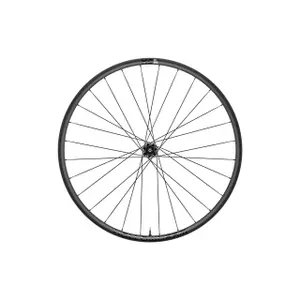
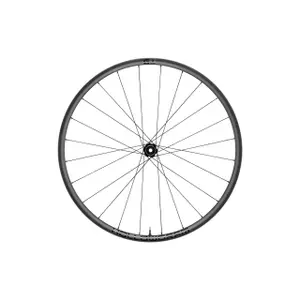
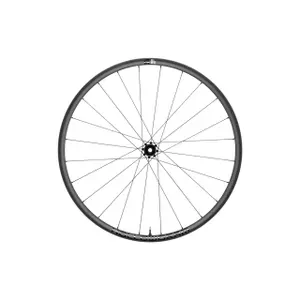
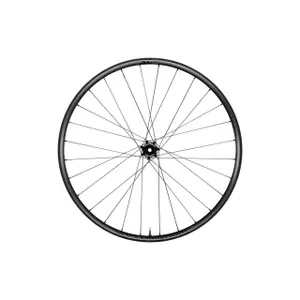
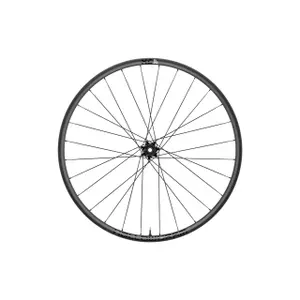
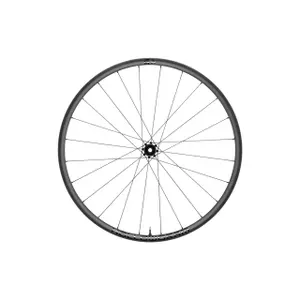
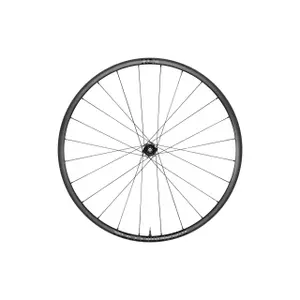
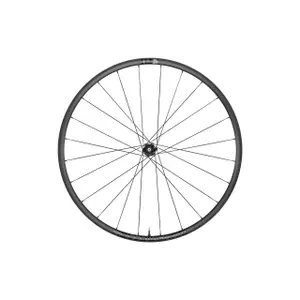

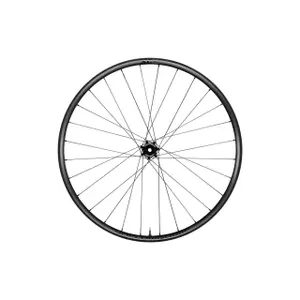


Mountain bike wheels are chosen according to the diameter your frame and fork are designed for, 26, 27.5 or 29-inch, then according to the axle, standard or Boost, and the internal rim width, which determines your tyres. Front wheels, rear wheels and wheelsets here cover cross-country, trail, enduro, downhill and electric mountain biking.
26, 27.5 or 29-inch: which mountain bike wheel size?
The diameter is set by your mountain bike's geometry: a frame and fork designed for 27.5 do not leave room for a 29-inch wheel. Each size does have its own character, though. The 29-inch wheel, on a 622 mm rim, rolls over obstacles more easily and holds its speed better: it has become the norm in cross-country and trail riding. The 27.5-inch wheel, on a 584 mm rim, makes the bike livelier and easier to handle in tight sections. The 26-inch wheel, on a 559 mm rim, is found on older mountain bikes, dirt jump bikes and many leisure mountain bikes. Some enduro bikes combine a 29-inch wheel at the front with a 27.5-inch wheel at the rear: in that case, replace each wheel in its original diameter.
Standard or Boost axle: how to tell them apart
Entry-level and older mountain bikes use a 9 mm quick release, with a 100 mm hub at the front and a 135 mm hub at the rear. Stiffer thru-axles then established two pairs of dimensions:
- Standard: 15x100 mm at the front, 12x142 mm at the rear.
- Boost: 15x110 mm at the front, 12x148 mm at the rear. The hub flanges are set wider apart, which stiffens the wheel, and the fork leaves more room for the tyre.
- Downhill: 20x110 mm at the front on dual crown forks.
A Boost wheel will not fit a standard fork or frame, and vice versa. The chainline also shifts by about 3 mm on Boost frames, hence specific chainrings.
Internal rim width: which tyres will it take?
The internal width, often given in the wheel's name as 25C or 30C, determines the shape the tyre takes. A 21 to 25 mm rim suits cross-country tyres, fast-rolling and light. A rim of around 30 mm gives better support to wide trail and enduro tyres, which keep their profile at low pressure; some tyres, such as the WT versions from Maxxis, are designed for these wide rims. Tyre manufacturers publish the recommended rim width range for each model.
Freehub body, brakes and tubeless: the compatibility points
At the rear, the freehub body must match your drivetrain: Shimano HG up to 11-speed, Shimano Micro Spline for Shimano 12-speed groupsets, SRAM XD for Eagle cassettes whose smallest sprocket has 10 teeth. On the braking side, hubs accept six-bolt or Center Lock rotors; an adapter lets you fit a six-bolt rotor to a Center Lock hub. Most recent rims are tubeless-ready: all you need is suitable rim tape, tubeless valves and sealant.
Electric mountain bike wheels: how strong do they need to be?
An electric mountain bike is heavier and takes the motor's torque with every acceleration. Wheels designed for this use state a higher maximum load and have reinforced rims and hubs: Mavic E-Deemax, Race Face Aeffect-R eMTB or Velox wheels built for e-MTB. For electric enduro, choose a wide rim and a higher spoke count.
Tyres, inner tubes and other wheels
A wheel is usually supplied bare: choose your MTB tyres according to the internal rim width, and MTB inner tubes if you do not ride tubeless. Sealant, plug kits and pumps are in our MTB pumps and repair accessories. If your bike is a hybrid or a city bike, see our bike wheels for all types of riding; for a road bike, see road bike wheels.
Which mountain bike wheel brands to choose?
Velox, a bike parts maker from Brittany, offers MTB wheels for every level of riding, from the Karma with a double-wall rim for disc brakes to the tubeless-ready Trucky 30 Boost.
Rodi, which produces aluminium rims and wheels in the Aveiro region of Portugal, supplies for mountain biking the Blackrock 23, a 29-inch front wheel for a 15x100 mm thru-axle, and the 26-inch Skorpion disc wheel.
Mavic counts the Crossmax among its classic MTB ranges and also offers the Crossride for leisure riding, the Deemax for downhill and the E-Deemax for electric mountain bikes.
Race Face, born in Vancouver among North Shore riders, designs the Turbine, Atlas and Aeffect-R wheels for trail and enduro, often with rims of 30 mm internal width.
Shimano offers the WH-MT500, a Center Lock disc MTB wheel in 27.5 and 29-inch, and tubeless versions such as the MT601.
DT Swiss fits its MTB wheels with Ratchet system hubs, whose two toothed ratchets stay engaged across their full set of teeth, and offers versions rated for higher loads for electric mountain bikes.
Where can you find mountain bike wheels on sale?
Wheels from previous ranges are gathered in our MTB wheels and tyres clearance, while models that have just joined the catalogue appear in new arrivals. The summer sales, before the season of long rides, and Black Friday are two good times to kit yourself out.
Frequently asked questions
Can you fit a 29-inch wheel to a 27.5-inch mountain bike?
Generally not: the tyre would rub on the fork or the chainstays, and the geometry would change, with a higher bottom bracket. Only frames and forks stated as compatible with both diameters allow it. Check your bike's specification sheet.
How do you know if your mountain bike uses the Boost standard?
Measure the inside distance between the fork dropouts: 110 mm for Boost, 100 mm for standard. At the rear, it is 148 mm for Boost and 142 mm for standard. The fork or hub designation, often engraved, also tells you.
Do you need a specific wheel to go tubeless?
You need a tubeless-ready rim, which most recent MTB rims are. Airtight rim tape covers the spoke holes, a tubeless valve replaces the inner tube and the sealant provides the seal. The tyre must also be tubeless-ready.
What rim width for 2.4-inch tyres?
An internal width of 25 to 30 mm suits most 2.3 to 2.4-inch tyres. Beyond that, towards 2.5 and 2.6-inch, a rim of 30 mm or more stops the tyre from deforming under cornering load. The tyre manufacturer's compatibility chart is the reference.
28 or 32-spoke MTB wheel: what is the difference?
For the same rim, 32 spokes spread the forces better and make the wheel more tolerant of impacts, at the cost of a few grams. Cross-country wheels often make do with 28 spokes, while enduro, downhill and electric mountain biking favour 32 spokes or more.







