
Road bike pumps, CO2 inflators and repair kits
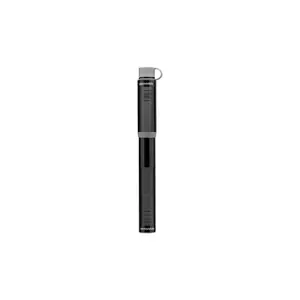


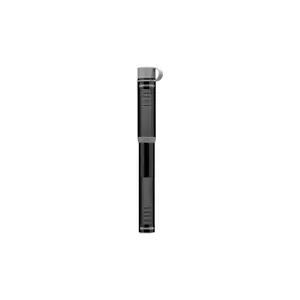


A road bike pump has to reach a high pressure and fit the Presta valve found on most road wheels. At home, a floor pump with a gauge sets the pressure precisely; out on a ride, a mini pump or a CO2 cartridge gets you going again in a few minutes. Sealants, tubeless valves, replacement pump heads and adapters complete the page.
Which pump for a road bike?
Most cyclists own at least two, one for the workshop and one for the road:
- Floor pump: stable, fast and fitted with a gauge, it is used to check the pressure before every ride. A road tyre naturally loses pressure over the days, even without a puncture.
- Mini pump: it slips into a jersey pocket or attaches to the frame next to the bottle cage. A telescopic model or one with a flexible hose spares the valve while you inflate.
- CO2 inflator: a small cartridge, often 16 g, reinflates a road tyre in a few seconds, the choice of racers and fast rides. A head with a regulator controls the gas flow, and a sleeve stops your fingers freezing, as the cartridge gets very cold.
- Electric pump: rechargeable, it inflates without effort and displays the pressure on a screen, at the cost of extra weight.
High pressure or high volume: the right pump barrel
A road tyre holds little air but at a high pressure. Pumps designed for the road have a narrow barrel, which takes less force with each stroke as the pressure rises; mountain bike models move more air with each stroke, for wide tyres at low pressure. Several manufacturers indicate this in the name, HP for high pressure and HV for high volume. Check the pump's maximum pressure and how readable the gauge is in the range you ride at, then respect the values printed on the tyre sidewall and the limits of the rim.
Presta, Schrader: valves and pump heads
Almost all road bikes use the Presta valve, sometimes called the French valve, which is slim and has a small nut to unscrew before inflating. The Schrader valve, or American valve, is the one used on cars and many city bikes. A dual or reversible pump head takes both without an adapter. For tubeless, a rim valve with a removable core lets you inject sealant without removing the tyre; check its length, which must stick out clearly from the rim, especially on a deep-section wheel.
Tubeless: seating the tyre and preventing punctures
To seat a tubeless tyre, you need to send a large volume of air in one go so that the beads snap against the rim. Floor pumps with a charge chamber, which you fill before releasing in one movement, or CO2 cartridges manage it where a standard pump fails. Sealant, poured into the tyre, then seals small holes as you ride. It dries over time: check it regularly and top it up, especially after a period without riding.
Tyres, inner tubes and tubulars
Inflation goes hand in hand with your road bike tyres and how they are fitted. Keep a spare inner tube even when running tubeless, and a spare tubular if you ride on tubular tyres. For off-road riding, mountain bike pumps and repair gather high-volume models, and all road wheels and tyres are on the parent page.
Which bike pump brands should you choose?
Zefal, a historic French cycling brand that claims more than 140 years of existence, strives to manufacture in France; its Profil Max floor pumps with a gauge sit alongside a charge chamber for seating tubeless tyres and EZ CO2 inflators.
Lezyne, founded by former professional triathlete Micki Kozuschek and produced in its factory in Taichung, has Engineered Design as its motto: the CNC Floor Drive connects to the valve with its ABS head, and the Micro Floor Drive HPG is a compact floor pump with a digital gauge.
Topeak developed the TwinHead, with two openings for Presta and Schrader valves, then the SmartHead, presented as the first head compatible with every valve; its Joe Blow floor pump comes in versions including the Booster, designed for seating tubeless tyres.
Pro, the accessories and components brand of the Shimano group, offers the Team Tubeless floor pump, a CO2 head with a regulator and Compact mini pumps, including a telescopic one.
Vittoria, an Italian tyre maker, completes its ranges with sealants, from the Universal in several sizes to the Pit Stop.
SKS, a German manufacturer based in Sundern, offers the Rennkompressor floor pump, including a special edition marking its 60th anniversary, as well as the Injex and Airflex mini pumps.
Road bike pumps on sale
When a model is replaced, the pump and its accessories join road wheels and tyres clearance; what has just arrived is among new arrivals. To equip your workshop with a long-lasting floor pump, make the most of the seasonal sales or Black Friday.
Frequently asked questions
How do you use a bike pump on a Presta valve?
First free the valve: loosen its knurled nut a few turns, then press with your finger to let out a little air and confirm that it opens. Place the pump head straight on, flip its lever to lock it and inflate while watching the gauge. Remove it without forcing it sideways, then close the nut again.
What pressure should you inflate a road bike tyre to?
Respect the minimum and maximum values printed on the tyre, without exceeding the rim's limit. The wider the tyre and the lighter the rider, the lower the pressure can go; a tubeless tyre is also inflated a little less than a tyre with an inner tube. Then adjust according to the comfort and grip you feel.
Can you inflate a tubeless tyre with CO2?
Yes, it is even an effective way to seat a tyre at the roadside. CO2 passes through rubber faster than air: once back home, deflate and reinflate with the floor pump.
Does tubeless sealant need topping up?
Yes, it gradually dries inside the tyre and loses its effectiveness. Check it every few months, more often in hot weather, and top up the dose through the valve with a removable core.
Is a mountain bike pump suitable for a road bike?
It inflates wide tyres quickly but struggles to reach road pressures. If you only have one floor pump for several bikes, choose a model with a gauge and a dual head that can reach high pressures.







