
MTB jerseys for men, women and kids


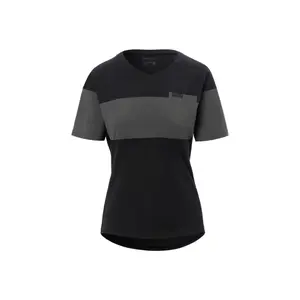
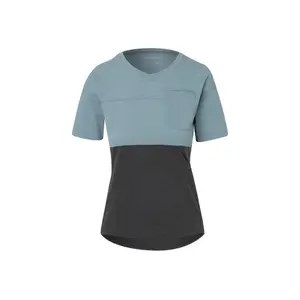
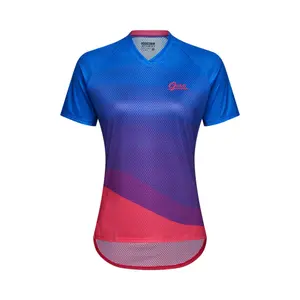
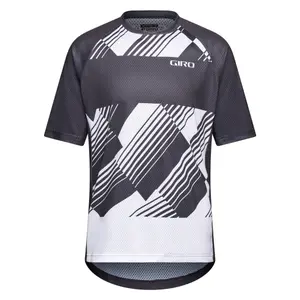
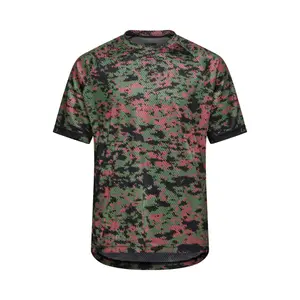
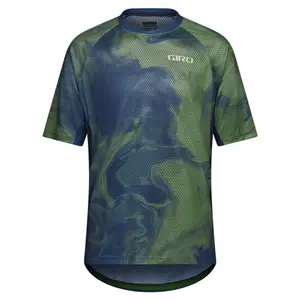
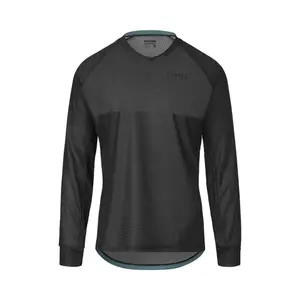
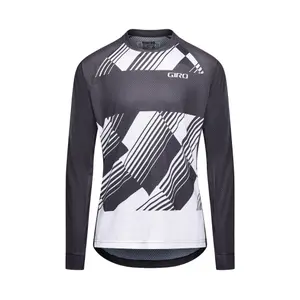
An MTB jersey is chosen first according to how you ride: close-fitting with back pockets for cross-country, looser and without pockets for trail, enduro and downhill, where it is worn over a back protector or elbow pads. Short sleeves for summer, long sleeves against branches and the cold: jerseys, technical T-shirts and base layers are all on this page, in men's, women's and kids' cuts.
How does an MTB jersey differ from a road jersey?
An MTB jersey is cut for a more upright position, constantly changing body positions and more frequent falls. It leaves more room at the shoulders and arms to move the bike around, its fabric stands up better to rubbing against vegetation or the ground, and its longer back covers your lower back when you move behind the saddle on descents. Most trail and enduro models do without back pockets: on the trails, water and tools travel in a backpack or a hip pack. For riding on tarmac, the fitted cut and three pockets of road cycling jerseys remain better suited.
Cross-country, trail, enduro or downhill: which MTB jersey cut?
- Cross-country: a close-fitting, light jersey, often zipped and with back pockets, similar to a road jersey. Riders look for ventilation and freedom of movement at high intensity.
- Trail and all-mountain: a regular cut, technical fabric that feels softer, sometimes a small zipped pocket for a key or a card.
- Enduro: a looser cut, raglan sleeves that follow the movement of the shoulders, room for a back protector and elbow pads, and reinforcements in exposed areas.
- Downhill and freeride: a loose long-sleeved jersey, inherited from motocross, in thick, hard-wearing fabric, often worn over a body armour jacket.
MTB jersey: short sleeve or long sleeve on the trails?
Short sleeves keep your upper body cool on summer climbs. Long sleeves protect your skin from brambles, branches and the sun, and limit grazes if you slide: many mountain bikers keep them all year round, in a thin version in summer and a thermal version with a brushed inner face in winter. Three-quarter sleeves, more and more common, cover the elbow without being too warm. In cold weather, a close-fitting base layer wicks sweat away under the jersey, and a windproof jacket completes your kit at the top before you drop into the descent.
Fabric and size: what to check
Most MTB jerseys combine a technical polyester, increasingly recycled, with breathable mesh panels under the arms or on the back. Some models rely on merino wool, which holds on to few odours on rides lasting several days. Also look at the UV protection rating, useful at altitude.
For sizing, start from your chest measurement and the brand's size guide, then take into account what you will wear underneath: if you ride with a back protector, choose a jersey designed to accommodate it, even if that means going up a size in a fitted cut. Women's models are cut narrower at the shoulders and longer in the body, and kids' sizes let young riders ride in kit that fits them.
Completing your MTB kit
A jersey goes hand in hand with shorts: MTB shorts and bib shorts are chosen in the same cut, loose for enduro and more fitted for cross-country. For rain and windy summits, an MTB jacket packs into your bag, and MTB gloves protect your hands in a fall. If you switch between gravel tracks and roads, gravel jerseys offer a compromise with back pockets, while BMX jerseys take up the loose cut of the race tracks.
Which MTB jersey brands to choose?
Fly Racing, an American brand born in motocross within the distributor Western Power Sports, also kits out mountain bikers with the Rayce, a stretch jersey with mesh panels on the sides, available in adult and kids' sizes.
Leatt bears the name of the South African neurosurgeon Chris Leatt, who created a protective neck brace for off-road motorcycle riders. Its jerseys are divided into Trail, AllMtn, Endurance and Gravity lines: the close-fitting Endurance 6.0, with back pockets, is aimed at cross-country, and the Gravity line at downhill-oriented riding.
Endurance, a Danish sportswear brand from the Sports Group Denmark group, based in Silkeborg, offers most of its MTB jerseys, such as the Logan, the Crusoe or the long-sleeved Paxton, in men's and women's cuts.
POC, founded in Sweden with the aim of reducing the consequences of accidents, cuts its Reform Enduro to leave room for elbow pads and a back protector, with raglan sleeves; the lighter Motion Air comes with short, three-quarter and long sleeves.
Karpos, an Italian mountain brand from Manifattura Valcismon, based in Fonzaso at the foot of the Dolomites, brings its know-how from mountaineering and ski touring to mountain biking with jerseys such as the Val Viola, the Val Federia or the women's Verve.
Fox Racing, an American motocross and mountain bike brand, offers the Ranger, a trail jersey with an MTB cut and a longer back, and the tougher Defend, available in a thermal version for winter.
MTB jerseys on sale and latest arrivals
Replaced colours and end-of-line models go to MTB clothing clearance, and jerseys that have just joined the catalogue are shown in new arrivals. To renew your trail jerseys, also look out for the summer sales and Black Friday.
Frequently asked questions
Why do many MTB jerseys have no back pockets?
In trail and enduro riding, mountain bikers often ride with a backpack or a hip pack, which would squash the contents of back pockets. A loaded pocket would also get in the way in a fall. Cross-country jerseys, worn without a bag, keep their pockets.
Can you wear a back protector under an MTB jersey?
Yes, provided you choose a jersey whose cut allows for it: enduro and downhill models leave room at the back and elbows. Try the jersey on with your protection, arms stretched out towards the handlebar: it should neither pull at the shoulders nor ride up above your waistband.
Does an MTB jersey size up like a road jersey?
Generally not: for the same size, a trail or enduro jersey is looser than a road jersey. Cross-country jerseys, on the other hand, are closer to a fitted cut. Rely on each brand's size guide rather than your usual size.
How do you wash an MTB jersey?
Turn it inside out, close any zips and wash it at a low temperature, without fabric softener, which clogs technical fibres and reduces their ability to wick away sweat. Dry it in the open air rather than in a tumble dryer.
Is a plain T-shirt enough for mountain biking?
For a short ride, yes, but a cotton T-shirt absorbs sweat, becomes heavy and chills your upper body as soon as you stop. A jersey or a technical T-shirt in synthetic fibres or merino dries much faster. Several casual-looking technical T-shirts are also on this page.







