
Comfortable bike seats and seatposts for the city
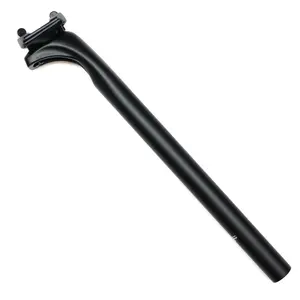

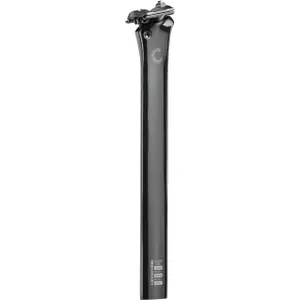
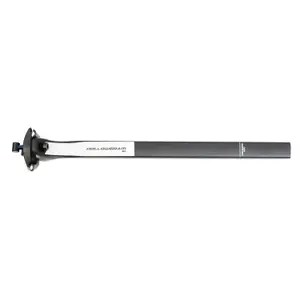
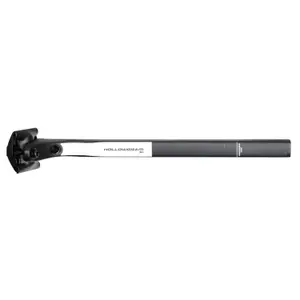
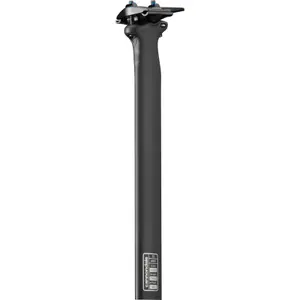
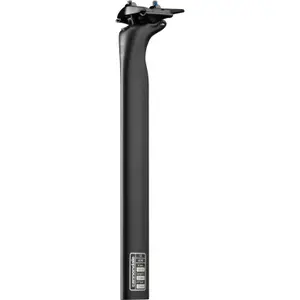


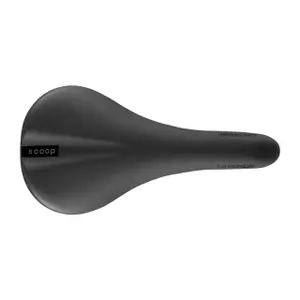
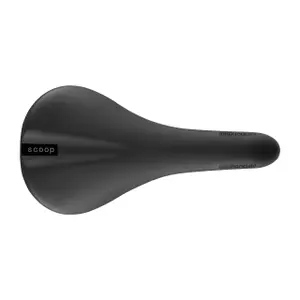


A comfortable bike seat for the city is chosen according to your position: the more upright you sit, the more your weight rests on your sit bones and the wider and softer the saddle needs to be. Pair it with the right seatpost, rigid, or suspension to soak up cobbles and kerbs, in the exact diameter of your frame. Seat clamps and saddle springs are also on this page.
Which city bike saddle should you choose?
On a city bike, you sit almost upright, with your hands on a raised handlebar: most of your weight rests on your sit bones, the two bones of the pelvis you sit on. The saddle should therefore be wide at the back, fairly soft and without an overly long nose that would rub against your thighs. The more your position leans forward, on a hybrid or a road bike converted for the city, the more weight shifts to the front of the pelvis and onto your hands, and the narrower the saddle becomes.
To help you find your way, Selle Royal classifies its saddles by the angle of your back: Relaxed for an upright position, at 90 degrees, Moderate at around 60 degrees, Athletic at around 45 degrees. Most city bike saddles fall into the first two categories.
Gel, foam, springs or leather: which kind of comfort?
Dense foam supports without flattening and suits most journeys. Gel, as a layer or in inserts, moulds to the shape of your pelvis and absorbs small vibrations. Springs under the shell absorb the shocks from cobbles and kerbs, useful in a very upright position where your back takes everything. Leather, firm at first, gradually shapes itself to your body. A cut-out or a channel in the saddle relieves the perineum; noseless saddles go further by removing support at the front.
Rigid or suspension seatpost?
A rigid seatpost, most often in aluminium, is chosen on two criteria: diameter and setback, which places the saddle further back from the seat tube or closer to it. A suspension seatpost absorbs some of the shocks before they reach your back. There are two families: telescopic, with a spring sliding inside the shaft, and parallelogram, with a linkage under the saddle. In both cases, the spring is chosen according to the rider's weight and the preload can be adjusted. Ergotec also classifies its seatposts by safety level, from 1 to 6, calculated according to the rider's weight.
Diameter, height and insertion mark
A seatpost's diameter is engraved on the existing post and must match the frame to a tenth of a millimetre: 25.4, 27.2, 30.9 and 31.6 mm are the most common. Respect the minimum insertion mark engraved on the post, which must stay hidden inside the seat tube.
For saddle height, put your heel on the pedal at the bottom of the stroke: your leg should be straight, without your hips rocking. With your foot back in its normal position, your knee stays slightly bent at the bottom of the pedal stroke. In town, it is tempting to lower the saddle so you can put your feet flat on the ground at traffic lights, at the expense of your knees: it is better to slide off the saddle when you stop and keep the right height while riding.
Seat clamps and other city bike components
The seat clamp tightens the seat tube around the seatpost. A quick-release clamp lets you adjust the height without tools, but also makes it easier to steal the saddle from a bike parked in the street; a bolt-on clamp, or an anti-theft bolt, is safer in town. Comfort also depends on the other contact points: see city bike pedals and city bike brakes, wheels and tyres, whose width also absorbs shocks, and pumps and repair tools. All components are gathered in city bike wheels and components.
Which saddle and seatpost brands should you choose?
Kalloy Uno: the Taiwanese manufacturer Kalloy, based in Taichung, makes its seatposts under the Uno brand; this page offers rigid aluminium models from 25.4 to 30.9 mm.
ISM, a brand from Lutz, Florida, has removed the nose from its saddles: you sit on the pubic bones rather than on soft tissue. The Touring, its original saddle, is padded with soft foam.
Selle Royal, an Italian manufacturer whose group is based near Vicenza, fills the Drifter Plus with RoyalGel and fits it with two springs, and gives the Float memory foam with a central cut-out.
Selle San Marco, the Italian saddle maker, still makes the Rolls, its design almost unchanged for decades, a long-distance saddle that also suits the city.
Selle Montegrappa, a manufacturer from the province of Treviso, offers vintage-style saddles in hand-worked vegetable-tanned leather, mounted on steel springs, and sprung saddles in faux leather for city bikes.
Suntour, the Taiwanese suspension manufacturer, offers the SP12 NCX seatpost: a parallelogram with 50 mm of travel, adjustable preload and three springs to suit the rider's weight.
Bike seats and seatposts on sale
Saddles and seatposts from discontinued ranges are grouped with other city gear in our urban clearance; recently added models can be found in new arrivals. During the summer sales, bike journeys get longer: a good time to change your saddle.
Frequently asked questions
Why does sitting on a bike seat hurt?
Most often, the saddle does not suit your position or is poorly adjusted: too high, and your hips rock with every pedal stroke; tilted the wrong way, and it shifts your weight onto the perineum or your hands. Start with the adjustment, then choose a saddle suited to your posture and the width of your pelvis.
How do you look after a leather saddle?
Feed it regularly with a balm designed for leather, protect it from rain with a cover when the bike stays outside, and let it dry away from any heat source if it has got wet. Some leather saddles have a tension bolt that lets you re-tension the leather over time.
Do women need a different bike seat?
Many models come in a women's version, wider at the back and often with a cut-out. It is not a hard and fast rule: the right choice depends on the width of your sit bones and your position, whatever the model.
How do you stop your saddle being stolen?
Replace the quick-release clamp with a bolt-on clamp, or with an anti-theft bolt that can only be loosened with a specific key. A cable threaded through the saddle rails and attached to the frame adds protection; for long-term parking outdoors, taking the saddle with you remains the safest option.
How do you adjust a suspension seatpost?
First choose the spring suited to your weight, then adjust the preload: the post should sink slightly when you sit down, without bottoming out over bumps. Too hard, it filters nothing; too soft, it makes you bounce with every pedal stroke.







