
City bike brakes, brake blocks and rotors


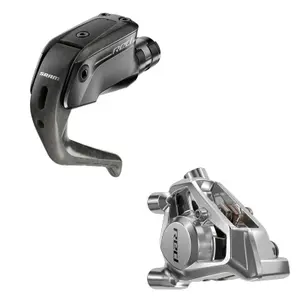


City bike brakes have to stay reliable in the rain, on a loaded bike or an e-bike. First identify your bike's system, rim brakes with blocks or disc brakes, mechanical or hydraulic, then the wearing part that goes with it: brake blocks, rotor or complete brake. This page brings together brake blocks, rotors and disc brakes for city bikes and bikes of every kind.
Which type of brake does your city bike have?
- V-brake: two vertical arms mounted on bosses on the frame and fork, very common on city bikes and hybrids, powerful and easy to adjust.
- Calliper brake: a bridge fixed by a central bolt above the wheel, on classic city bikes and road bikes.
- Disc brake, cable-operated or hydraulic: more and more common, especially on e-bikes.
- Drum or roller brake, housed in the hub: sheltered from the rain, it needs little maintenance.
Whatever the system, a city bike is fitted with two independent brakes: in practice, one on each wheel, each operated by its own lever.
Brake blocks and V-brake pads: choosing and adjusting them
The brake block must match the brake and the rim. Cartridge blocks combine a holder and a removable insert, which alone is replaced when worn; one-piece blocks are replaced whole. A compound designed for an aluminium rim suits neither carbon rims nor steel rims, which need a specific compound. When fitting, the block must sit flat against the rim sidewall over its whole surface, without touching the tyre, with the front of the block making contact slightly before the rear to prevent squealing. Replace it when the grooves in the rubber have disappeared.
Disc brakes in the city and on an e-bike
A disc brake works as well in the wet as in the dry: it acts away from the wet, muddy rim and does not wear it. On an e-bike, heavier and more often ridden at speed, it is very widespread, with 180 mm or even 203 mm rotors at the front, which cope better with repeated stops. A hydraulic brake needs less effort at the lever and adjusts automatically for pad wear; a cable-operated mechanical brake is simpler to maintain, but needs adjusting as the pads wear.
To replace a rotor, note its mounting, 6-bolt or Center Lock, and its diameter, and check that it accepts your pads: several Shimano rotors only take resin pads.
Looking after your brakes day to day
Before setting off, squeeze both levers with the bike stationary: neither should touch the handlebar, and the bike should not move forward when you push it. A slack cable is re-tensioned with the barrel adjuster on the lever or the brake. Clean dirty rim sidewalls and never grease a rim, a rotor or pads. On a hydraulic brake, a soft lever that pulls further than before calls for a bleed. Finally, check the wear of your brake blocks and pads twice a year, and before any long journey. A Shimano roller brake is greased with the brand's specific grease, never with ordinary grease.
Road, MTB, gravel brakes and spare parts
Brakes come by discipline: road bike brakes for the callipers and disc brakes of racing bikes, MTB brakes for powerful trail brakes, gravel bike brakes and BMX brakes. Levers, cables, pads and bleed kits are gathered in bike brakes and parts. For the city bike, wheels and tyres complete the range of city bike wheels and components.
Which brake brands should you choose for a city bike?
Shimano classes its RT-EM300 rotor among its e-bike components: fitted at the rear, it carries the magnet read by the motor's speed sensor. The brand also supplies the R55C4 cartridge blocks for its rim calliper brakes.
Sram offers complete hydraulic brakes, from the Level to the Maven, a four-piston brake that runs on mineral oil, and rotors such as the CenterLine.
XLC, a component brand created by the Accell group, offers blocks for V-brakes, road callipers and hydraulic rim brakes, in sets of four or in workshop boxes.
Clarks Cycle Systems, a British manufacturer based in Derby that specialises in braking, offers complete hydraulic disc brakes and their rotors.
Fibrax, a Welsh company that makes its brake blocks and pads in Wrexham, offers block holders for city bike callipers, including a version with a compound for steel rims in wet weather.
Tektro, a Taiwanese manufacturer founded in Changhua, whose first products were cantilever brakes, recommends its four-piston Orion hydraulic brake for mid-motor e-bikes; it also supplies cartridge brake blocks.
City bike brakes on sale
End-of-line brake blocks, rotors and brakes end up in our city bike brake clearance, and parts recently added to the range in new arrivals. Take advantage of the winter sales to overhaul the brakes of a bike used all year round.
Frequently asked questions
Is the front brake dangerous?
No, it is the most effective: under braking, weight shifts forward and the front wheel does most of the stopping. Apply it progressively, braking with both hands, with more restraint on slippery ground or in corners. The risk comes from grabbing the lever suddenly, not from the brake itself.
Why do my bike brakes squeal?
On rim brakes, the noise often comes from a badly angled block or a dirty rim. On disc brakes, it points to pads that have not been bedded in, pads contaminated by a lubricant or a cleaner, or a poorly centred calliper. Clean, realign, and replace contaminated pads.
My brake does not spring back: what should I do?
On a cable brake, the cable or outer casing is sticking: clean and lubricate the cable, or replace the cable and outer casing if they are rusty or kinked, then check the brake's return spring. On a hydraulic brake, dirty pistons may stay extended: cleaning the calliper and, if necessary, bleeding the brake solves the problem.
Can you fit disc brakes to a city bike?
You need a frame and fork with calliper mounts, and hubs designed for a rotor. Without these mounts, you would have to change the fork and wheels: it is then better to renew the blocks and cables of the existing brake.
How do you adjust the brakes on a city bike?
Start with the cable tension, using the barrel adjuster on the lever or the brake, until you get a short lever travel without rubbing. On rim brakes, then centre the blocks at an equal distance from each sidewall using the spring tension screws. On disc brakes, loosen the calliper, squeeze the lever and retighten the calliper in that position to centre it over the rotor.







