
Sports smartwatch: running, trail, swimming

A sports smartwatch records your running, trail, swimming, or cycling sessions and measures your heart rate at the wrist. Choose it based on the sport you practice the most: lightweight for running, sturdiness and maps for the mountains, waterproof rating for swimming. Heart rate belts and replacement straps complete the page.
Which sports smartwatch for your activity?
- Running: a lightweight watch with a readable display while on the move, like the Polar Pacer Pro, 41 g including its strap.
- Trail and mountain: a sturdy watch, with maps and long battery life, like the Polar Grit X2 Pro, featuring sapphire glass and compliant with military standard MIL-STD-810H.
- Fitness and everyday use: more discreet watches that track sleep, recovery, and guided sessions, like the Polar Unite or the Polar Ignite 3.
- Cycling and triathlon: a multisport watch that supports external sensors; for bicycle-centric use, check out the GPS watches for mountain biking.
Built-in or connected GPS, wrist or chest heart rate monitoring
A watch with built-in GPS records pace and distance independently, with the phone left at home. The Polar Unite, on the other hand, uses the smartphone's GPS, which needs to be taken along to track the workout. Most watches monitor heart rate using an optical sensor on the back of the case. For interval training, a chest strap reacts faster. Check its protocol, Bluetooth or ANT+, depending on the device that will read it.
Water resistance, case size, straps: practical details
The WR rating indicates possible use in water: the Polar Unite is rated WR30, the Pacer Pro WR50, and the Grit X2 Pro WR100, and none are diving instruments. For comfort, cases of 40 mm, like the Garmin Venu 2S or the Instinct 2S, fit well on slim wrists. A replacement strap must match the width and attachment of the watch.
What brands offer sports smartwatches?
Garmin combines analog hands treated with Super-LumiNova, readable in the dark, with a digital display, in a case that meets MIL-STD-810 standards and is waterproof to 10 ATM; the smaller Venu 2S features guided HIIT sessions and a sleep score.
Polar covers every activity: the Pacer Pro for running, with a constantly visible display, the Grit X2 Pro for outdoor use, with built-in flashlight and offline maps, the Vantage V3 and Vantage M3 for multisport, and the Unite and Ignite 3 for fitness.
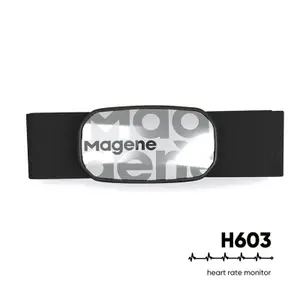
Magene offers the H603 heart rate belt, with dual protocol: an ANT+ device and a Bluetooth app simultaneously record its data; its battery life is rated at 1,000 hours.
Sports smartwatches on sale
Last generation watches are joining the electronics clearance, while recent models are featured in new arrivals. On the rack, counters and GPS complement the watch. The French Days and winter sales are good opportunities.
Frequently asked questions
Can a sports smartwatch work without a phone?
Yes, if it has built-in GPS: it tracks the session independently and transfers data to the app during the next sync. A connected GPS watch, like the Polar Unite, requires the phone to track the route.
Can you swim with a sports smartwatch?
According to Polar, a watch rated for 30 or 50 m is sufficient for bathing and swimming, while a watch rated for 100 m can handle frequent water use; don't press the buttons underwater. The brand advises against wrist heart rate monitoring while swimming, as their tests show it performs poorly in that context.
Does a heart rate belt work with all watches?
It must use the same protocol as the watch: Bluetooth, ANT+, or both. A dual-protocol belt can communicate with both a watch and a counter at the same time.
What case size should I choose?
A 40 to 42 mm case fits slim wrists and can be worn comfortably at night; a case larger than 45 mm displays more data. Tighten the strap so the optical sensor maintains contact with the skin.
What can a sports smartwatch measure outside of workouts?
Depending on the model, sleep, overnight recovery, and daily activity. The Unite and Ignite 3 from Polar analyze night recovery with Nightly Recharge and offer guided sessions with FitSpark.







