
Bike inner tube: sizes, valves and TPU




Starting at $300.00
$272.71


Starting at $300.00
$272.71


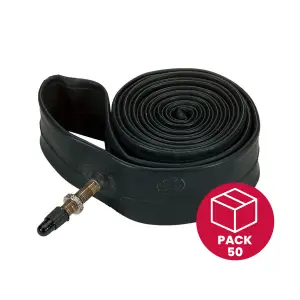
A bike inner tube is chosen on three criteria: the tyre size, read on its sidewall, the type of valve the rim accepts and a valve length that suits the rim depth. Then come the material, butyl, latex or TPU, and the protection, standard, reinforced or with puncture sealant. This page covers everything from children's wheels up to 29 inches.
What size of bike inner tube should you choose?
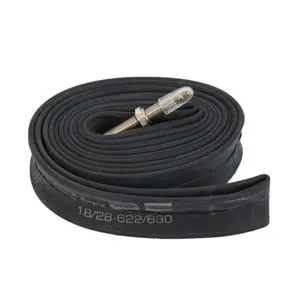
The size is read on the sidewall of the tyre, not on the rim. The most reliable marking is the ETRTO size, for example 37-622: the second number gives the rim diameter, the first the tyre width. An inner tube always covers a range of widths, shown on its box, for example 28 to 47 mm for a 622 mm diameter. Your tyre simply needs to fall within that range, at the same diameter.
- 622: road, gravel, hybrid and 29-inch mountain bikes, marked 700 or 28-inch.
- 584: 27.5-inch or 650B wheels.
- 559: 26-inch mountain bikes.
- 507, 406, 305, 203: the 24, 20, 16 and 12-inch wheels of children's bikes, BMX and folding bikes.
Be wary of markings in inches alone: a 26 x 1 3/8 from an old bike does not have the same diameter as a 26 x 2.10 mountain bike tyre. If in doubt, the ETRTO size settles it.
Presta, Schrader or Dunlop: which valve?
The Presta valve, thin and light, is fitted to most road bikes and many mountain bikes; it is unscrewed before inflating and needs the narrowest rim hole. The Schrader valve, the same as on cars, can be inflated at a petrol station and needs a wider hole. The Dunlop valve, common on Dutch bikes, uses the same wide hole. A Presta valve can be fitted in a Schrader hole with an adapter ring; the reverse means drilling the rim, which is best avoided.
The valve length depends on the rim depth: 40 mm is enough on a shallow rim, while 60 or 80 mm is needed on a deep-section road rim. Valves with a removable core let you inject a preventive sealant or replace the core.
Butyl, latex or TPU: which material?
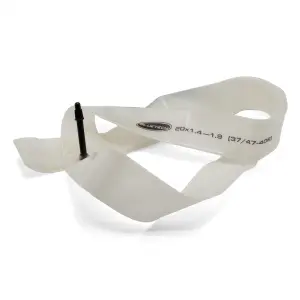
Butyl is the material of the vast majority of inner tubes: it holds air well, is durable and is easy to repair with a patch. Reinforced models, with a thicker wall, resist pinch flats better on mountain bikes and loaded bikes. Latex, supple, reduces rolling resistance and absorbs small irregularities better, but loses air faster: pump it up before every ride. TPU, a very thin synthetic material, cuts the weight and bulk of a tube: it appeals to road and gravel cyclists who slip one into their saddle bag. Check with the brand that a TPU or latex tube is compatible with rim brakes, which heat the rim on descents.
Puncture-resistant inner tubes: reinforced or with sealant
An inner tube containing a preventive sealant seals small punctures by itself, caused by a thorn or a shard of glass, within a few turns of the wheel. It is an effective solution in town and on tracks where thorns abound. A reinforced tube limits pinch flats against the rim. No inner tube is truly puncture-proof: pair it with a tyre fitted with a puncture protection belt and the right pressure, shown on the tyre sidewall.
Inner tubes by discipline and related parts
For a selection by discipline, see road, MTB, gravel and BMX inner tubes. Repeated punctures often come from a worn tyre or a displaced rim tape: check your bike tyres and the rim tapes in bike wheel parts.
Which inner tube brands?
Hutchinson covers every use, from standard inner tubes to the reinforced Koloss and Reinforced models, by way of the puncture-resistant Protect'Air, the City-Trekking range and TPU inner tubes.
Lineatube, a company based in the Loire, in France, makes linear, open inner tubes whose ends overlap inside the tyre: they can be fitted without removing the wheel, and the same tube suits several sizes, from 20 to 29 inches, including for e-bikes.
Continental offers its Race inner tubes in 700, Tour and Compact for small wheels, as well as workshop packs of fifty tubes.
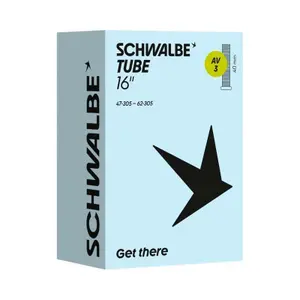
Schwalbe identifies its inner tubes by a size number preceded by the valve type, SV for Presta, AV for Schrader, such as the SV17 or the AV13, and also offers the Air Plus and Aerothan inner tubes.
Slime builds a puncture sealant into its inner tubes that plugs small punctures, with a Presta or Schrader valve, from 24 to 29 inches and in 700.
Vittoria offers Competition latex inner tubes and Ultralight TPU tubes, as well as standard inner tubes with a Presta valve and a removable core.
Inner tubes on sale
Inner tubes and workshop packs from older series are reduced in spare parts clearance; new references arrive in new arrivals. Before your summer rides, keep a spare inner tube for each bike.
Frequently asked questions
How do you change a bike inner tube?
Deflate it completely, lever one side of the tyre off the rim with tyre levers and remove the tube. Run your hand around the inside of the tyre to remove the thorn or shard, slip in a new, slightly inflated tube starting with the valve, refit the tyre without pinching the tube, then inflate to the stated pressure.
Which inner tube for which tyre?
Take the same rim diameter as the tyre, in ETRTO, and a width range that includes the tyre width. Then choose the valve your rim takes and a length suited to its depth.
Tubeless or inner tube?
Tubeless does without a tube and limits pinch flats, but needs a compatible rim and tyre and a sealant to be topped up. The inner tube remains simple, inexpensive and can be repaired anywhere. Even with tubeless, a spare tube in your saddle bag is still useful.
Does a 28-inch inner tube fit a 700C tyre?
Yes in most cases: both markings refer to the 622 mm diameter. Just check that the tyre width falls within the range shown on the tube.
Should you replace or repair a punctured inner tube?
A butyl inner tube is easy to repair with a patch and suitable glue, as long as the hole is not close to the valve. A tube whose valve has been torn off or which has a long gash should be replaced.







