
Road bike headsets and headset bearings
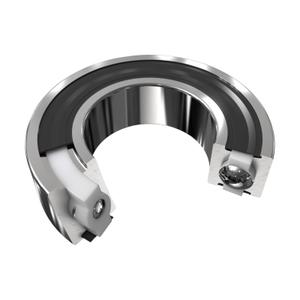
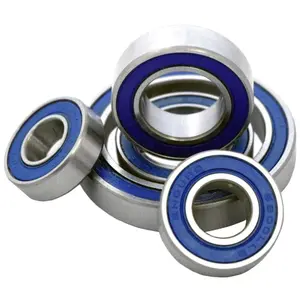
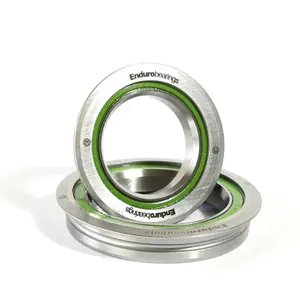
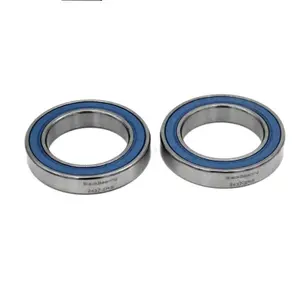
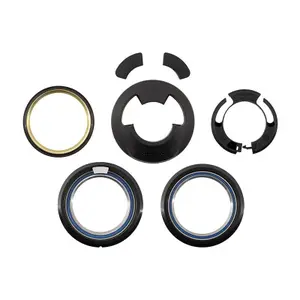
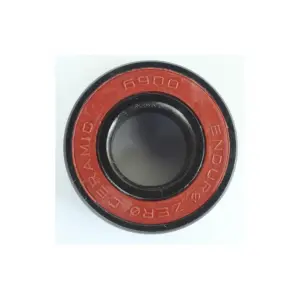
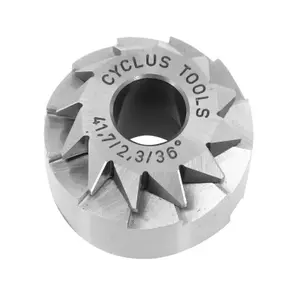
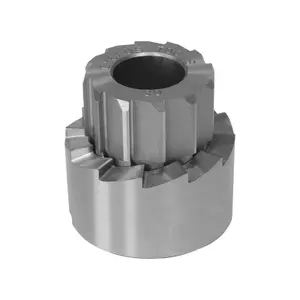
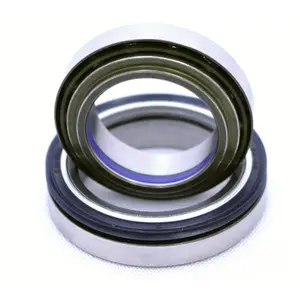
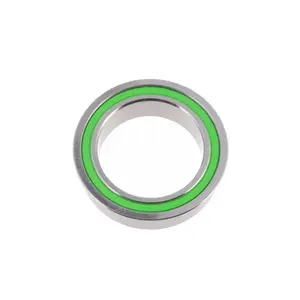
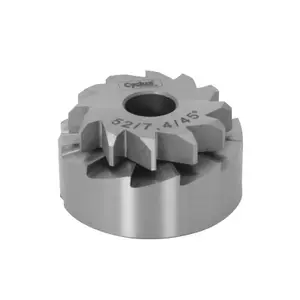
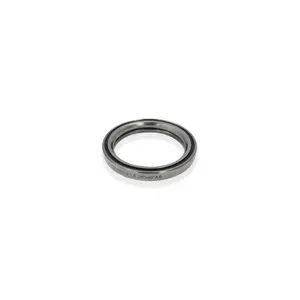
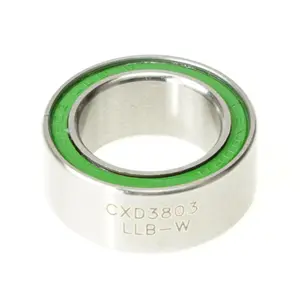
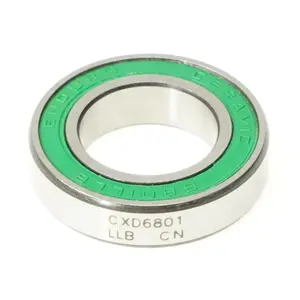
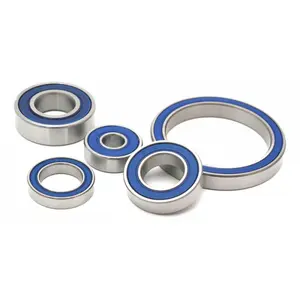
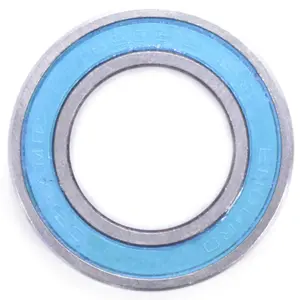
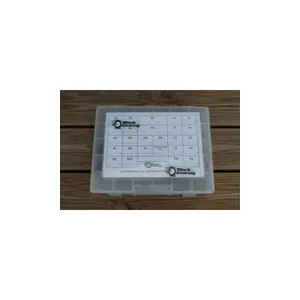
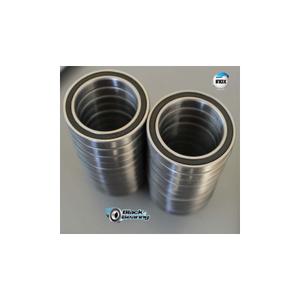
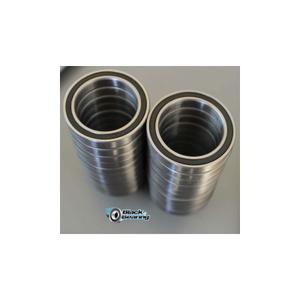
A road bike headset lets the fork turn freely in the frame, with no play and no tight spots. To replace it, note your frame's dimensions, often given as an SHIS code, the steerer diameter and the bearing angle. Here you will find complete headsets, individual headset bearings and cartridge bearings for other parts of the bike.
Why does the headset matter so much on a road bike?
Between the fork and the frame, the headset is the part that lets the front wheel turn while holding it firmly. On the road, where descents are taken fast and every change of line is made with your fingertips, the slightest play can be felt in corners and under braking, and tired bearings make the steering sticky on long straights. A healthy headset goes unnoticed: it turns without tight spots, does not knock and lets neither water nor dust in.
External, semi-integrated or integrated: identifying your standard
Older steel road bikes often use an external headset, whose cups stand proud of the head tube, or even a threaded headset. The semi-integrated type, with its cups set into the tube, is fitted to many aluminium frames. Today's carbon frames most often go for the integrated type: the bearing sits in a seat moulded or machined directly into the frame, which slims down the front of the bike.
To find your way around, manufacturers use the SHIS code, which combines a type, IS, ZS or EC depending on whether the headset is integrated, semi-integrated or external, with two diameters in millimetres: that of the seat in the frame, then that of the steerer or crown race. A carbon road frame marked IS42/28.6 at the top and IS52/40 at the bottom therefore takes an integrated headset for a tapered fork. At the top, the steerer almost always measures 28.6 mm, or 1 1/8 inch; at the bottom, it often widens to 1 1/4 or 1.5 inch to stiffen the front end.
Angles and headset bearings: the details that count
An angular contact headset bearing has two chamfers, whose angle must match the bearing seat in the frame and the crown race: 45° on 45°, 36° on 45° or 36° on 36° depending on the brand. The wrong angle gives imperfect support and rapid wear. Bearings also differ in their material: steel for everyday use, stainless steel for corrosion resistance, ceramic to reduce friction.
On many recent road bikes, hoses and cables run through the headset to enter the frame. These headsets, with their top cap, spacers and dedicated bearings, can only be chosen for the exact frame model: several kits on this page actually carry the name of the bike they are intended for.
How to adjust and maintain a road bike headset
The check takes a minute: with the front brake on, rock the bike back and forth while keeping two fingers on the joint between the upper cup and the frame. A noticeable knock indicates play; steering that always drops back to the same point, with the wheel lifted, indicates pitted bearings. Play is taken up with the top cap bolt, with the stem bolts loosened, then the stem is realigned with the wheel and tightened to the torque marked on it, alternating between the bolts, especially on a carbon steerer. Pitted bearings, for their part, are replaced in pairs, with the bearing seats cleaned and lightly greased.
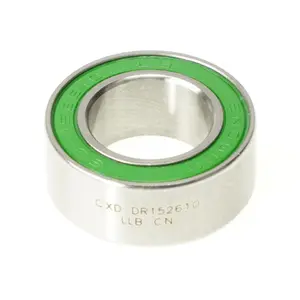
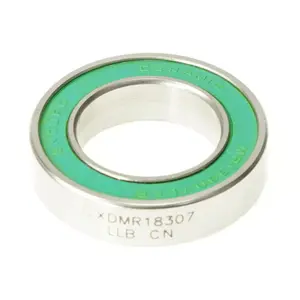
The cartridge bearings on this page are also used in wheels, bottom brackets and suspension: order them by the reference engraved on their side, such as 6902 or 6803, and by their inner diameter, outer diameter and width.
Stem, handlebar and other road components
The headset top cap is tightened through the road bike stem, whose spacers set the height of the cockpit; road handlebars complete the set-up. Road bike components brings these parts together, and MTB headsets are designed for suspension forks.
Which brands for a road bike headset?
Enduro Bearings, a maker of high-end bearings for industry and cycling, covers almost every position on the bike, from the Maxhit Zero Stack headset to wheel, bottom bracket and suspension bearings.
Black Bearing, a French bearing maker, offers upper headset assemblies for the road that let the housing pass through the head tube, as well as ceramic bottom bracket bearings for BB90 and BB95 shells.
Elvedes sells headsets and headset bearings individually, identified by their dimensions and angles, 45° on 45° or 36° on 45°, in sealed versions for 1.5 inch steerers.
CeramicSpeed, a Danish manufacturer based in Holstebro, offers SLT headset bearing kits by frame model, for the Pinarello Dogma F, Colnago C64 or Specialized SL7, and complete headsets for Cervélo and Scott.
FSA, a Taiwanese brand whose headsets are its best-known products, covers integrated and semi-integrated standards with its Orbit ranges, individual ACB bearings and ACR headsets designed for specific frames.
Campagnolo completes its groupsets with Classic1 external headsets, DCR and In-5 integrated headsets, as well as replacement headset bearings.
Headsets on sale and new arrivals
To equip a second bike or plan ahead for a service, take a look at our road components clearance; recent references are shown in new arrivals. Winter, when the bike goes into the workshop, and the sales that come with it are a good time for this job.
Frequently asked questions
How do you know which headset fits your bike?
Check the frame's technical specifications, which often give the SHIS code. Failing that, remove the fork and measure the outside diameter of the bearings, their width, their angle and the steerer diameter. The references engraved on the old bearing make the search easier.
Can you replace just the bearings of an integrated headset?
Yes, it is even the most common case: on an integrated headset, only the bearings wear, since the bearing seats are part of the frame. Choose bearings with the same dimensions and angle, and check the condition of the crown race.
When should you replace headset bearings?
When the steering turns in notches, catches when riding straight or keeps some play despite adjustment. A bike often ridden in the rain or washed with a hose wears its bearings faster: a check at every service limits nasty surprises.
Are ceramic headset bearings worth it?
The reduction in friction is small on a part that turns little, unlike the wheels or the bottom bracket. The benefit lies mainly in the longevity and corrosion resistance of some models; for most cyclists, a good quality steel or stainless steel bearing is enough.
Can play in the headset make the bike shake on descents?
It can contribute: a loose headset lets the fork move and amplifies oscillations at high speed. If your bike develops a speed wobble on descents, check the headset first, then the wheel fixing and the tyre pressure.







