
Front and rear MTB mudguards, 27.5 and 29


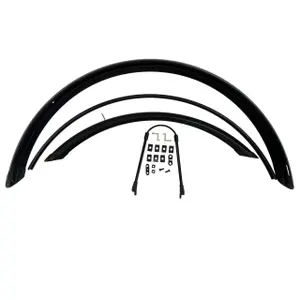


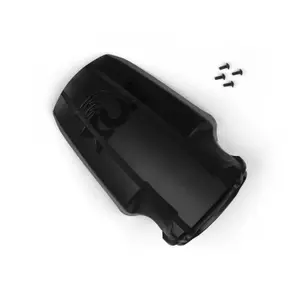


A mountain bike mudguard protects your eyes, your drivetrain, and the seals of your fork from splashes. At the front, it screws or attaches to the arch of the suspension fork; at the rear, it attaches under the saddle or on the frame while allowing the wheel to move. Choose it based on your fork, the wheel diameter, and the tyre width. Road and city models are also included here.
Why fit a mudguard on a mountain bike?
On a wet trail, the front wheel throws mud and gravel straight into your face and onto your glasses just when you need to see the terrain. The rear wheel drenches your back, the saddle, and the drivetrain. A short front mudguard is often enough to keep your view clear; a longer one also protects the seals of the stanchions and the frame. Mountain bikers who ride all winter or go on multi-hour rides benefit from added comfort and less maintenance.
Front mudguard: on the fork arch
The front mudguard of a mountain bike attaches to the arch of the suspension fork, which moves up and down with the wheel: it stays the same distance from the tyre without the risk of contact when compressed. Models that are screwed into the designated holes on the arch hold better than those attached with zip ties, but they must match your fork and sometimes its generation. Universal models tighten around the arch or the stanchions with zip ties. A long mudguard that extends further down in front of the wheel offers better protection for the lower stanchions and the frame.
Rear mudguard: saddle, frame, and dropper post
At the rear, there are three mounting options. The mudguard under the saddle, attached to the rails, protects your back and moves with the saddle. The model that clips onto the seat post works with a rigid post but not with a dropper post, as it would block its descent. On a full suspension mountain bike, a small mudguard fixed to the seat stays or swingarm moves with the wheel and doesn’t touch it when the suspension compresses.
Wheels, tyres, and travel: measurements to check
Check the announced wheel diameter, 26, 27.5, or 29 inches, which is often covered by the same model, then check the maximum tyre width: a mountain bike tyre of 2.4 or 2.6 inches requires a wide mudguard to be effective. Fat bikes have their own models. On a long-travel fork, ensure that the mudguard doesn’t touch the bottom of the frame or the diagonal tube when the fork is fully compressed and the handlebars are turned.
Electric mountain bikes and everyday use
An electric mountain bike is often also used for daily commutes on wet roads. Some models come with eyelets for fitting full-length mudguards, while others have specific mudguards designed by the manufacturer. Otherwise, a front mudguard on the arch and a rear mudguard under the saddle provide a good compromise, removable before a sporty outing.
Kickstands, mirrors, and other protections
For a bike used in the city or for trekking, kickstands and mirrors and bells complete the setup. The clip-on mudguards for city and road bikes are also featured in bike mudguards, and the full range of accessories is listed in bike protection.
What brands of mountain bike mudguards are available?
RRP provides front coverage with the ProGuard Bolt On, which is screwed onto the arch in Mini or Standard versions, the compact EnduroGuard, and the FatGuard for fat bikes, and at the rear with the RearGuard, one version of which attaches to the ICS system of Fizik saddles.
Riesel Design offers its front mudguards Schlamm:PE and Kol:oss, and its rear models RIT:ZE, in many colours, allowing customization of your mountain bike; the Schmutz:Fink outfits children's bikes.
Polisport presents the Cross Country Evo, available as a front version for suspension forks and a rear version for 26 to 29 inches, as well as the S-Mud rear adjustable from 16 to 29 inches.
Rockshox designs mudguards specific to its forks, Lyrik, Pike, ZEB, SID, Rudy, or Reba, which attach to the arch of the respective generation.
Zefal combines the Deflector, a front mudguard like the FM40 or rear like the RM90, with the Shield, which is fixed under the saddle for wheels from 26 to 29 inches.
Discounted mudguards
Old designs and previous versions go into the bike protection clearance; new models and colours come into the new arrivals. Winter sales come when the trails are muddiest.
Frequently asked questions
What mudguard is suitable for a full suspension mountain bike?
At the front, a model fixed to the arch of the fork. At the rear, a mudguard under the saddle or fixed to the swingarm that follows the wheel. Avoid long fixed mudguards above the rear wheel: the wheel may hit them during full travel.
Is a front mudguard enough for mountain biking?
To keep your view clear, it often is: it’s the front wheel that throws mud into your face. A rear mudguard is added for very wet rides or to keep your back clean during a trek.
Can you fit a rear mudguard with a dropper post?
Yes, provided it's not attached to the post itself. Choose a model that clips onto the saddle rails, which moves down with it, or one that is fixed to the frame or swingarm.
How can I tell if a mudguard fits my fork?
A screwed mudguard needs to correspond to the holes in the arch, hence to the model and sometimes generation of the fork. A universal model with zip ties adapts to most forks: just check the permitted tyre width and diameter.
Does a mudguard add much weight to the mountain bike?
No, a plastic front mudguard for mountain bikes weighs just a few dozen grams. The main concern is its attachment, to ensure it doesn’t vibrate or shift on the arch while descending.







