
Bike reflectors and reflective accessories


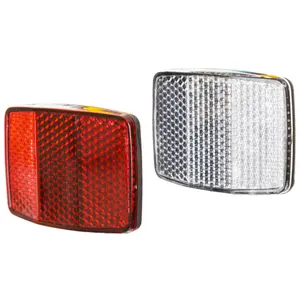


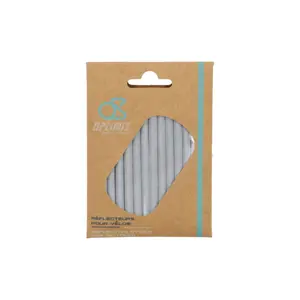
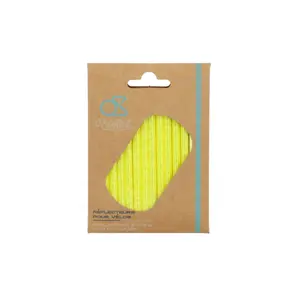
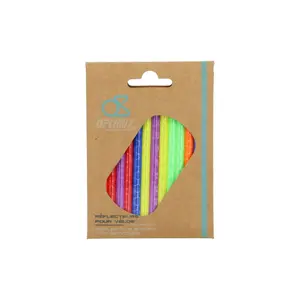


Bike reflectors send the light of headlights back towards drivers: at night, they show up your bike even if your lights are fading. Here you will find front, rear, wheel and pedal reflectors to replace those fitted as standard, as well as stickers and bands to boost your visibility in town.
Are bike reflectors required by law?
A bike usually carries four sets of reflectors: a white reflector at the front, a red reflector at the rear, reflectors on the wheels, visible from the side, and amber reflectors on the pedals. What is compulsory depends on the country. In the UK, the Highway Code states that at night a bike must have white front and red rear lights lit, a red rear reflector and, on all but very old bikes, amber pedal reflectors; white front reflectors and spoke reflectors are recommended to help you be seen. In Ireland, every bike used on a public road must display a red rear reflector at all times, except a child's bike used in daytime, and must have a white or yellow front light and a red rear light during lighting-up time. New bikes are usually sold already fitted with reflectors: it is the lost or broken ones that need replacing.
Wheels, pedals, frame: where do the reflectors go on a bike?
- On the wheels: one reflector per wheel clips onto the spokes. Small reflectors fitted to each spoke draw a circle of light, very easy to spot at junctions.
- On the pedals: flat pedals often have them as standard, clipless pedals rarely. Some brands sell reflector units for their models, to be chosen according to the pedal reference.
- On the frame and seatpost: an adhesive or clamp-on reflector replaces one that has broken, and stickers add visible points on the frame, fork or mudguard.
Reflective stickers, bands and clips: being seen in town
In town, headlights come from every direction: multiplying reflective surfaces helps drivers make out the shape of the bike. Stickers are applied to a clean, dry surface, in a repositionable version if you care about your frame's paintwork. Hook-and-loop bands are worn on the ankle or on a bag, and clips at the bottom of trousers. The UK Highway Code also recommends reflective clothing or accessories, such as belt, arm or ankle bands, in the dark. For children, fun designs do the rest.
Lighting, clothing and urban safety
Reflectors do not replace bike lights, the only thing that can be seen before a car's headlights reach you. For the cyclist, reflective clothing brings together vests and jackets, and bike indicators signal your changes of direction. All the equipment, locks included, is in safety and visibility.
Which reflective accessory brands to choose?
Wowow offers reflectors that clip onto wheel spokes, in boxes of 72, and a microfibre reflective band for your bag or bike.
Rainette offers its reflective stickers in around ten themes, dinosaurs, space, superheroes or zebra, to personalise a child's bike or helmet.
Kellys uses 3M Scotchlite reflective material for its Rafiate trouser clips, its Twinkle Pro light-up clip and its Ray clips, which fix onto wheel spokes.
Shimano supplies the reflector units for its own pedals, such as the SM-PD63, SM-PD64A or SM-PD67, to put reflectors back on its pedals.
Myflash sells its stickers in sets of four, described as tear-proof and repositionable.
Reflective Berlin goes for quirky designs, a unicorn or a skull, to brighten up a city bike.
Reflective accessories on sale
End-of-line accessories are grouped in our safety and visibility clearance, and newcomers in new arrivals. Check the whole family's reflectors when the clocks go back.
Frequently asked questions
Do I need reflectors if my bike has lights?
In the UK and Ireland, yes: lights and the red rear reflector are two separate requirements. Reflectors stay visible when a battery runs flat and show the bike from the side, where lights carry little.
My tyres have a reflective strip: do I still need wheel reflectors?
A reflective sidewall already makes the bike visible from the side, which is the role of wheel reflectors. In the UK, the Highway Code presents spoke reflectors as an aid rather than a requirement. The red rear reflector remains compulsory in the UK and Ireland, as do amber pedal reflectors in the UK.
Does a reflective sticker replace a reflector?
No. Required reflectors are devices with a defined colour and position; stickers come on top of them to multiply the visible points, without replacing them.
How do you fit reflectors to clipless pedals?
With the reflector units that some manufacturers provide for their pedals: note your pedals' reference to choose the right model. Dual-sided pedals, flat on one side, often have them.
Reflective or fluorescent: what is the difference?
Reflective material sends headlight beams back towards their source and works at night; fluorescent colours stand out in daylight and at dusk. The two complement each other.







