
Powerful front and rear bike lights, USB
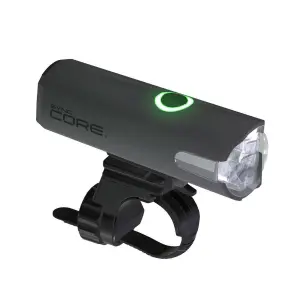
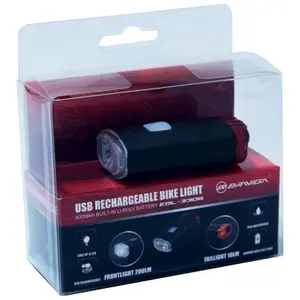
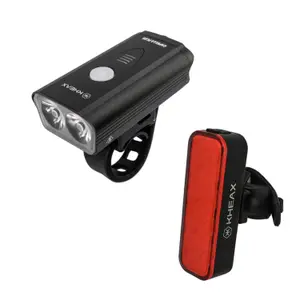
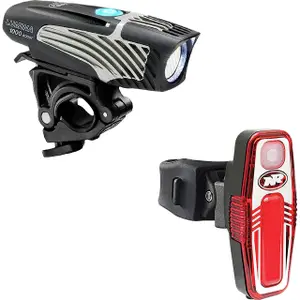
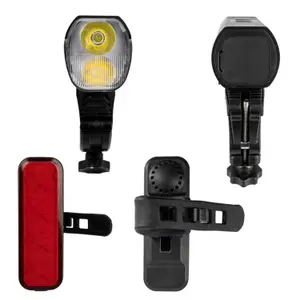
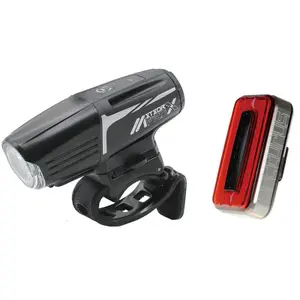
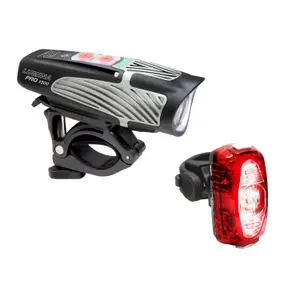
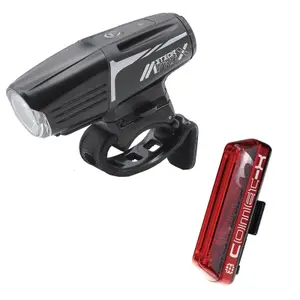
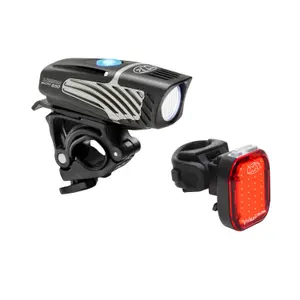
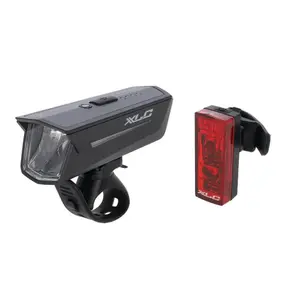
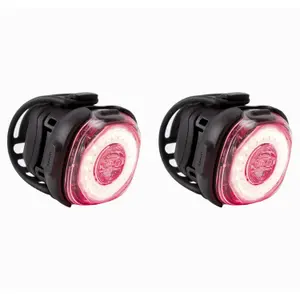
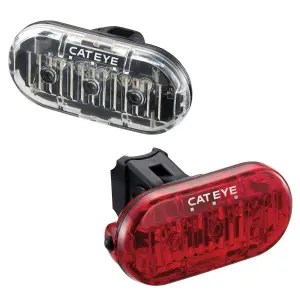
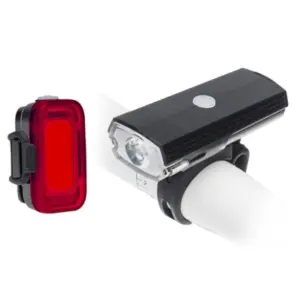
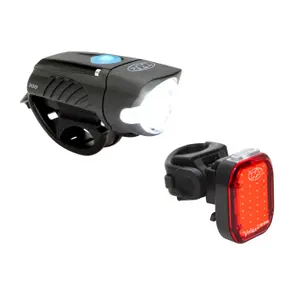
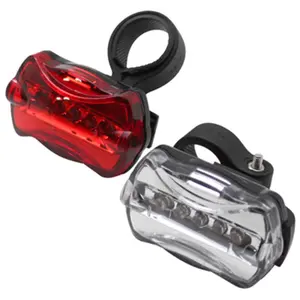
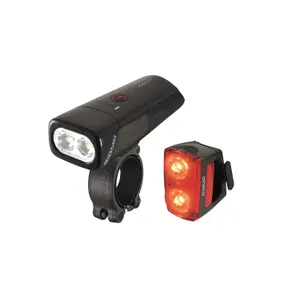
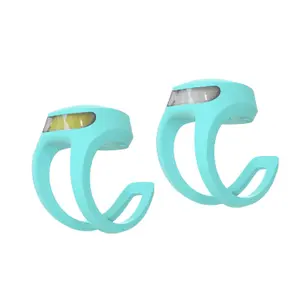
A powerful bike light is no longer just for being seen: it brightens up country roads, gravel paths, or trails when streetlights are gone. Choose a headlight that matches your speed and terrain, a rear light that can be seen from far away, and then check the battery life in the mode you will actually use.
Why is powerful lighting necessary when you leave the city?
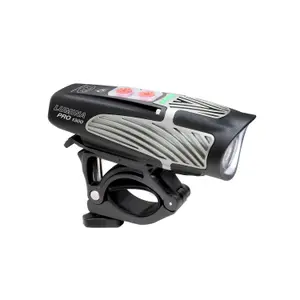
In the city, street lighting already shows the road and your headlight mainly indicates your presence. On a country road without lamp posts, a forest path or a gravel track, it highlights potholes, pebbles and the curve of the next bend. The faster you go, the farther the beam should reach. A few hundred lumens are enough for a leisurely pace on the road; headlights over 1,000 lumens, like the NiteRider Lumina Pro 1300 or the Sigma Buster 1100, target fast descents and mountain bike trails. The sets on this page pair this headlight with a matching rear light.
Flow, brightness, optics: how to compare two headlights?
The number of lumens expresses everything the lamp emits; the number in lux, the light that actually reaches the illuminated surface, the road in front of you. Lighting that complies with German regulations StVZO, such as the XLC CL-S25 Proxima Pro kit, often indicates its power in lux. With equal flow, the optics make the difference: a wide beam that is cut upwards lights up the sides without dazzling, while a focused beam reaches further down a path. Prefer numbers measured according to a declared method: Moon specifies that the flow and autonomy of its lamps are tested according to the ANSI FL-1 standard.
Battery life, recharging and modes: read the technical sheet
The advertised battery life depends on the mode chosen. The FYRE headlight from Busch & Müller lasts over 5 hours at 30 lux and about 15 hours at 10 lux; the Sigma Buster 1100 claims up to 50 hours in its most economical mode, much less at full power. So estimate the length of your night rides in the mode you will use and allow for a margin in cold weather, which reduces battery capacity. A charge indicator prevents running out of power on the road. The NiteRider Lumina 1000 Boost adds a Boost mode, activated by a double press, for a technical section; the memory mode, available on Moon and NiteRider, turns the lamp back on in the last mode used.
Rear light: be seen from afar
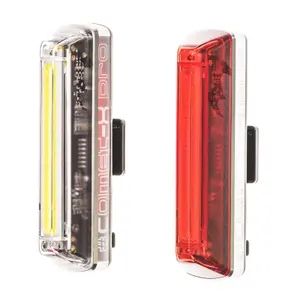
Outside built-up areas, vehicles approach quickly: the rear light must be visible from a distance and ideally from the side. The NiteRider Lumina 1000 Boost packs it with a Sabre light of 110 lumens, and the Comet-X light from Moon packs offers side visibility. Flash and daytime modes catch the eye, but French law requires a non-flashing red rear light: in traffic, choose a steady and powerful mode. Mount it high enough on the seat post so that a bag doesn’t block it.
What the Highway Code says
According to the “Mandatory equipment for bicycles” sheet from service-public.gouv.fr, the front light must be white or yellow and non-dazzling, the rear light red and non-flashing, to be turned on at night and during the day in poor visibility. A powerful headlight should therefore be aimed at the road and be lowered a mode when another user is coming towards you. Outside built-up areas, at night or in insufficient visibility, a high-visibility vest is also mandatory for the rider and their passenger.
Handlebar, helmet, seat post: where to mount your lights?
The main headlight secures to the handlebar with a rubber strap or a bracket; make sure it fits the diameter of your handlebar. On a mountain bike, a second light on the helmet illuminates where you are looking, before the bike enters the bend: the Buster 1100 from Sigma is available in a helmet version. For a single light, either front or rear, or other formats of lamps, browse the entire bike lighting section.
Which brands of powerful lights to choose?
Moon tests the flow and autonomy of its lights according to the ANSI FL-1 standard; the Meteor-X Auto Pro headlight, waterproof according to the IPX4 rating and featuring a daylight mode, is sold in a pack with a rear light Moon.
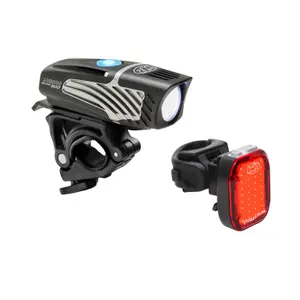
NiteRider, based in Poway, California, offers complete sets: the Lumina 1000 Boost, with six modes, along with its Sabre 110 rear light, or the L Pro Omega NiteLink pack.
XLC combines in its CL-S25 Proxima Pro kit a headlight of 15, 40 or 80 lux on a 2,000 mAh battery and a rear light visible at 360 degrees, compliant with German StVZO regulations.
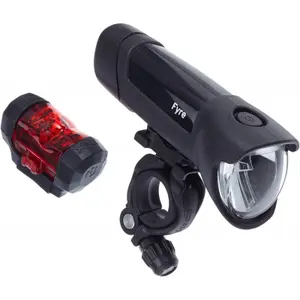
Busch & Müller, whose lights are designed and manufactured in Germany, pairs its FYRE headlight, which also illuminates the nearby field, with the IXXI rear light and its 15 hours of autonomy.
Sigma combines the Buster 1100 headlight, with a beam advertised at 165 m and six lighting modes, and the RL150 rear light for night rides on the road, gravel or mountain biking.
Powerful lights on sale
When a brand updates its range, packs from the previous generation go into the electronic clearance sale; the newly arrived headlights can be found in the new arrivals. Winter sales come right in the middle of night riding season.
Frequently asked questions
What power headlight for road, gravel or mountain biking?
It all depends on the speed and the terrain. On the road, a few hundred lumens allow for moderate pace riding outside of lit areas. In fast gravel riding and mountain biking, where you need to read the terrain from a distance and in the bends, headlights of 1,000 lumens and more have the advantage.
Is a very powerful headlight allowed on the road?
Yes, as long as it doesn't dazzle: the law requires a non-dazzling white or yellow front light. Angle the beam towards the road and switch to medium mode when approaching other users, keeping full power for the trails.
Why does the actual battery life seem shorter than expected?
The maximum advertised battery life corresponds to the lowest mode: at full power, it is counted in hours, sometimes less. Cold also reduces battery capacity. Compare the durations mode by mode and recharge after each ride.
Do you need a helmet light for mountain biking?
It complements the handlebar headlight without replacing it: it illuminates in the direction you are looking, useful in tight turns and technical sections. Choose a lightweight one so it doesn’t unbalance the helmet, and keep the handlebar headlight as the primary light source.
How to recharge lights during a long ride?
USB rechargeable headlights can be connected to an external battery during a break. For a very long night ride, reduce the power on the rolling sections and reserve the high mode for descents.







